ByMd BaizidReviewed by:Shuman Chandra Das
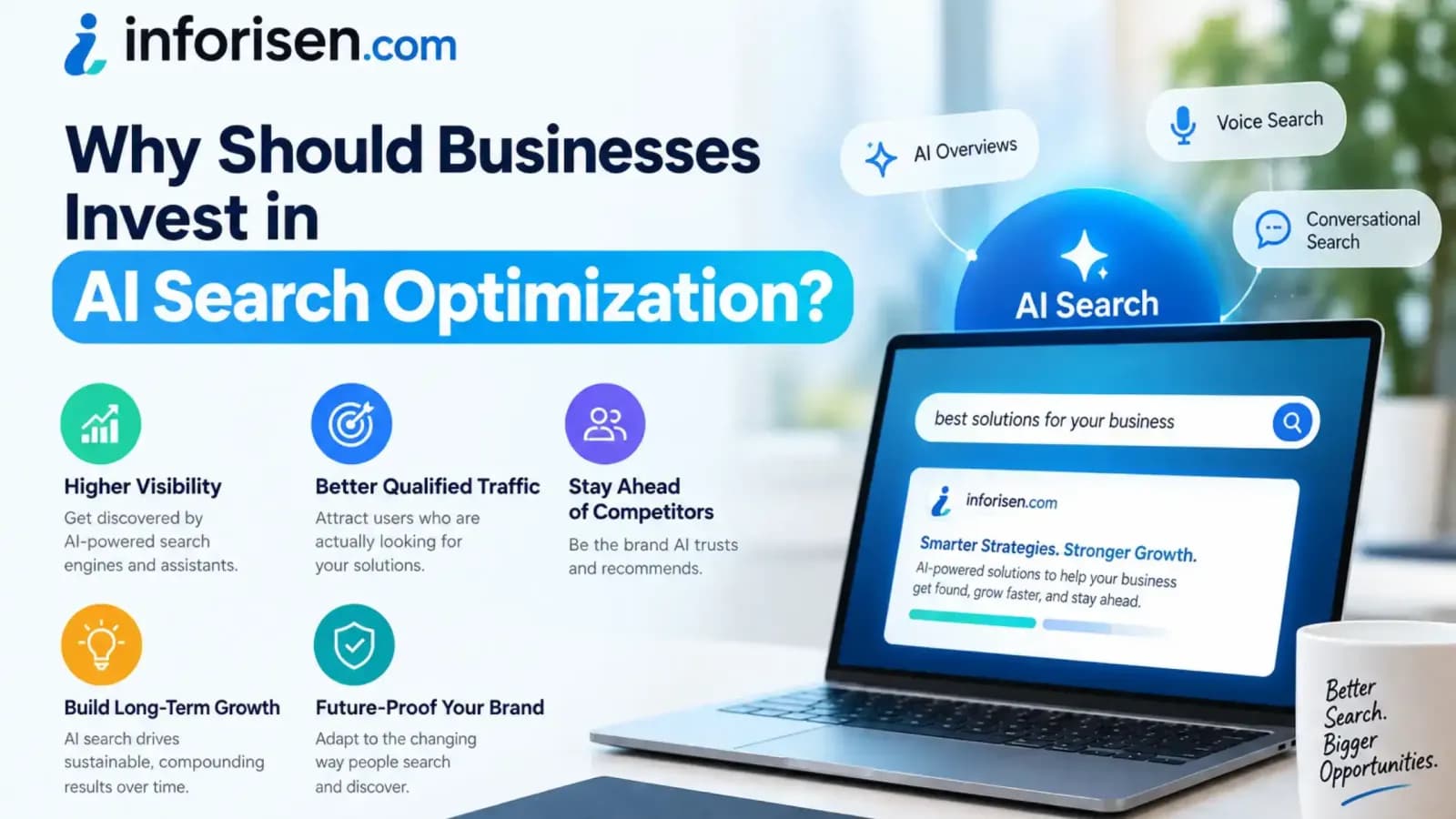
Human WrittenWhy Should Businesses Invest in AI Search Optimization?
Learn why AI search optimization matters for modern businesses and how combining AI SEO with strong content, technical SEO, and topical authority can support better search visibility and customer discovery.
Imagine someone is looking for a software company. Instead of opening Google, comparing ten websites, and visiting each one, they ask an AI tool:
“Which software development companies can help me build a SaaS product?”
The answer may immediately mention a few companies, explain what they do, and help the person decide which businesses are worth considering.
Now ask yourself something uncomfortable: Would your business be mentioned? This is one of the reasons businesses are starting to pay attention to AI search optimization.
Search is no longer limited to traditional blue links. AI Overviews, conversational search, and AI assistants are changing how people discover information, compare businesses, research services, and make decisions. At the same time, traditional SEO fundamentals remain important for these AI-powered search experiences.
So, why should businesses invest in AI search optimization? The answer is not simply because AI is becoming popular. The bigger reason is that the way potential customers discover and evaluate businesses is changing.
What Is AI Search Optimization?
AI search optimization is the process of improving your website, content, brand information, and overall online presence so AI-powered search systems can better understand your business and its expertise.
You may hear several terms around this topic:
AEO — Answer Engine Optimization
GEO — Generative Engine Optimization
AIO — AI Optimization
LLMO — Large Language Model Optimization
The terminology can vary, but the practical objective is similar: make your business information clear, useful, trustworthy, and easy for search and AI systems to understand and connect with relevant questions.
How AI Search Is Different From Traditional Search
Traditional SEO generally focuses heavily on helping pages appear for relevant search queries. AI search adds another layer.
Instead of simply asking:
“Which page ranks for this keyword?”
the business needs to think about:
“Can an AI system understand what our company does, who we serve, what makes our offering relevant, and which content supports those claims?”
That means content structure, entity clarity, topical authority, technical accessibility, and brand information become increasingly important.
AI Search Does Not Replace SEO
This is where businesses sometimes get confused. AI search optimization should not be treated as a completely separate replacement for SEO.
Google's current guidance indicates that foundational SEO practices remain relevant to AI Overviews and AI Mode. Crawlable content, useful information, clear structure, internal linking, and strong technical foundations still matter. So rather than abandoning SEO, businesses should expand their search strategy.
Think:
SEO + AEO + GEO + strong brand signals, rather than:
SEO vs. AI search
Why Should Businesses Invest in AI Search Optimization?
The biggest reason is simple. Your customers may already be changing how they search.
If your competitors become visible in AI-generated answers while your business remains unclear or absent, the customer may form an opinion before ever visiting your website.
That can affect discovery, consideration, and eventually the number of people who enter your sales funnel.
AI Search Can Influence the Research Stage
Think about how people normally buy professional services. They rarely go directly from “I need something” to “I'll contact this company.”
There is usually a research process.
They may ask:
- Which companies provide this service?
- What does this service cost?
- Which solution is suitable for my business?
- What should I look for in a provider?
- Which technology should I use?
- What are the alternatives?
- Which provider has experience with this type of project?
AI tools can increasingly become part of that research process.
That means your business needs to be understandable before the potential customer reaches your website.
Competitor Visibility Can Become a Business Issue
Imagine that someone asks an AI assistant to recommend SaaS development companies. Your company offers SaaS development. But your competitor has clearer service pages, stronger topical content, consistent business information, and more relevant online references.
The AI system may have more information to work with when describing the competitor. You might still rank in traditional search, but you could miss part of the customer's research journey.
This is why AI search optimization should be considered a visibility and competitive-positioning issue, not simply another SEO trend. Current GEO research and industry analysis increasingly frame the problem around whether brands are being mentioned and cited when buyers ask category-specific questions.
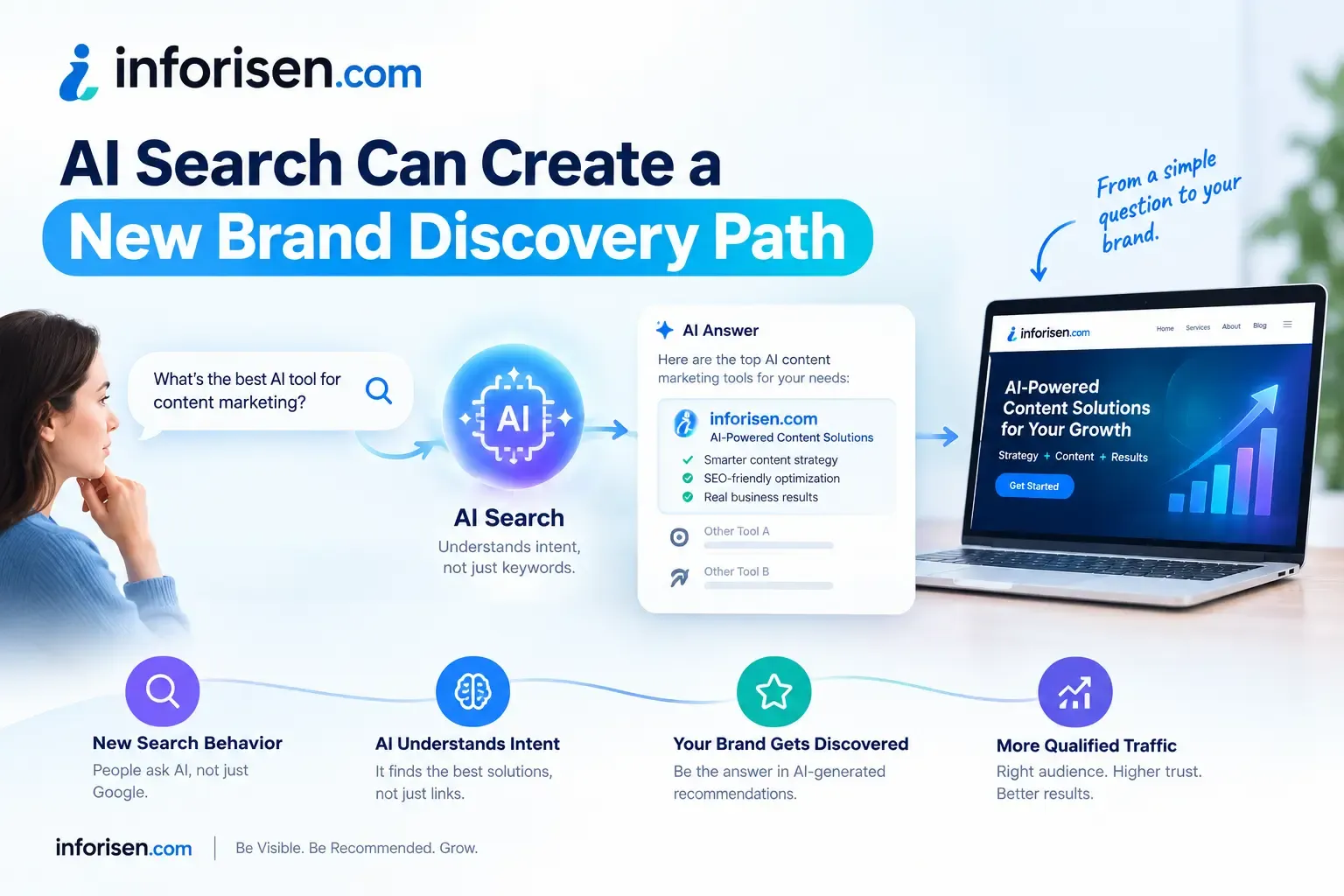
AI Search Can Create a New Brand Discovery Path
Traditional customer journeys often look like this:
Search → Website → Service Page → Contact
AI-assisted discovery can look different:
Question → AI Answer → Brand Mention → Website → Research → Contact
Sometimes the user may not even click immediately. They may first use the AI-generated response to create a shortlist. That means businesses should think about visibility earlier in the journey.
From Ranking a Page to Being Understood as a Business
This is a subtle but important difference.
Your website may rank for:
“SaaS development company”
But AI systems may need to understand much more:
- What exactly does your company develop?
- Who are your target customers?
- What technologies or solutions do you provide?
- What types of projects do you work on?
- What related services do you offer?
- What information supports those descriptions?
A strong AI search strategy therefore focuses on the business entity, not just isolated keywords.
Build Clear Connections Between Topics
Suppose your company offers:
SEO Services → AI SEO → AEO → GEO → Content Strategy → Technical SEO
These should not exist as random pages. They should connect logically. Your main service page can link to supporting educational content. Those articles can link back to the relevant service. Related topics can connect with descriptive anchor text.
Inforisen's How Important Are Keywords in SEO article also explains how keywords, search intent, semantic relevance, and internal linking work together in modern search.
AI Search Optimization Can Strengthen Your Existing SEO
One of the most useful things about AI search optimization is that many of the activities overlap with good SEO anyway.
You are not necessarily creating a completely separate website for AI.
You are improving the quality and clarity of the website you already have.
This is why investing in AI search can improve the underlying quality of your search strategy rather than simply adding another marketing channel.
What Makes a Business Easier for AI Search to Understand?
AI systems need information they can interpret and connect.
That sounds complicated, but the practical principles are fairly straightforward.
Make Your Business Information Clear
Your website should clearly communicate:
- Who you are.
- What you do.
- Who you serve.
- Where you operate.
- Which services or products you provide.
- What problems you solve.
If these details are vague, scattered, or contradictory, it becomes harder for both users and machines to understand the business.
Create Content Around Real Customer Questions
Instead of publishing articles simply because a keyword has search volume, think about what your potential customers actually ask.
For example, a software development company could create useful content around:
- How much does SaaS development cost?
- How long does it take to build a SaaS product?
- What should an MVP include?
- How do I choose a SaaS development company?
- What is the difference between custom software and SaaS?
- What technical architecture does a SaaS product need?
This question-driven approach naturally supports AEO and GEO because it creates clear, self-contained answers around real customer problems.
Inforisen's How to Develop an SEO Strategy also emphasizes connecting business goals, search intent, keyword research, content planning, technical SEO, internal linking, and measurement instead of treating SEO as isolated tasks.
Why Topical Authority Matters More in AI Search
Imagine asking an AI:
“Who are the experts in SaaS development?”
Would one random article about SaaS be enough to establish a business as an expert?
Probably not. A stronger website demonstrates depth across related subjects.
Build a Connected Topic Cluster
For a software company, a SaaS cluster could include:
→ SaaS Development
→ SaaS Roadmaps
→ MVP Development
→ SaaS Architecture
→ SaaS UI/UX
→ SaaS Security
→ SaaS Integrations
→ SaaS Development Costs
→ SaaS Scaling
→ Choosing a SaaS Development Company
This gives your website more opportunities to demonstrate knowledge around the same business area. It also creates natural internal-linking opportunities between informational content and commercial pages.
Inforisen already uses this type of connected SEO approach across its content around SaaS, SEO, UI/UX, and software development. Its blog currently includes related guides covering SaaS roadmaps, SEO, website SEO, and other digital-business topics.
How AI Search Optimization Can Support Business Goals
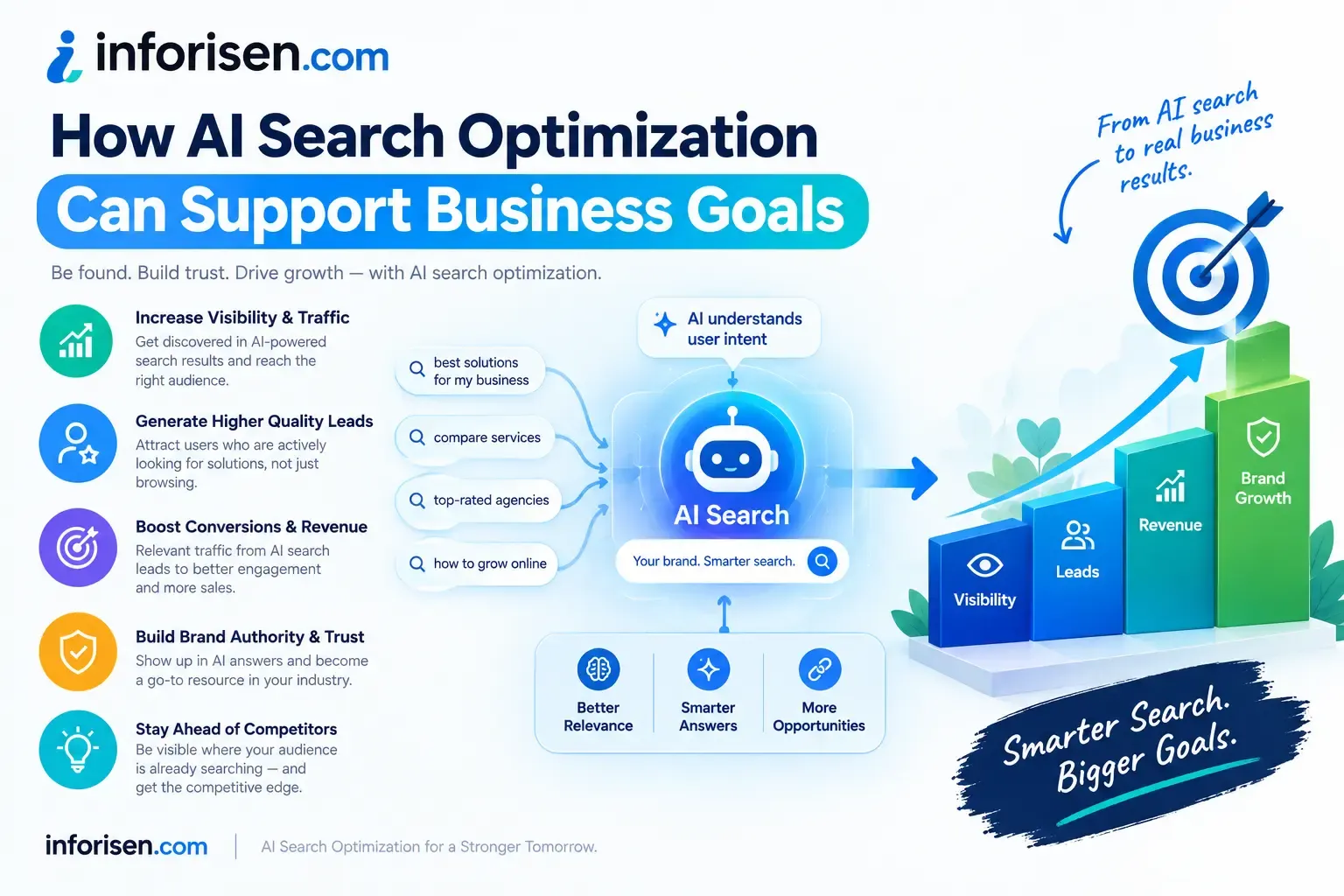
AI visibility is interesting, but businesses ultimately care about business outcomes.
So the question should not be:
“How many times did AI mention us?”
The better question is:
“Did better AI visibility help more relevant people discover and consider our business?”
Metrics will vary by business, but useful indicators can include AI mentions, citations, branded searches, referral traffic, organic conversions, qualified leads, and assisted conversions.
The goal is to connect AI visibility with measurable business value rather than chasing mentions simply because they look impressive.
AI Search Optimization Should Be Part of Your Content Strategy
A business does not need to publish hundreds of AI-focused articles. In fact, publishing large amounts of repetitive content can create the opposite problem. The better approach is to identify the questions your customers actually ask and build useful resources around them.
Answer the Question Quickly
If someone asks:
“How much does website development cost?” do not spend 500 words talking about why websites are important before answering. Give the reader a clear answer first.
Then explain the factors that influence the cost. That structure works for people and makes individual sections easier for search systems to interpret.
Add Depth After the Direct Answer
Direct answers do not mean shallow content. After answering the question, explain:
- Why does the answer vary?
- What factors influence it?
- What should a buyer consider?
- What mistakes should they avoid?
- What should they do next?
This combination of direct answers and supporting depth is useful for both informational visitors and AI-assisted discovery.
Inforisen's How to Improve Website SEO also covers clear headings, direct answers, internal linking, crawlable content, and AI-search-friendly content structure.
What Technical SEO Has to Do With AI Search
It is easy to focus on content and forget the website itself.
But if search systems cannot properly discover, crawl, understand, or index important content, your beautifully written article has a problem.
Keep Important Content Crawlable
Your important information should exist in accessible HTML content rather than being hidden only inside images, inaccessible scripts, or difficult interactive elements.
Clear navigation also helps users and crawlers discover related pages.
Improve Website Structure and Performance
Technical SEO can include:
- Crawlability
- Indexation
- Site architecture
- Internal links
- Mobile usability
- Page performance
- Canonicalization
- Broken links
- Structured data where appropriate
- Secure website infrastructure
Inforisen's Website Design & Development Services can also be relevant when the website itself needs structural, usability, or development improvements alongside SEO.
How Inforisen Can Help With AI Search Optimization
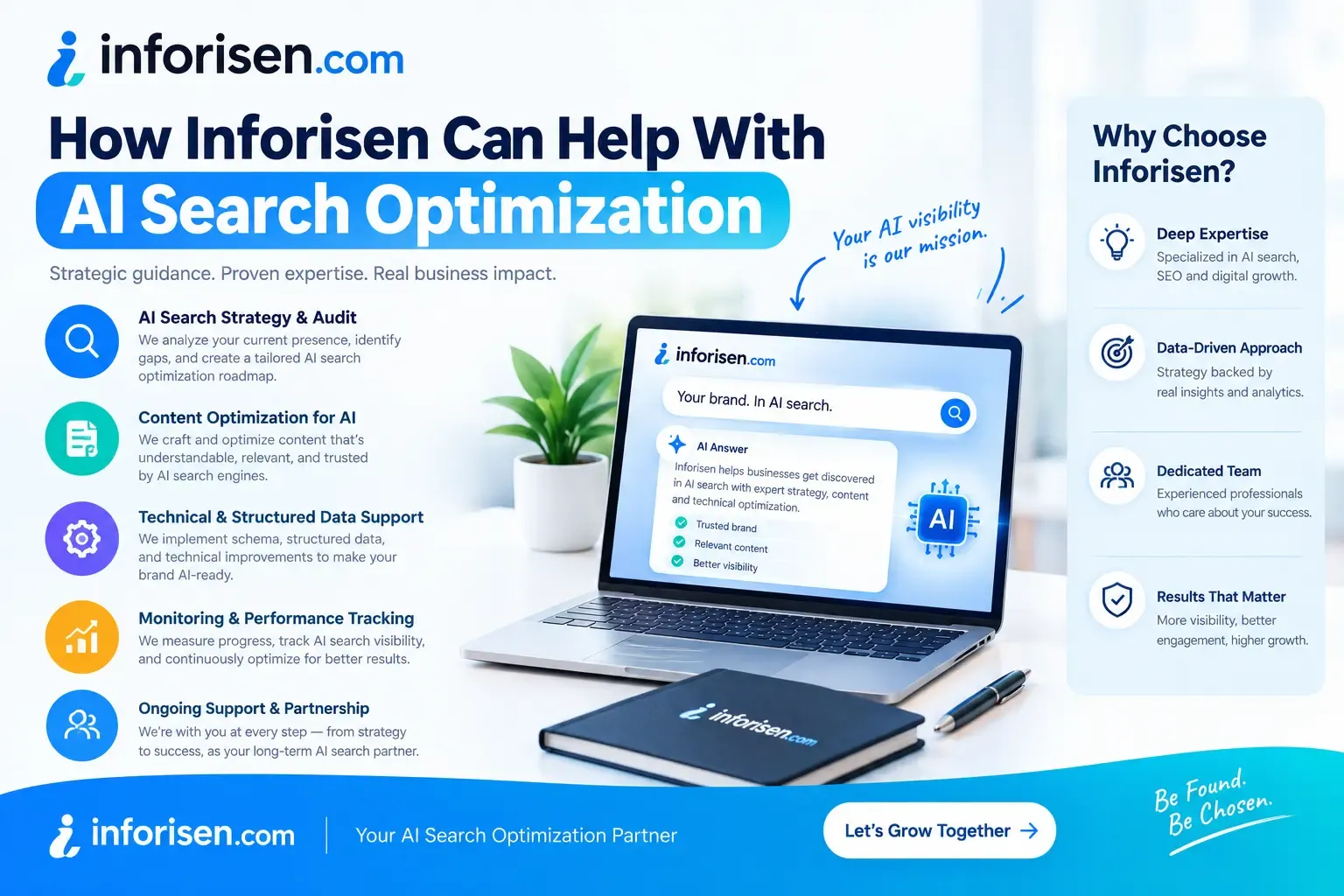
This is where AI search optimization becomes much more than simply adding the words “AI SEO” to a service page.
A business needs to understand how its website, content, technical structure, services, brand information, and authority signals work together.
That is the kind of broader search problem Inforisen can help businesses address. Inforisen's AI SEO Services focus on semantic search, intent-based queries, and emerging AI-driven search experiences. The service sits within Inforisen's wider SEO approach rather than treating AI visibility as an isolated shortcut.
Start With the Existing Search Foundation
Before thinking about AI visibility, Inforisen can look at the foundation.
- What pages already exist?
- Which services are important to the business?
- What are customers searching for?
- Which topics are missing?
- Are important pages technically accessible?
- Are related pages properly connected?
- Does the content clearly communicate the company's expertise?
These questions help identify where the real opportunities are.
Build Content Around Search Intent and Business Expertise
AI search optimization should not mean creating generic content designed to sound “AI-friendly.”
The stronger approach is to create useful content around the questions, problems, comparisons, and decisions that matter to potential customers.
That can include:
- Informational content for early research.
- Commercial content for people comparing solutions.
- Service pages for high-intent searches.
- Supporting guides that demonstrate expertise.
- FAQs that answer specific customer questions.
Comparison and decision content for users closer to making a purchase.
These pages can then be connected through a logical internal-linking structure.
Connect SEO, AEO, GEO, and the Website
Inforisen can also approach AI search as part of the broader digital ecosystem.
- Your SEO strategy affects content.
- Content affects internal linking.
- Internal linking affects site structure.
- Website structure affects discoverability.
- Service pages affect conversions.
- Brand information affects how clearly your business can be understood.
And all of these pieces contribute to how your online presence communicates what your company does.
Inforisen already provides SEO Services, AI & Automation Solutions, Website Design & Development, and other digital services, allowing businesses to address search visibility alongside broader website and technology needs.
Turn AI Visibility Into a Long-Term Search Strategy
The goal should not be to chase every new AI platform.
Instead, build a website that consistently communicates:
- Who your business is.
- What you know.
- What you offer.
- Who you help.
- Why your information is useful.
- Where customers can learn more.
That foundation can continue supporting traditional search while also preparing your business for AI-assisted discovery.
Common AI Search Optimization Mistakes
AI search is still evolving, which makes it easy for businesses to fall for exaggerated promises.
Treating GEO as a Magic Ranking Trick
There is no simple button that guarantees your company will be recommended by ChatGPT, Gemini, Perplexity, or another AI system.
AI-generated answers can change depending on the query, platform, context, sources, and other factors.
A serious strategy should focus on improving the underlying information and authority of the business rather than promising guaranteed mentions.
Creating Content Only for AI
If an article sounds unnatural to a human reader, it has missed the point.
Your content should answer real questions clearly and provide useful information.
AI search visibility should be a consequence of creating strong digital resources, not an excuse to produce machine-focused content nobody enjoys reading.
Ignoring Traditional SEO
Another common mistake is thinking that AI search means keywords, technical SEO, internal links, and website structure no longer matter.
Current search guidance points in the opposite direction: strong SEO fundamentals continue to support AI-powered search experiences.
Is AI Search Optimization Worth the Investment?
For businesses whose customers increasingly research products, services, or providers through AI-powered search, AI visibility is becoming a reasonable part of a broader search strategy.
But the investment should be approached realistically.
You should not invest simply because the term “AI search” sounds new.
Look at your actual market.
Ask:
- Are my customers using AI to research solutions?
- Are competitors already appearing in AI-generated answers?
- Does my website clearly explain what we do?
- Do we have strong content around the questions customers ask?
- Can search systems easily crawl and understand our website?
- Can we measure whether improved visibility contributes to business outcomes?
If the answers reveal gaps, AI search optimization can become a practical extension of your existing SEO strategy.
Final Words
Search is changing. People are no longer relying exclusively on traditional search-result pages to discover information, compare businesses, and research solutions.
AI-powered search experiences are becoming another part of that journey. That does not mean businesses should abandon traditional SEO. Quite the opposite.
The businesses that prepare well are likely to be the ones that understand the connection between technical SEO, useful content, search intent, topical authority, internal linking, brand clarity, and AI search visibility.
So, why should businesses invest in AI search optimization?
Because being visible is no longer only about where your website appears in a list of search results.
It is also about whether your business can be understood, referenced, and discovered when customers ask questions through AI-powered search experiences.
And that starts with something much more fundamental than an AI trick:
Build a website that clearly explains who you are, what you know, what you offer, and why customers should trust the information you provide.
Frequently Asked Questions
What is AI search optimization?
AI search optimization is the process of improving a business's website, content, technical foundation, and online presence so AI-powered search systems can better understand and potentially reference the business when answering relevant questions.
Why should businesses invest in AI search optimization?
Businesses can invest in AI search optimization to prepare for changing search behavior, improve how clearly their brand and expertise are represented online, strengthen content and technical foundations, and create more opportunities to be discovered during AI-assisted research.
Is AI search optimization the same as SEO?
Not exactly. AI search optimization overlaps heavily with SEO but places additional attention on how AI systems understand, extract, connect, and potentially reference information about a business. Strong traditional SEO remains an important foundation for AI search visibility.
What are AEO and GEO?
AEO stands for Answer Engine Optimization and generally focuses on making content suitable for direct-answer experiences. GEO stands for Generative Engine Optimization and generally refers to improving visibility within generative AI answers. The terminology varies across the industry, and the underlying practices overlap significantly.
Does AI search optimization replace traditional SEO?
No. Businesses should continue investing in technical SEO, useful content, internal linking, search intent, website accessibility, and authority. These fundamentals also support AI-powered search experiences.
Can AI search optimization guarantee that ChatGPT will mention my business?
No. No legitimate optimization strategy can guarantee that a particular AI system will mention or recommend a business for every query. AI responses can vary by platform, query, context, sources, and other factors.
What type of content works well for AI search?
Useful question-focused content, clear explanations, direct answers, original insights, strong topical coverage, descriptive headings, and logically connected pages can make information easier for users and search systems to understand.
How can businesses measure AI search optimization?
Possible metrics include AI brand mentions, citations, branded searches, AI-referred traffic where measurable, organic traffic, qualified leads, conversions, and assisted conversions. The right metrics depend on the business model and the available tracking data.
Does Inforisen provide AI SEO services?
Yes. Inforisen offers AI SEO Services focused on semantic search, intent-based queries, and emerging AI-driven search experiences as part of its broader SEO offering.
.webp&w=3840&q=75)

.webp&w=3840&q=75)