ByArian MahmudReviewed by:Shuman Chandra Das
Human WrittenHow to Find Keyword Gaps Between Your Website and Competitors
Learn how to find keyword gaps between your website and competitors. This guide covers competitor research, free and paid tools, search intent, and a simple way to prioritize keywords so you can create content that brings more traffic and leads.
Do your competitors show up on Google for searches where your website is missing? Then you may have keyword gaps.
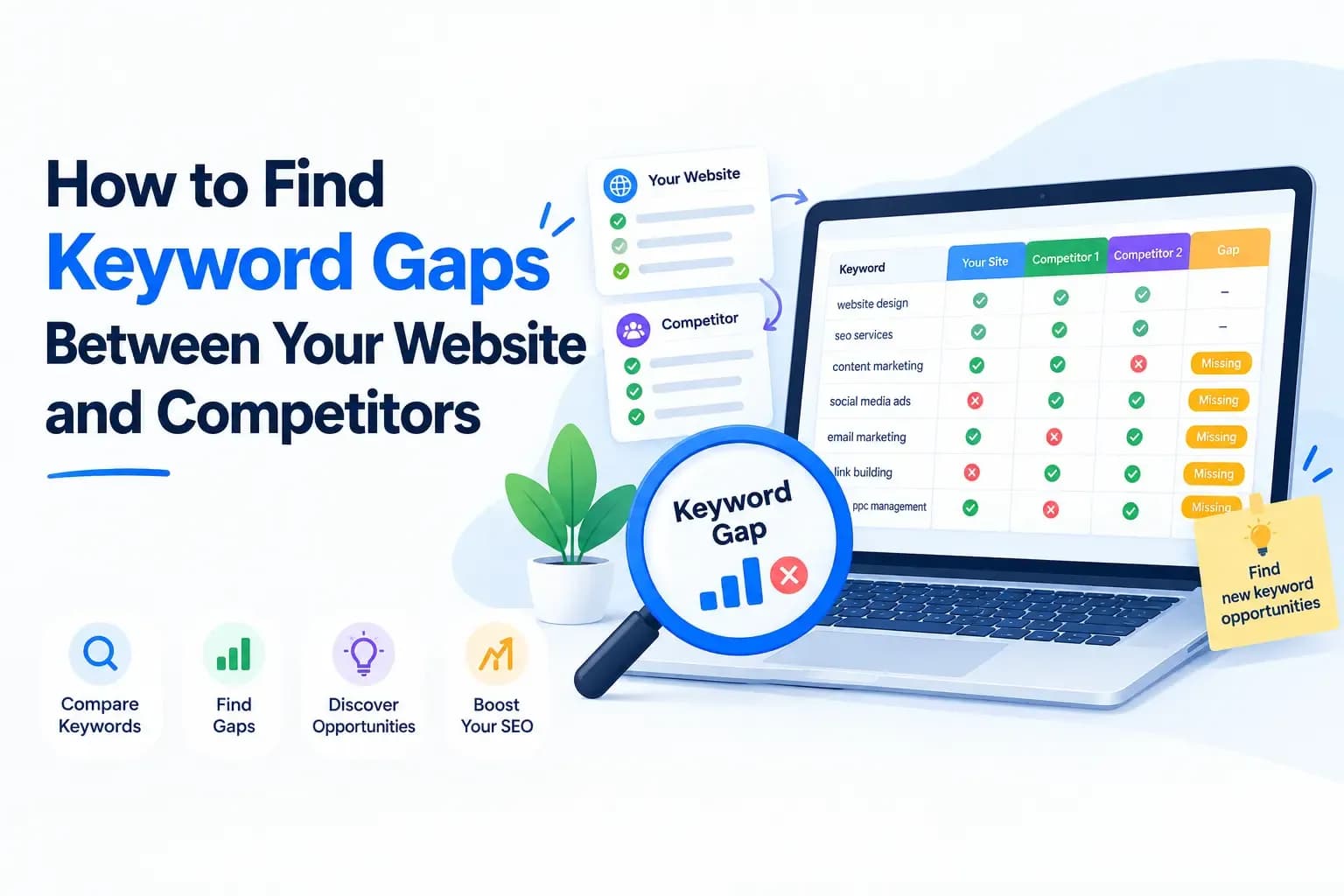
A keyword gap is a search term that your competitors rank for, but you do not. Finding these gaps shows you what your customers are searching for and what content you still need to create.
In this guide, you will learn 8 simple steps to find keyword gaps, the best tools to use, and how to decide which keywords to target first.
What Is a Keyword Gap and Why Does It Matter?
A keyword gap analysis compares the keywords your website ranks for with the keywords your competitors rank for. The difference between the two lists is your gap.
Gaps usually fall into a few types:
- Missing keywords: Competitors rank for them, but your site does not.
- Weak keywords: You rank, but far below your competitors.
- Shared keywords: Everyone ranks, but you can improve your position.
This matters because every gap is a missed chance to reach people who are ready to search, read, and buy. It also saves time. Instead of guessing what to write about, you can use real search data.
For a broader approach to identifying opportunities and organizing SEO activities, read our guide on how to develop an SEO strategy.
How to Find Keyword Gaps: 8 Simple Steps
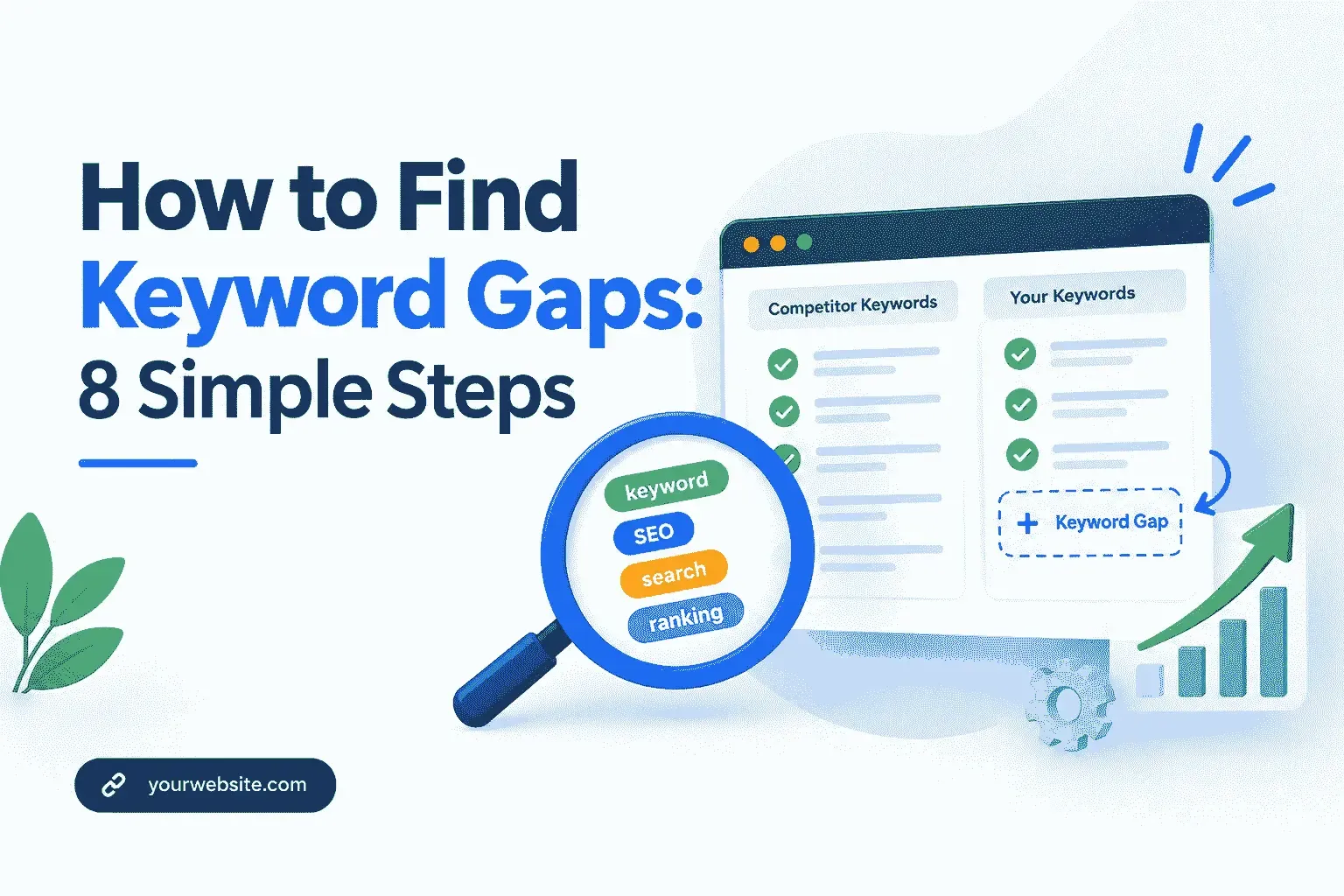
Follow these steps in order. Each step shows what to do and how to use the result.
1. Pick the Right Competitors
Your real search competitors may not be the same as your business competitors. A blog or a directory can outrank you on Google even if it does not sell what you sell.
How to Find Them: Search your main keywords on Google and note which websites appear again and again. Your SEO tool can also show a list of organic competitors.
How to Use It: Pick 3 to 5 competitors. Include a mix of direct competitors and websites that rank for your topics. Skip huge brands that are too far ahead of your site.
2. Make a List of Your Current Keywords
You need to know where you stand before you compare.
How to Find Them: Open Google Search Console and go to Performance → Search results. Export your queries, clicks, impressions, and average position.
How to Use It: Save the list in a spreadsheet. Mark which keywords already bring clicks and which ones have many impressions but few clicks. These are quick wins.
3. Run a Keyword Gap Report
This is the main step. Add your site and your competitors to a keyword gap tool. The tool will show keywords that competitors rank for and you do not.
How to Find Them: Use the Keyword Gap tool in Semrush or the Content Gap tool in Ahrefs. Enter your domain and 3 to 5 competitor domains.
How to Use It: Start with keywords that two or more competitors rank for. If several sites rank for a term, it may indicate a useful opportunity. Export the full list.
4. Remove Keywords That Do Not Fit Your Business
Not every gap is worth filling. Some keywords have nothing to do with what you offer.
How to Check: Go through the list and remove keywords about services you do not provide, locations you do not serve, or brand names of other companies.
How to Use It: Keep only the keywords that match your products, services, and customers. A shorter and cleaner list is easier to act on.
5. Check Search Intent
Search intent means why a person is searching. Someone searching “keyword gap analysis tools” wants a list. Someone searching “what is a keyword gap” wants a simple answer.
How to Check: Search the keyword on Google and look at the top results. Are they blog posts, product pages, comparison lists, or videos?
How to Use It: Match your content to that format. If the top results are guides, write a guide. If they are service pages, create a service page. Writing the wrong type of page is a common reason content does not rank.
6. Look at Search Volume and Difficulty
Some keywords get many searches but are very hard to rank for. Others get fewer searches but are much easier.
How to Check: Review the search volume and keyword difficulty scores in your tool. Treat these scores as estimates, because every tool calculates them differently.
How to Use It: For a newer or smaller website, start with keywords that have lower difficulty and clear intent. You can go after harder keywords later, once your site has built more authority.
For more guidance on selecting relevant search terms, read our article on how important keywords are in SEO.
7. Study the Competitor Pages That Rank
Do not just copy the keyword. Look at the page that ranks for it.
How to Check: Open the top competitor pages. Note their headings, topics covered, length, examples, images, and FAQs.
How to Use It: Find what is missing. Can you add a clearer example, newer facts, a table, or a better explanation? Your goal is to create something more helpful, not a copy.
8. Group Keywords into Topics and Build a Content Plan
Do not create one page for every keyword. Many similar keywords can be covered by one strong page.
How to Check: Group keywords that share the same meaning and intent. For example, “keyword gap analysis” and “how to do a keyword gap analysis” can go on one page.
How to Use It: Create a simple content calendar. Add the target keyword, page type, priority, and owner. Also check if an old page on your site can be updated instead of writing a new one.
A structured content plan is an important part of improving website SEO.
Best Tools to Find Keyword Gaps
You do not need every tool. Start with one or two and add more as you grow. Free plans often have limits, so check what is included.
Google Search Console shows what you already rank for. Semrush and Ahrefs show what your competitors rank for. A spreadsheet helps you clean the data and plan your next steps.
How to Prioritize Keyword Gaps
A gap report can show hundreds or thousands of keywords. You cannot target them all at once. Start with the ones that can bring the most value with the least effort.
Pick your top 10 keywords first. Create or update the pages, then watch your results in Google Search Console. Check your rankings, clicks, and impressions after a few weeks and adjust your plan.
Keep in mind that SEO takes time. A new page may not rank right away, and rankings are never guaranteed.
How Inforisen Helps You Find and Fix Keyword Gaps
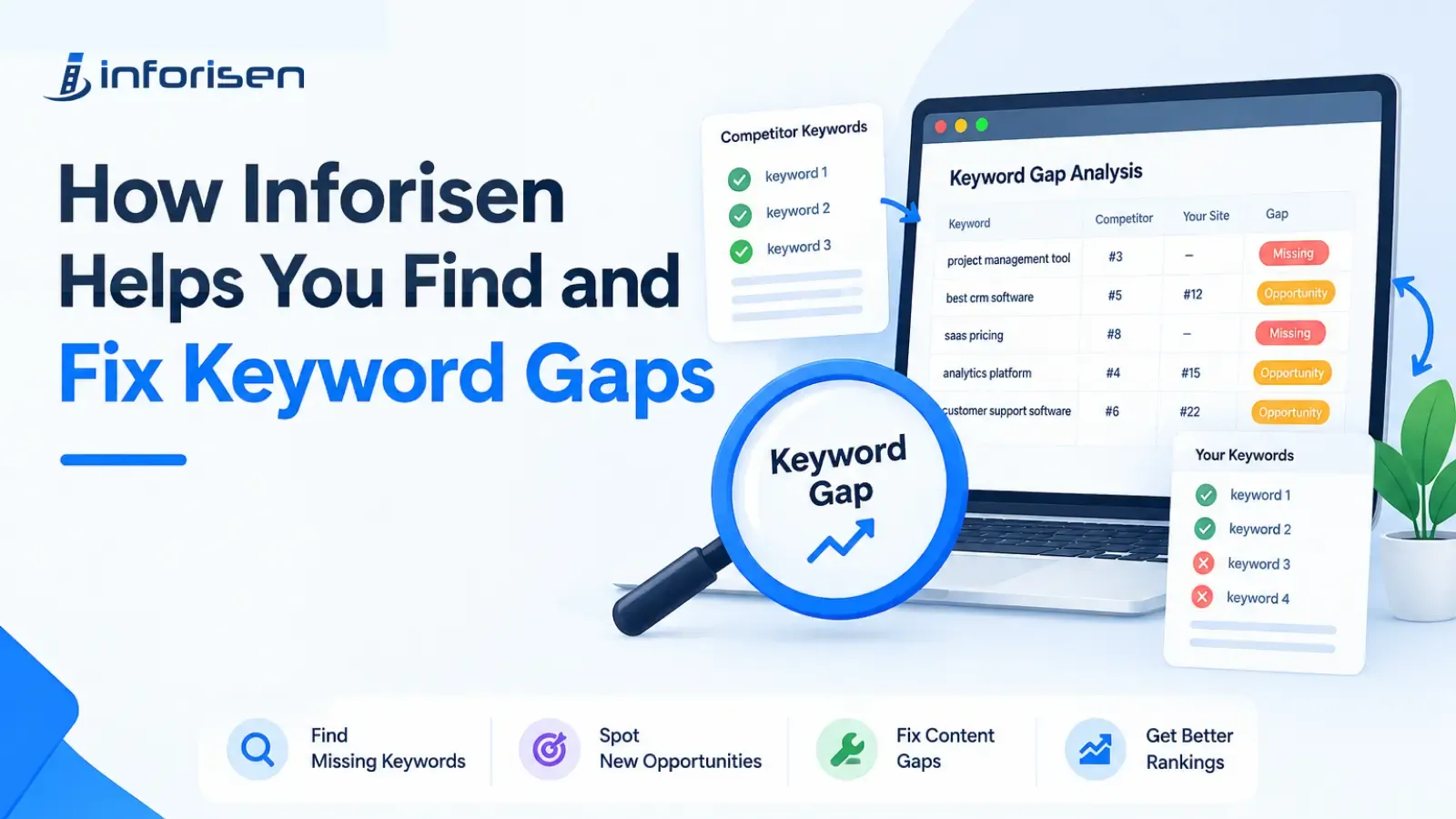
Finding keyword gaps is the first step. Turning them into content that ranks takes planning, research, and good writing.
At Inforisen, we help businesses research competitors, find useful keywords, and plan content that matches what their customers search for. Our SEO services include keyword research, content planning, on-page optimization, and technical SEO support.
Whether you run a new website or an older one, we can help you see where you are losing visibility and what to do next.
Frequently Asked Questions
1. What Is Keyword Gap Analysis?
It is the process of comparing your website’s keywords with your competitors’ keywords. It helps you find search terms that they rank for and you do not.
2. How Often Should I Do a Keyword Gap Analysis?
Every three to six months is a good start. Do it again when you launch new services, enter a new market, or see a drop in traffic.
3. Can I Find Keyword Gaps for Free?
You can start with free tools like Google Search Console and Google Keyword Planner. They show your own data and keyword ideas. For a full competitor comparison, paid tools like Semrush or Ahrefs are more helpful, though some offer limited free access.
4. How Many Competitors Should I Compare?
Three to five is enough for most small businesses. Too many competitors can make the data messy and hard to use.
5. Should I Target Keywords with High Search Volume First?
Not always. High-volume keywords are often more competitive. Start with keywords that match your business, have clear intent, and are realistic for your website to rank for.
6. How Can Inforisen Help with Keyword Gaps?
Inforisen can help you research competitors, find keyword opportunities, and build a content plan based on your goals. Learn more about our SEO services.
Final Thoughts
Keyword gap analysis shows you what your competitors are doing well and where your website is missing out. It turns guesswork into a clear plan.
Start by choosing your competitors, then run a gap report, remove keywords that do not fit, check search intent, and group the rest into topics. Focus on a few strong pages instead of trying to cover everything.
Repeat this process every few months to stay ahead. If you need help with research or content strategy, Inforisen is ready to support you.