ByArian MahmudReviewed by:Shuman Chandra Das
Human WrittenHow Does Website Speed Affect Long-Tail Keyword Rankings?
Discover how website speed affects long-tail keyword rankings and SEO performance. Learn about Core Web Vitals, page speed testing, and practical optimization techniques to improve user experience.
Understanding how website speed affects long-tail keyword rankings helps you build a website that performs well for both search engines and visitors. Website speed can contribute to page experience, but it cannot guarantee higher Google rankings.
A fast website helps visitors access information and interact with pages more smoothly, while relevant content helps search engines understand whether a page answers a query.
For example, a page targeting “best web development company for small businesses” needs both useful information and reliable performance. This guide explains the connection between website speed and long-tail keyword rankings, the Core Web Vitals to monitor, and practical ways to improve website performance.
Understanding Website Speed and Long-Tail Keywords
Website speed describes how quickly a webpage loads and becomes usable, while long-tail keywords are specific search phrases that often reveal a clear user need. Understanding both helps website owners build pages that answer search queries and deliver a smooth browsing experience.
What Is Website Speed?
Website speed refers to how quickly content appears and how smoothly a visitor can interact with a webpage. It includes loading performance, responsiveness, and visual stability—not just the time it takes for the first element to appear.
Perceived speed describes how fast a page feels to a user. Measured performance uses metrics such as Largest Contentful Paint (LCP) and Interaction to Next Paint (INP) to assess the experience more objectively.
What Are Long-Tail Keywords?
Long-tail keywords are specific search phrases that target a narrower topic or need. Examples include “how to improve website speed on WordPress” and “affordable web development company for startups.”
These searches can reveal what a person wants to learn, compare, or purchase. A page that addresses the exact intent behind a query has a better chance of being relevant than one that only repeats the same keywords.
Why Are Website Speed and Long-Tail Keywords Important for SEO?
Long-tail keyword relevance helps search engines understand a page’s subject, while website performance supports a usable experience after someone clicks. Both matter, but they serve different purposes.
A fast page with weak content may not satisfy a search query. Likewise, useful content can lose visitors if the page is difficult to load or use. Effective SEO brings technical performance, search intent, and content quality together.
Does Website Speed Affect Long-Tail Keyword Rankings?
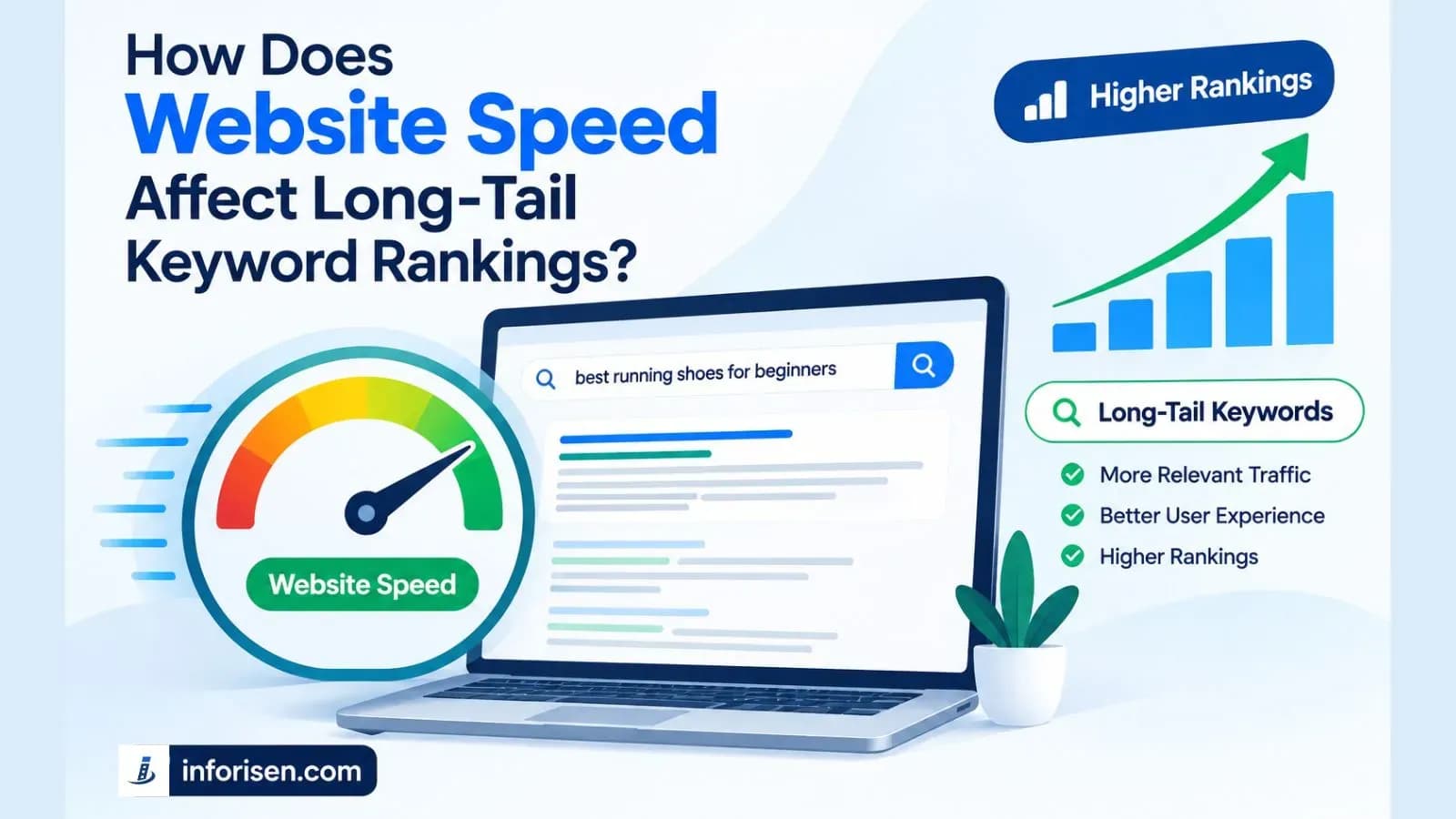
Yes, website speed can affect SEO through page experience, but it is not a standalone guarantee of higher long-tail keyword rankings. Google uses Core Web Vitals as part of its page-experience considerations within its broader ranking systems. However, there is no separate speed-ranking rule specifically for long-tail keywords.
Google aims to present relevant, useful results. A page that answers a specific query accurately may still compete in search results even if its performance is imperfect. Improving speed is worthwhile, but it should complement—not replace—useful content, search intent, crawlability, and other SEO fundamentals.
How Does Website Speed Influence SEO Performance?
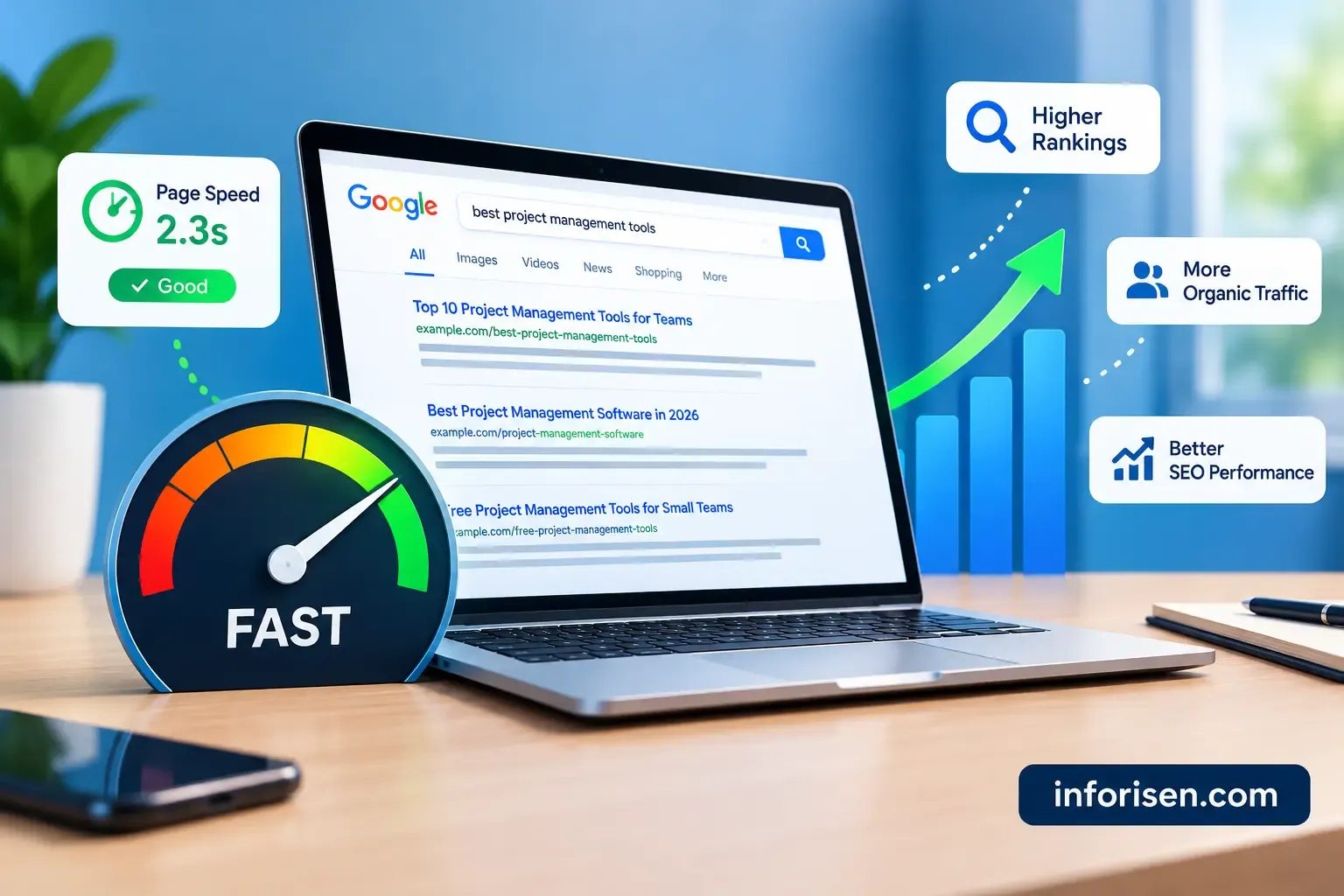
Website speed affects how easily visitors can access and use content. Its SEO value comes from supporting a better page experience rather than automatically moving a page to the top of search results.
Website Speed and Core Web Vitals
Core Web Vitals measure three aspects of user experience: loading performance, responsiveness, and visual stability. Google recommends achieving good results for these metrics because they align with the experience its ranking systems seek to reward.
A strong score does not guarantee a ranking improvement. It helps identify technical problems that may make a page less comfortable to use.
Slow Loading Times and User Experience
Slow pages can frustrate visitors, delay access to important information, and make forms or navigation feel unresponsive. Some users may leave before completing their intended action.
For a page targeting a high-intent search such as “hire a web developer for an ecommerce website,” these delays can create unnecessary friction. Improving speed can make the journey from search result to inquiry smoother, although actual conversions also depend on the offer, trust, content, and design.
Mobile Website Speed and Search Performance
Mobile performance matters because many people browse websites on smartphones, often with varying network conditions. A page that works well on a desktop may still feel slow or difficult to use on a smaller screen.
Test mobile layouts, image sizes, navigation, buttons, and forms. Google also uses the mobile version of a website’s content for indexing, so important information and functionality should remain accessible across devices.
What Are the Core Web Vitals That Affect Website Performance?
Google's Core Web Vitals measure loading, responsiveness, and visual stability. The recommended “good” thresholds are LCP within 2.5 seconds, INP below 200 milliseconds, and CLS below 0.1, assessed at the 75th percentile of page visits.
These targets come from Google's Core Web Vitals documentation.
Largest Contentful Paint (LCP)
LCP measures how quickly the largest visible content element—such as a main image or heading block—appears. A slow LCP may result from large images, slow server responses, or resources that delay rendering.
Prioritize the main content, optimize its delivery, and investigate the causes of long loading times.
Interaction to Next Paint (INP)
INP measures how quickly a page responds visually to user interactions, such as clicking a button or opening a menu. Heavy JavaScript and long-running tasks can make a website feel unresponsive.
Reducing unnecessary scripts and improving how interactive tasks are handled can help.
Cumulative Layout Shift (CLS)
CLS measures unexpected movement of visible elements during loading. For example, an image without reserved dimensions may push a paragraph down after the visitor starts reading.
Set image and video dimensions, reserve space for dynamic elements, and avoid inserting content above existing text unexpectedly.
Why Website Speed Matters for Long-Tail Keywords
Website speed supports the experience people have after clicking a search result. For long-tail queries, that means helping visitors reach a specific answer, compare options, or complete an intended action without unnecessary delays.
Better Page Experience for Specific Search Queries
Someone searching “how to fix a slow WordPress website” expects clear troubleshooting steps. If the page takes too long to load or its layout keeps shifting, accessing those instructions becomes harder.
A stable, responsive page helps visitors focus on the answer.
Helping Visitors Access Relevant Content Faster
Relevant content should be easy to find and use. Clear headings, descriptive navigation, optimized images, and responsive layouts help visitors reach the information they need without unnecessary friction.
These improvements support usability; they do not replace the need to answer the search query accurately.
Supporting Conversions From High-Intent Long-Tail Traffic
Long-tail searches can indicate a specific goal, such as comparing service providers or requesting a quote. A smoother page experience may make it easier to review service details, complete a form, or contact a business.
Track conversions alongside speed metrics to understand whether improvements are helping visitors complete meaningful actions.
How Can the Right Web Development Company Improve Website Speed?
A web development company can identify technical bottlenecks, implement suitable fixes, and test the results across devices. The right approach begins with diagnosis rather than applying the same speed checklist to every website.
Professional support can be particularly useful when performance issues involve code, server configuration, third-party integrations, or a complex content management system.
Technical SEO Audits and Performance Testing
A technical audit helps identify problems that may slow down pages or prevent important content from working correctly. Developers can use PageSpeed Insights, Google Search Console, browser developer tools, and server logs where appropriate.
An effective audit should prioritize:
- Slow-loading, high-value landing pages.
- Render-blocking scripts and stylesheets.
- Large images and unnecessary requests.
- Server response issues and technical errors.
- Performance differences between mobile and desktop.
Website Speed Optimization and Core Web Vitals
The best fix depends on the cause of the problem. Image compression may help LCP, reducing main-thread work may improve INP, and reserving space for page elements may improve CLS.
Developers should measure performance before and after changes. This confirms whether an update solves the original issue or creates new problems elsewhere.
Mobile-Friendly and SEO-Friendly Web Development
Responsive development helps pages adapt to different screen sizes while keeping important content and functionality accessible. SEO-friendly development also supports crawlable links, sensible page structure, and efficient resource delivery.
For businesses planning a new website or rebuilding an existing one, Inforisen's website design and development services cover responsive layouts, custom development, fast-loading pages, and SEO-friendly structure.
Inforisen: The Best Web Development Company for Website Speed Optimization
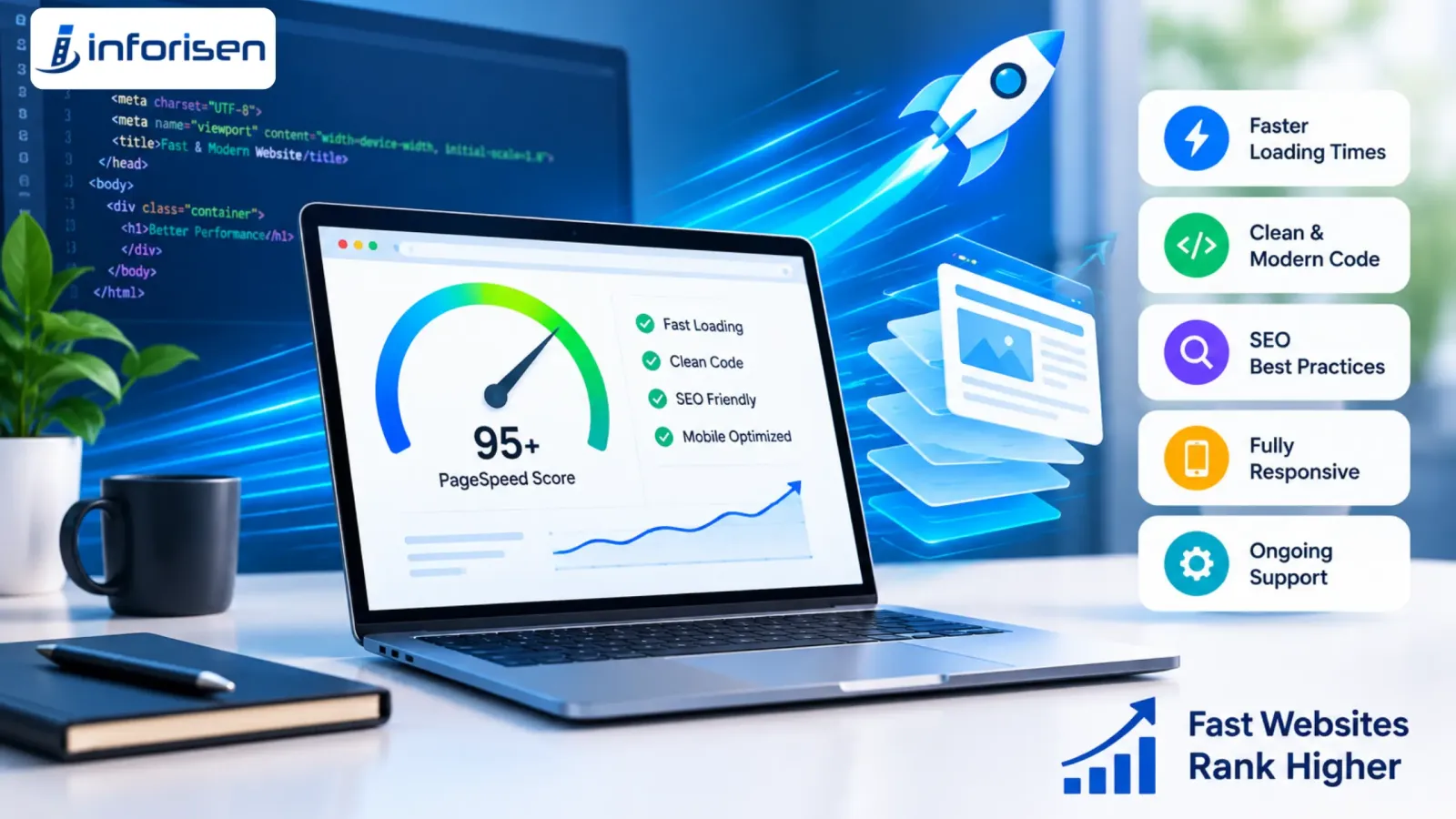
Choosing a web development company should depend on your project requirements, technical needs, communication, and evidence of relevant experience—not a ranking guarantee. Inforisen offers website design and development services for businesses that need responsive, functional websites with attention to performance and usability.
Before choosing a provider, identify the pages that matter most, document current performance issues, and ask how the proposed work will be tested. This makes it easier to compare providers and judge whether the solution fits your goals.
Website Development Solutions for Business Growth
A business website should help visitors understand your services and take the next step. Responsive design, clear navigation, and well-structured pages can support that goal while making the website easier to use.
Explore Inforisen's website development solutions to review its broader digital services and identify support relevant to your business needs.
Technical Improvements for Better Website Performance
Performance optimization should start with evidence. A development team can review page resources, code execution, image delivery, server response, and layout behavior before deciding which fixes deserve priority.
After implementation, compare the same performance metrics and test important user journeys. This helps verify technical improvements without assuming that a better score automatically produces higher rankings.
Get Professional Website Development Support From Inforisen
If your website has persistent loading issues, mobile usability problems, or technical limitations, professional development support may help identify the cause and plan suitable improvements.
Contact Inforisen to discuss your website requirements, priority pages, and performance concerns. Ask for a clear scope of work, testing plan, and explanation of how results will be evaluated.
Frequently Asked Questions About Website Speed and Long-Tail Keywords
Does Website Speed Directly Affect Google Rankings?
Website speed can contribute to page experience, and Core Web Vitals are used within Google's broader ranking systems. However, speed alone does not determine rankings; relevance and content quality remain essential.
What Is a Good Website Loading Speed for SEO?
Aim for an LCP of 2.5 seconds or less, an INP below 200 milliseconds, and a CLS below 0.1. These Core Web Vitals thresholds are more useful than relying on one universal page-loading time.
Do Core Web Vitals Affect Long-Tail Keyword Rankings?
They can contribute to the page-experience signals considered by Google. They do not apply exclusively to long-tail queries, and good scores do not guarantee better positions.
Can Improving Page Speed Increase Organic Traffic?
It may support SEO performance and improve the experience of visitors arriving from search. Traffic also depends on content relevance, competition, indexing, search demand, and other ranking factors.
Does Mobile Page Speed Matter More Than Desktop Speed?
Mobile performance deserves particular attention because Google uses the mobile version of website content for indexing. Test both mobile and desktop experiences to identify device-specific issues.
Can a Slow Website Still Rank on Google's First Page?
Yes. A slow page can still rank when it provides a relevant, useful answer. However, avoidable performance problems can harm usability, so fixing them remains worthwhile.
Can a Web Development Company Help Improve Website Speed?
Yes. A qualified team can audit the website, diagnose code or server issues, optimize resources, and test Core Web Vitals. Ask for a clear process and measurable performance checks rather than guaranteed rankings.
Final Thoughts
Website speed supports a smoother user experience and can contribute to SEO, but it cannot replace relevant content or satisfy search intent on its own. To understand how website speed affects long-tail keyword rankings, monitor Core Web Vitals, test important landing pages, and prioritize fixes based on real performance data.
If technical problems require development expertise, consider professional help to improve the website's performance, usability, and structure. Explore Inforisen's web development services to discuss a solution suited to your website and business goals.



.webp&w=3840&q=75)