ByMd BaizidReviewed by:Yunus A. Polash
Human WrittenHow Much Does It Cost to Build a SaaS Product?
Find out how much it costs to build a SaaS product in 2026, including MVP, full-scale, enterprise, and AI-powered SaaS development costs, timelines, key cost factors, and ongoing expenses.
SaaS development cost can start at around $15,000 for a focused MVP, while a complex production platform can cost $150,000+. Enterprise SaaS products with advanced security, custom integrations, compliance requirements, AI, or high scalability can require significantly larger budgets.
The final cost depends on much more than simply calling something a “SaaS product.” Your features, target users, number of user roles, integrations, design requirements, technology stack, development team, and expected user volume can all change the budget.
If you are planning a SaaS product, the better question is not just how much development costs. It is how much you should invest for the type of SaaS you actually need to launch and grow. This guide breaks down SaaS development costs by product stage, development phase, features, hiring model, ongoing expenses, and more, so you can create a realistic budget before starting development.
How Is a SaaS Product Built, and What Affects Its Cost?
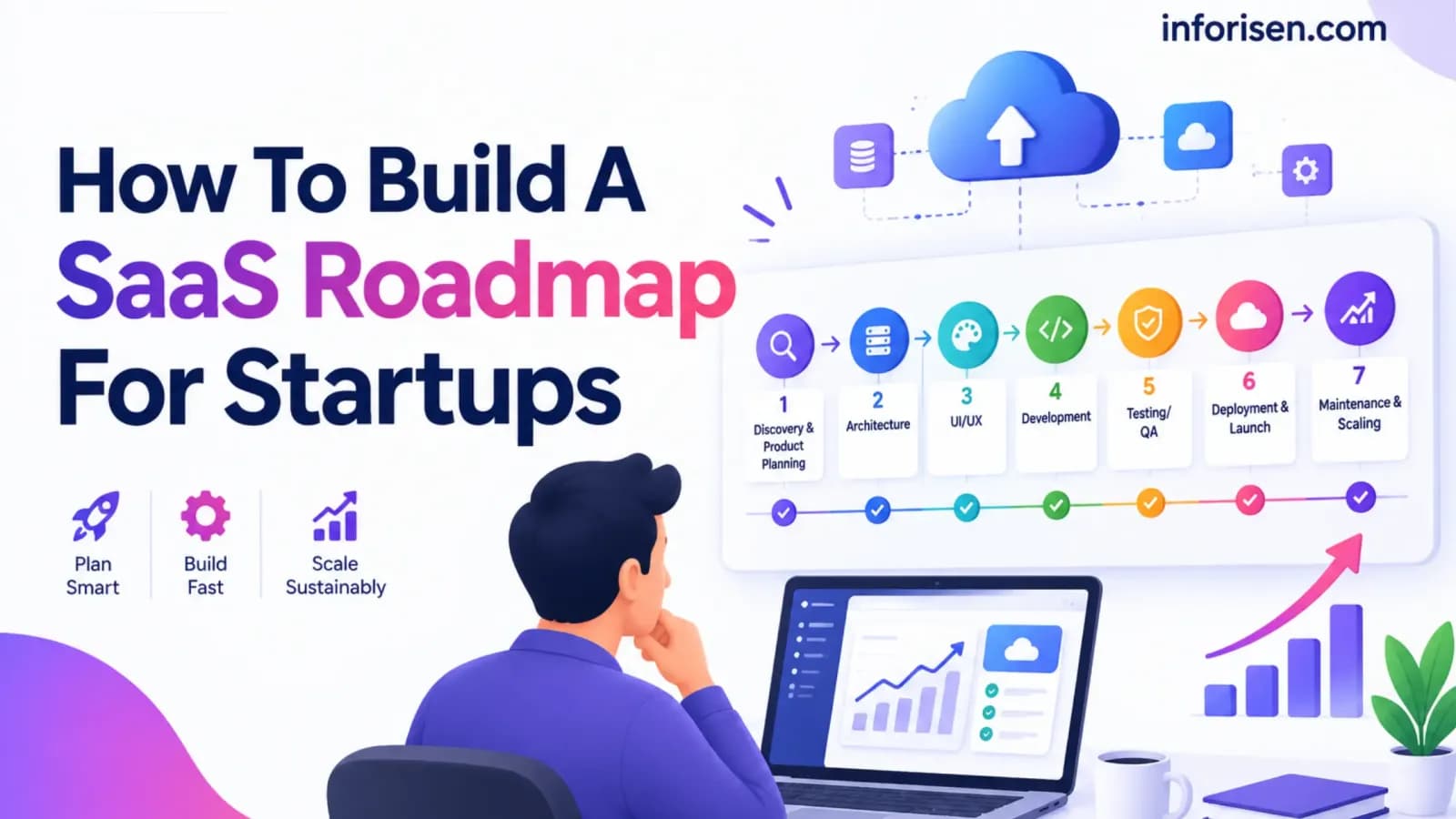
A SaaS (Software as a Service) product is software that users access online, usually through a subscription or usage-based model. To build one, you typically start by defining the customer problem and MVP, then move through UI/UX design, frontend and backend development, integrations, testing, and deployment.
The cost depends on the product’s complexity, features, integrations, user roles, security, and scalability. A focused SaaS MVP can cost around 15000 - 60,000, while a more complex or enterprise SaaS product can cost $150,000 or more.
SaaS Development Cost at a Glance
These are planning ranges rather than universal prices. Current 2026 estimates vary substantially because agencies and development teams use different assumptions about design, architecture, integrations, testing, and deployment.
What Does a Typical SaaS Development Budget Include?
A SaaS development budget normally covers more than writing code. It can include product discovery, technical planning, UI/UX design, frontend and backend development, database architecture, authentication, billing, integrations, testing, deployment, DevOps, and initial maintenance.
For example, a basic SaaS MVP might include:
- User registration and authentication
- User dashboard
- One core product workflow
- Subscription or payment functionality
- Admin functionality
- Database and API development
- Responsive UI
- Quality assurance
- Deployment and basic monitoring
The more production-ready the product needs to be, the more these supporting systems become part of the budget.
SaaS Development Cost by Product Stage

The stage of the product is one of the easiest ways to understand the difference between a $20,000 project and a $150,000 project. A small validation product does not need the same architecture, feature depth, integrations, or operational infrastructure as a mature SaaS platform.
Micro SaaS
A micro SaaS built around one narrow problem can often fall around 15,000–30,000 when the feature set is tightly controlled.
For example, a scheduling tool, simple calculator platform, reporting tool, or niche workflow application may only need authentication, one primary feature, a dashboard, payments, and basic administration.
The goal is usually to validate a business idea rather than build every feature users may eventually request.
SaaS MVP
A production-ready SaaS MVP can commonly fall around 15,000–60,000, depending on scope and development team. Some focused MVPs may land below this range, while multi-role products with integrations and complex billing can move higher.
A good MVP should allow a real customer to complete the core job the product promises. It does not need every feature planned for the next three years.
For many startups, this is the most sensible starting point because it limits upfront investment while producing something that can generate real user feedback.
Full SaaS Product
A more complete SaaS product commonly starts around $50,000 and can reach $150,000 or more when it includes multiple roles, advanced dashboards, integrations, billing, analytics, administration, and a stronger production architecture.
At this stage, the focus changes from simply proving the idea to creating a product that can support a growing customer base. A specialized SaaS product development service can help businesses plan this broader product around actual business requirements rather than simply adding more features.
Scaling an Existing SaaS Product
Scaling costs are difficult to predict from the original development price because the requirements change with actual usage.
You may need database optimization, caching, queue systems, better monitoring, infrastructure changes, security improvements, improved APIs, additional engineering capacity, and new features.
A product that worked well for 100 users may require a very different architecture at 10,000 or 100,000 active users.
How Much Does It Cost to Build a SaaS Product, Phase by Phase?
Breaking the project into phases makes a SaaS development quote easier to understand. Instead of looking at one large number, you can see how much is being allocated to discovery, design, development, testing, deployment, and ongoing support.
Product Discovery
Product discovery can cost roughly 3,000–8,000 for a focused discovery and design sprint, although complex products can require considerably more. The work may include requirements gathering, user flows, technical architecture, data modeling, product scope, and a clickable prototype.
This phase is valuable because unclear requirements are one of the easiest ways for development costs to increase later.
UI/UX Design
UI/UX design can range from roughly $5,000 to $30,000+, depending on the number of screens, user roles, workflows, design-system requirements, and level of research involved.
A SaaS product needs more than attractive screens. Users need clear onboarding, intuitive navigation, useful dashboards, understandable forms, and predictable workflows. If you are estimating the design portion separately, a dedicated UI/UX design service can cover the product experience before development begins.
MVP vs. Full SaaS Development
MVP development focuses on the smallest useful version of the product. Full SaaS development expands that foundation with additional features, integrations, roles, automation, analytics, administration, and scalability.
A focused MVP might sit around 15,000–60,000, while a broader production SaaS can reach 50,000–150,000+.
The important distinction is not simply how many features you have. It is how much engineering complexity those features introduce.
QA, DevOps, and Maintenance
Testing and infrastructure should not be treated as optional expenses at the end of development.
QA covers functional testing, usability issues, browser/device compatibility, regression testing, and sometimes automated testing. DevOps covers deployment, environments, monitoring, backups, infrastructure, and operational reliability.
After launch, maintenance commonly runs around 15%–25% of the original development cost per year, although products with demanding compliance, rapid releases, or high infrastructure needs can cost more.
What Makes a SaaS Product More Expensive to Build?
Two products can both be called “SaaS” while having completely different development budgets. The major difference usually comes from complexity rather than the label itself.
Product Complexity
A simple workflow with a few screens is much easier to build than a product with complex business rules, automation, data processing, reporting, permissions, and multiple workflows.
Every additional dependency creates more development and testing work.
Number of User Roles
A SaaS with only one type of user is relatively straightforward. Adding customers, administrators, managers, vendors, team members, moderators, or other roles introduces permission rules and different user journeys.
Role-based access control becomes particularly important when users can access sensitive information or perform different actions.
Custom Integrations
Integrations with CRMs, payment providers, accounting platforms, email systems, social networks, analytics tools, or external APIs can add significant development time.
The challenge is not only connecting an API. Developers also need to handle authentication, errors, webhooks, data synchronization, rate limits, retries, and changes made by the external provider.
Subscription Billing
Subscription billing can be more complicated than simply adding a “Pay” button.
A SaaS may need monthly and annual plans, trials, upgrades, downgrades, cancellations, coupons, invoices, failed payments, usage-based billing, taxes, refunds, and subscription status management.
Because billing directly affects revenue, it needs careful implementation and testing.
Mobile App Requirements
If customers need native iOS or Android applications alongside the web platform, the development scope increases.
You may need mobile-specific UI, authentication flows, push notifications, app-store requirements, device testing, API optimization, and ongoing mobile maintenance.
For SaaS products that also require dedicated mobile experiences, mobile app development can become a separate part of the overall product budget.
Security and Compliance
Security requirements become more demanding when your SaaS handles financial, medical, business, personal, or otherwise sensitive information.
Requirements may include encryption, audit logs, access controls, backups, secure authentication, vulnerability testing, data retention policies, and compliance-related work.
AI or Real-Time Functionality
AI features can add costs for model integration, prompt engineering, data pipelines, evaluation, monitoring, usage controls, and third-party API consumption.
Real-time functionality can also require WebSockets, event systems, background processing, notifications, synchronization, and additional infrastructure.
Scalability and Expected User Volume
A product designed for a few hundred users does not necessarily need the same infrastructure as one expected to serve millions.
If high traffic is expected early, developers may need to plan database performance, caching, load balancing, asynchronous processing, observability, and failure recovery from the beginning.
SaaS Development Cost by Feature
Feature-level estimates are useful for understanding why a quote changes when the scope changes.
These should not be treated as fixed feature prices. A basic dashboard and an advanced analytics dashboard can have completely different development requirements.
How Much Does Each SaaS Development Service Cost?
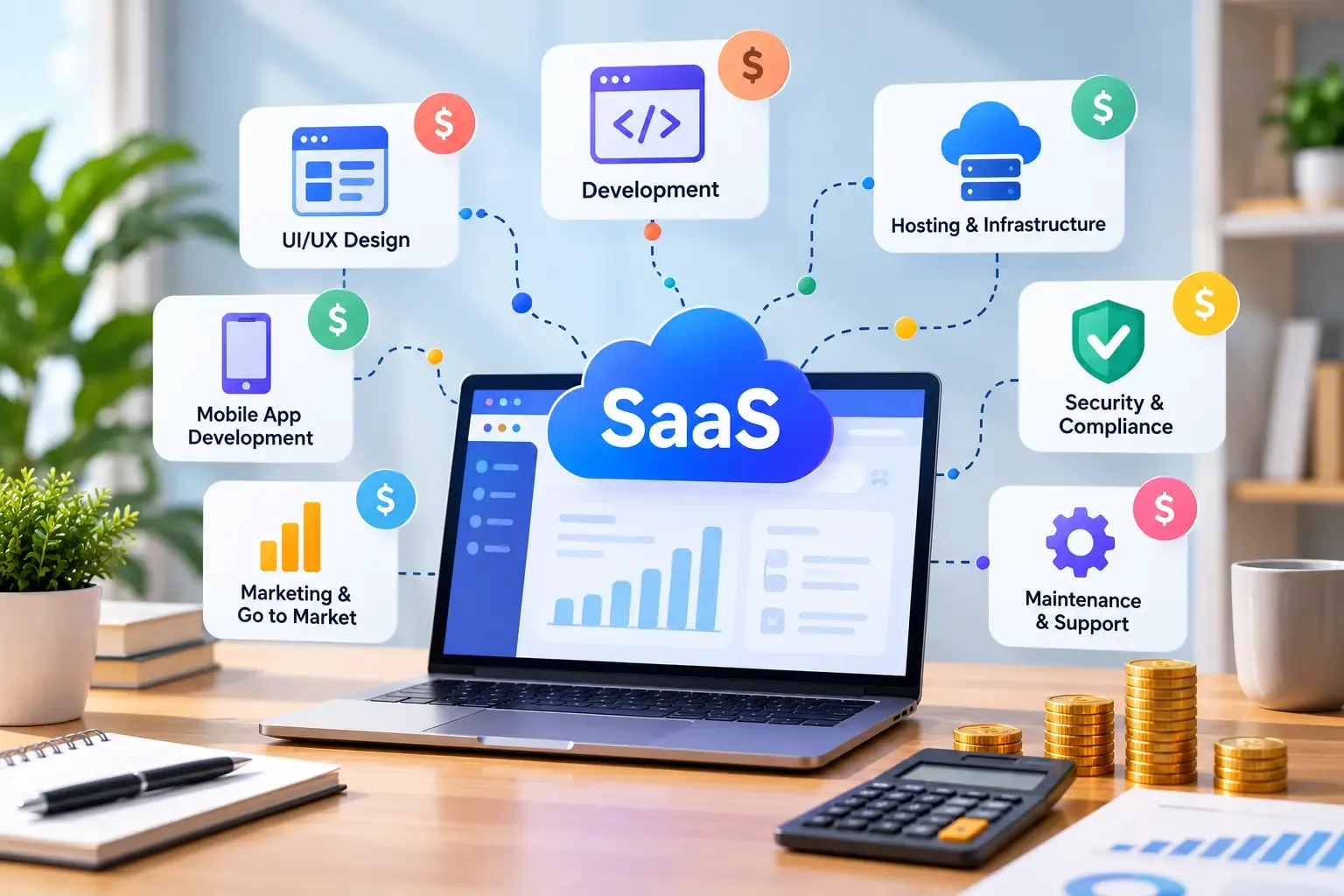
Instead of asking only for the total project price, ask how the development team is allocating the budget across major services.
Product Discovery and Planning
Budget around 3,000–8,000+ for a focused discovery process, depending on product complexity.
The goal is to turn an idea into a defined product scope with user flows, technical requirements, architecture considerations, and a development roadmap.
UI/UX Design
A SaaS UI/UX project may cost roughly 5,000–30,000+, depending on the number of screens and workflows.
Complex B2B SaaS products often require considerably more UX work because users may spend hours inside the application every week.
SaaS MVP Development
A focused SaaS MVP can commonly fall between $15,000 and $60,000. More complex MVPs can exceed that range when they include multiple roles, integrations, complex billing, AI, or compliance requirements.
Full Product Development
A market-ready SaaS product can commonly require 50,000–150,000+, with complex enterprise platforms moving substantially higher.
The final price depends heavily on whether you need advanced permissions, integrations, analytics, mobile apps, AI, enterprise security, or high-scale architecture. Businesses looking for a broader technical team can also explore software development services as part of their product development plan.
Quality Assurance and Testing
QA costs depend on the size and complexity of the SaaS product. Testing may include:
- Manual testing for core features and user flows
- Automated testing for repetitive and critical functions
- API testing to verify backend services and integrations
- Performance testing to check speed and stability under load
- Security testing to identify vulnerabilities and risks
- Regression testing to make sure new updates do not break existing features
- Continuous testing as part of the development and deployment process
A simple MVP may need only focused manual testing, while a mature SaaS product usually requires broader automated and continuous testing.
DevOps and Deployment
DevOps prepares the SaaS product for a reliable production environment. Depending on the architecture, the cost may include:
- Cloud infrastructure and server configuration
- CI/CD pipeline setup
- Database configuration and management
- Automated backups and recovery systems
- Application and server monitoring
- Logging and error tracking
- Security controls and access management
- Containerization when required
- Auto-scaling and infrastructure configuration
- Deployment automation
Maintenance and Support
Maintenance generally represents around 15%–25% of the original build cost annually as a broad planning rule.
For example, if your SaaS costs $60,000 to build, a rough annual maintenance budget could be 9,000–15,000 before considering unusually high infrastructure, support, or feature-development requirements.
SaaS Development Cost by Hiring Model
The same SaaS specification can receive very different quotes depending on who builds it. Team location, seniority, communication overhead, project management, and included services all affect the final price.
Freelancer
Freelancers can be cost-effective for focused SaaS products, especially when the scope is relatively simple and you have someone capable of managing the project.
The main limitation is that one person may not cover product management, UX, frontend, backend, QA, DevOps, and security equally well.
In-House Team
An in-house team provides greater direct control and can be a strong long-term choice for a company whose SaaS product is its core business.
However, salaries are only part of the cost. Recruitment, benefits, equipment, management, office expenses, software, training, and employee turnover also need to be considered.
Development Agency
An agency can provide several capabilities under one engagement, such as product management, UX/UI, frontend development, backend development, QA, and DevOps.
For businesses that prefer one team to handle the technical side of a product, an experienced software development team can reduce the need to coordinate multiple independent specialists.
Offshore or Nearshore Team
Offshore teams can reduce development costs because engineering rates are often lower in regions such as South Asia and Southeast Asia.
Nearshore teams can provide a middle ground when time zone overlap and communication are especially important.
The cheapest hourly rate is not automatically the cheapest project. Poor communication, weak architecture, or rework can eliminate the initial savings.
No-Code or Low-Code
No-code and low-code tools can reduce the cost of validating simple SaaS ideas.
They are especially useful when your product relies on standard workflows and integrations.
However, highly customized logic, complex performance requirements, unusual integrations, or long-term platform flexibility may eventually require custom development.
How Much Does It Cost to Start a SaaS Company?
Starting a SaaS company costs more than developing the application itself. You may need to budget for product development, branding, domain and software tools, legal or business setup, hosting, payment processing, analytics, customer support, marketing, and future product development.
For a bootstrapped founder, a focused launch can potentially begin around 25,000–60,000, while companies building a broader product and team from the beginning may require $100,000 or considerably more.
The smartest approach is to separate the product launch budget from the business runway. Having enough money to build the product does not necessarily mean having enough money to acquire customers and operate the company afterward.
What Are the Ongoing Costs After Launch?
A SaaS product continues to consume resources after the initial development project is finished. You need to keep the application secure, available, updated, monitored, and useful to customers.
Software Maintenance
Maintenance includes bug fixes, dependency updates, security patches, browser compatibility, database maintenance, and technical improvements.
A reasonable initial planning figure is 15%–25% of the original build cost per year, with more demanding products potentially requiring a larger budget.
Cloud Hosting
Early SaaS infrastructure can be surprisingly affordable, particularly when usage is low and modern managed services are used. For example, some common managed SaaS infrastructure plans start at tens of dollars per month, while total infrastructure rises with traffic, storage, database usage, bandwidth, and other services.
Your actual hosting bill depends on usage rather than simply the number of features.
Monitoring, Tools, and Security
You may need monitoring, error tracking, log management, email delivery, backups, analytics, security tools, CI/CD services, and other developer tools.
Each individual service may look inexpensive, but the combined monthly cost becomes meaningful as the product grows.
New Features and Customer Support
Maintenance keeps the existing product working. Product development keeps the business competitive.
Customer requests often lead to new features, improved workflows, integrations, reporting, automation, and usability improvements. You may also need customer support staff or engineering time for technical support.
Hidden SaaS Development Costs
The initial quote does not always reveal the full cost of building and running a SaaS product.
Commonly overlooked expenses include:
- Requirement changes after development begins
- Additional user roles
- API usage fees
- Payment-processing costs
- Email and notification services
- Cloud storage and bandwidth
- Security improvements
- Data migration
- Backup systems
- Monitoring and logging
- App-store fees for mobile products
- Third-party software subscriptions
- Compliance work
- Technical debt
- Post-launch bug fixing
- Customer support
- New features requested after launch
This is why a development estimate should be viewed as a scope-based projection rather than a guaranteed lifetime cost.
Why Can Two SaaS Development Companies Give Very Different Quotes?
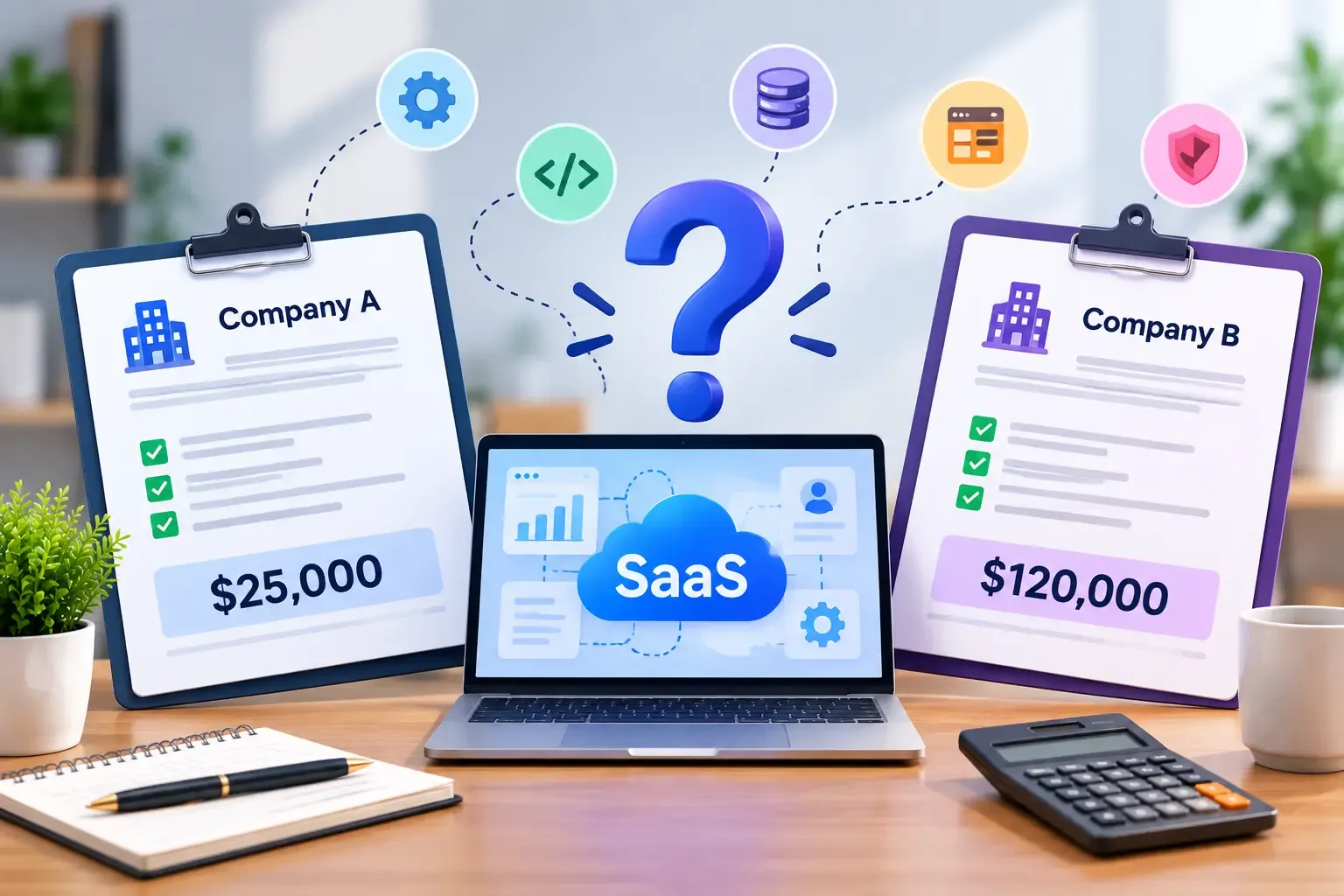
Two companies can receive exactly the same idea and still provide dramatically different estimates. One team may assume a basic dashboard, standard authentication, and a simple payment integration. Another may include advanced role permissions, automated testing, scalable infrastructure, detailed UX, analytics, security hardening, and documentation.
Their hourly rates may also differ substantially by location and seniority. When comparing quotes, compare scope, deliverables, technology, team composition, timeline, QA, deployment, support, and ownership rather than comparing the final number alone.
What’s Included in These Cost Estimates?
The ranges in this guide assume a professionally developed SaaS product rather than a simple landing page or prototype.
Depending on the project, an estimate may include:
- Product planning
- UI/UX design
- Frontend development
- Backend development
- Database development
- Authentication
- Core SaaS functionality
- Basic administration
- Payment or subscription integration
- API integrations
- Testing
- Deployment
- Basic DevOps
- Initial documentation
It does not automatically include marketing, customer acquisition, extensive post-launch support, major scope changes, third-party subscription fees, or ongoing feature development.
Always ask a development company to clearly define what is included before signing a contract.
How Much Does a SaaS Product Cost With AI Features?
A SaaS product with AI can start around $40,000 and move beyond $150,000, depending on whether AI is a small feature or a central part of the product.
Adding a simple AI API call to an existing workflow is very different from building an AI product that needs document processing, retrieval-augmented generation, custom models, real-time inference, large datasets, or sophisticated evaluation.
You should also budget for ongoing AI usage. Development cost and AI operating cost are separate expenses.
How to Reduce SaaS Development Costs Without Hurting Product Quality
Reducing SaaS development cost does not mean hiring the cheapest developer or removing essential testing. The better strategy is to reduce unnecessary scope while protecting the parts that affect product reliability and customer experience.
Start With a Focused MVP
Build the smallest version that solves the main customer problem.
If your SaaS idea has 20 planned features, you may only need three or four to validate the business model. A focused MVP reduces development time and gives you real customer feedback before you invest in the full roadmap.
Prioritize High-Value Features
Not every feature has the same business value.
Prioritize features that help customers reach the main outcome, generate revenue, reduce friction, or provide meaningful product differentiation.
A simple prioritization exercise can prevent months of development work on features customers rarely use.
Use Existing APIs and Integrations Where Practical
You do not need to build everything from scratch.
Payment providers, authentication services, email platforms, analytics tools, AI APIs, cloud services, and other established APIs can reduce development time when they fit your requirements.
The key is choosing integrations carefully so that you do not create unnecessary vendor dependency.
Choose the Right Development Team
The best team is not necessarily the cheapest team.
A developer who understands SaaS architecture, authentication, billing, APIs, databases, testing, and deployment can often prevent expensive rework later.
Evaluate previous SaaS projects, communication, technical process, documentation, ownership of code, and post-launch support along with price.
Avoid Unnecessary Custom Features
If an existing tool solves a problem reliably, custom development may not provide enough value to justify the cost.
Custom features make sense when they create competitive advantage, solve a unique customer problem, or provide control that an existing solution cannot offer.
Plan Scalability From the Beginning
Planning for scale does not mean building an enterprise architecture for your first 100 users.
Instead, establish a sensible foundation that can be expanded later. Good database design, clean APIs, proper authentication, sensible architecture, and monitoring can make future scaling much easier without paying for infrastructure you do not currently need.
Is the Cheapest SaaS Development Option Really the Cheapest?
Not always. A low initial quote can become expensive if it results in poor architecture, security problems, technical debt, missed requirements, or extensive rebuilding.
For example, saving $10,000 during initial development may not be worthwhile if you later spend $25,000 fixing the architecture or rebuilding core functionality.
The better question is which development option provides the right balance of cost, quality, speed, maintainability, and future flexibility for your product?
A Practical SaaS Development Budget Example
Suppose you want to build a B2B SaaS MVP with user registration, subscription billing, a dashboard, one core workflow, an admin panel, basic analytics, responsive UI, testing, and deployment.
A practical planning budget could look like this:
This is an example budget, not a universal quote. A simpler product may cost significantly less, while a more complex product can exceed this amount quickly.
The most useful way to create your own budget is to first define the required features, user roles, integrations, platforms, security requirements, and expected initial user volume.
What Should You Budget for Your SaaS Product?
Your budget should be based on the product stage you actually need rather than the biggest version of your idea.
If You Are Building an MVP
A reasonable planning range is 15,000–60,000 for a focused SaaS MVP.
Keep the core workflow narrow, use proven technologies, limit integrations, and avoid building advanced functionality before you have customer feedback.
If You Are Building a Market-Ready SaaS
A market-ready product may require 50,000–150,000+, particularly when you need multiple user roles, billing, integrations, analytics, administration, stronger testing, and production-ready infrastructure.
At this stage, you are not simply validating an idea. You are preparing a product for sustained customer use.
If You Are Building a Complex SaaS Platform
For enterprise-grade or highly complex SaaS products, a budget of 150,000–500,000+ may be more realistic.
Complex permissions, multiple integrations, compliance, advanced analytics, AI, real-time systems, mobile applications, and high scalability can all push the project into this range.
What to Check Before Accepting a SaaS Development Quote
Before accepting a quote, make sure you know exactly what you are paying for.
Check whether the proposal clearly explains:
- Product scope and features
- User roles and permissions
- UI/UX deliverables
- Technology stack
- Database and architecture
- Third-party integrations
- Subscription billing
- Testing and QA
- Security requirements
- Deployment process
- Cloud infrastructure
- Documentation
- Source-code ownership
- Intellectual property ownership
- Timeline and milestones
- Payment schedule
- Post-launch support
- Maintenance terms
- What happens when requirements change
A good quote should make the assumptions behind the price understandable. If two companies provide very different estimates, ask each one to explain the scope behind its number before deciding.
Frequently Asked Questions
How much does it cost to build a SaaS MVP?
A focused SaaS MVP can commonly cost around 15,000–60,000 in 2026. Very simple products can cost less, while MVPs with multiple roles, integrations, advanced billing, AI, or compliance requirements can exceed this range.
How long does it take to build a SaaS product?
A focused MVP can take roughly 2–4 months, while a broader market-ready SaaS may require 4–8 months or longer. Complex enterprise products can take 6–12 months or more. Timeline depends heavily on scope, team size, decision speed, integrations, testing, and revisions.
Should I build my SaaS product in-house or outsource it?
It depends on your long-term needs. An in-house team provides direct control and can be valuable when software development is central to your business. Outsourcing can provide access to an established team without the time and overhead of recruiting a full internal team.
For an early-stage startup, outsourcing can be practical when you need to validate the product before building a permanent engineering organization.
Is it cheaper to hire developers offshore?
Offshore development can reduce hourly costs because developer rates are often lower in regions such as South Asia and Southeast Asia. However, the total project cost also depends on management, communication, quality, architecture, and rework.
The best choice is the team that can deliver the required scope reliably at a reasonable total cost.
How much should I budget for SaaS maintenance?
A common planning rule is 15%–25% of the original development cost per year for maintenance. A $50,000 SaaS build, for example, could mean roughly 7,500–12,500 per year in baseline maintenance before major new features or unusually high infrastructure costs.
What are the hidden costs of running a SaaS product?
Hidden or overlooked costs can include cloud infrastructure, payment fees, email services, monitoring, security tools, backups, third-party APIs, customer support, compliance, bug fixing, data migration, and new feature development.
The development quote is only one part of the lifetime cost of a SaaS business.
How much does it cost to build a SaaS product with AI features?
AI-powered SaaS development can range from roughly $40,000 to $150,000+, depending on whether AI is a small enhancement or the core of the product. Complex AI systems involving large datasets, advanced retrieval, custom models, real-time processing, or extensive infrastructure can cost considerably more.
Final Thoughts
The cost to build a SaaS product is ultimately determined by what you are building, who you are building it for, how complex the product is, and how much scale you need.
A focused MVP may be achievable with a 15,000–60,000 development budget, while a market-ready SaaS can require 50,000–150,000 or more. Complex platforms with enterprise requirements, AI, advanced integrations, or high scalability can move well beyond $150,000.
Instead of trying to find the lowest possible development quote, start by defining your core customer problem, essential features, user roles, integrations, and launch requirements. Then choose a development approach that gives you enough quality to launch without paying upfront for functionality you have not yet validated.
For businesses that want to turn a SaaS idea into a reliable product, Inforisen’s SaaS product development service can help with product planning, UI/UX design, software development, and building the technical foundation needed to launch and grow the product.