ByMd BaizidReviewed by:Yunus A. Polash
Human WrittenSaaS Subscription Business Model: How It Works & Benefits
A complete guide to the SaaS subscription business model, covering how recurring software subscriptions work, common pricing models, benefits, challenges, and key metrics for sustainable growth.
The SaaS subscription business model lets customers pay regularly to access online software. This guide explains how the model works, common pricing options, key benefits, challenges, and the metrics businesses should track when building a subscription product.
Building software is only part of running a SaaS business. You also need a clear way to charge customers, deliver ongoing value, and give people a reason to renew.
A subscription model connects these activities. Customers pay for continued access, while the provider maintains the software, supports users, and improves the product.
This guide covers the subscription process, pricing choices, and practical steps to help you plan a SaaS business around customer needs.
What Is a SaaS Subscription Business Model and Why Does It Matter?
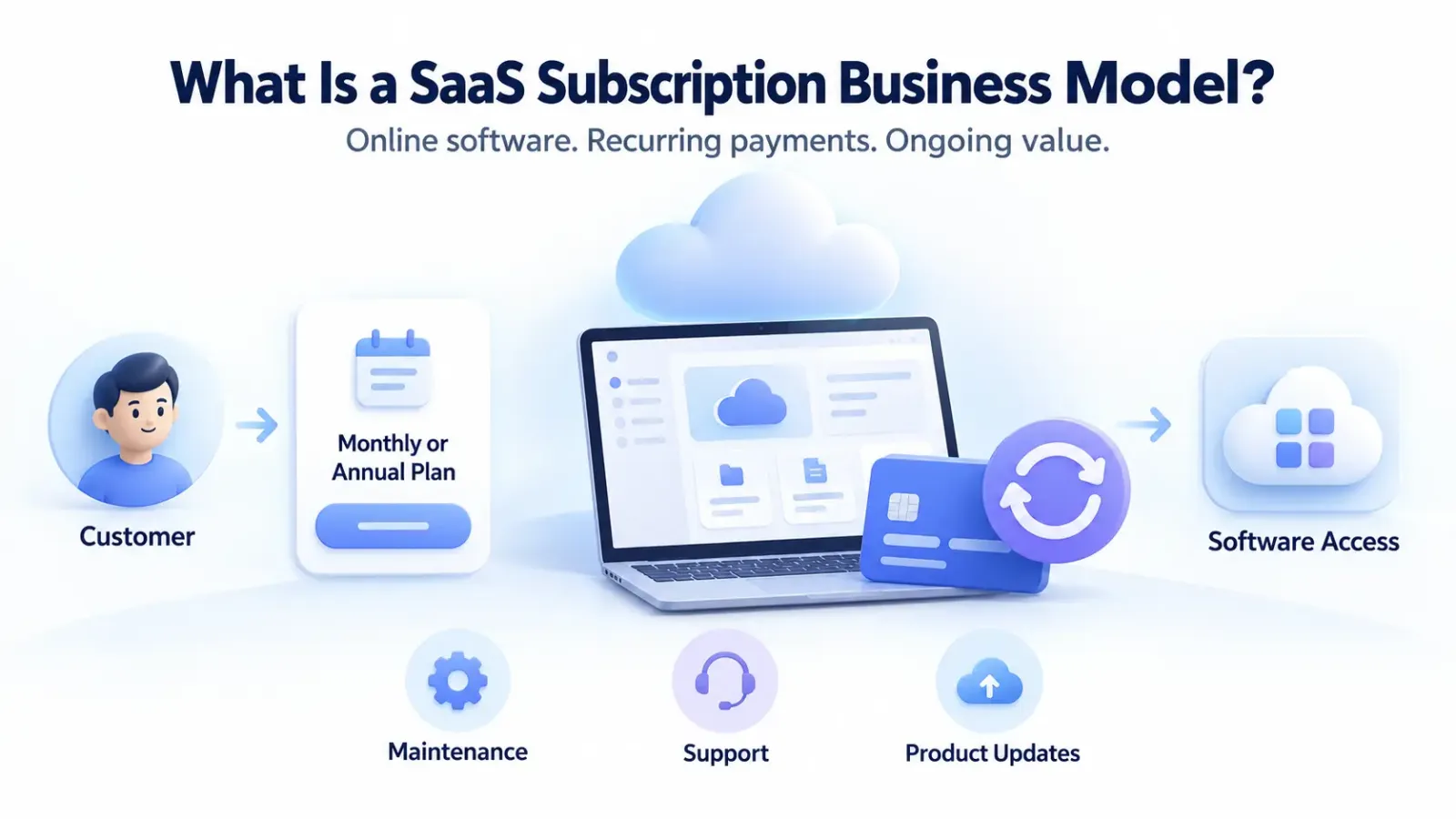
A SaaS subscription business model is a way of selling access to software through recurring payments. Customers typically pay monthly or annually, while the provider hosts and manages the application.
SaaS describes how software is delivered. Subscription describes how customers pay for it. Although they often work together, SaaS products can also use usage charges or a combination of payment models.
For example, imagine an appointment booking platform for small businesses. Customers subscribe to manage bookings, send reminders, and organize staff schedules. They continue paying because they need those functions regularly.
This model helps businesses:
- Build an ongoing source of subscription revenue.
- Offer different plans for different customer needs.
- Maintain relationships beyond the first purchase.
- Use customer feedback to guide product improvements.
However, recurring billing alone does not create a successful business. Customers need to receive enough value to keep subscribing.
How the SaaS Subscription Business Model Works: 10 Essential Steps
A SaaS subscription business involves more than collecting monthly payments. It connects product access, pricing, onboarding, billing, support, and renewals.
The following steps explain how these parts work together.
1. Identify a Recurring Customer Problem
A subscription product needs to solve a problem that customers face regularly. Occasional tasks may provide fewer reasons for people to maintain an active subscription. An invoicing application, for example, supports repeated activities such as creating invoices, tracking payments, and managing customer records.
What to Check: Speak with potential customers about their current process, common difficulties, and existing software.
How to Apply: Start with one clear customer group and a problem they experience often. Confirm that solving it would justify an ongoing payment.
2. Build the Core Software Product
The application must deliver the main result customers expect. A focused product can help you test demand before investing in a large collection of features.
For a booking platform, the core functions might include appointment scheduling, calendar availability, and confirmation messages.
What to Check: Identify the functions customers need to complete their main task.
How to Apply: Build a minimum viable product, or MVP, around those functions. Test whether users can complete the task without confusion or unnecessary steps.
3. Define Subscription Plans and Limits
Subscription plans explain what customers receive and how much they pay. Plans may differ by features, number of users, storage, or usage limits.
Clear differences help customers choose a suitable option.
What to Check: Review which features different customer groups need and how much those features cost to provide.
How to Apply: Create understandable packages. State what each plan includes, what it excludes, and when additional charges apply. Avoid making the entry plan so limited that customers cannot experience the product’s main value.
4. Offer Monthly or Annual Billing
Billing frequency determines when customers pay. A monthly plan collects payment each month, while an annual plan typically collects payment for a year in advance. Annual billing can bring cash into the business earlier. However, the business still needs to provide the service throughout the subscription period.
What to Check: Consider customer buying preferences and your ongoing delivery costs.
How to Apply: Explain the billing period, total charge, renewal date, and cancellation terms before checkout. If you offer an annual discount, make sure the reduced price still supports your operating costs.
5. Set Up Registration and Onboarding
After choosing a plan, customers need a simple way to create an account and start using the software. A difficult setup process can prevent users from reaching the result they purchased.
What to Check: Test registration, account verification, initial settings, and the first useful action.
How to Apply: Use a short setup checklist, relevant examples, and clear instructions. For a booking tool, help customers publish their first booking page quickly. Measure completed setup actions alongside account registrations.
6. Connect Billing with Product Access
Your billing system and application need to agree on each customer’s subscription status. A successful payment may activate a plan. A cancellation, downgrade, or failed renewal may require a different access level.
What to Check: Test successful payments, failed payments, renewals, cancellations, and plan changes.
How to Apply: Define clear rules for every subscription status. Use reliable payment notifications and ensure repeated notifications cannot create duplicate account changes. Customers should also be able to find invoices and update their billing information easily.
7. Deliver Ongoing Maintenance and Support
Customers pay for continued access to a working service. That means your responsibilities continue after launch. You need to maintain availability, fix bugs, protect customer information, and answer support requests.
What to Check: Review application errors, customer complaints, backup procedures, and support response times.
How to Apply: Assign responsibility for maintenance and customer support. Keep customers informed when problems affect their work. Set realistic support expectations so your team can deliver what the subscription promises.
8. Manage Upgrades, Downgrades, and Add-Ons
Customer needs change over time. A small team may hire more employees, need additional storage, or require advanced reporting.
Your subscription system should support these changes without creating billing confusion.
What to Check: Decide when plan changes take effect and whether partial-period charges or credits apply.
How to Apply: Show the new price and effective date before customers confirm a change. Explain what happens to existing data or features when a customer moves to a lower plan.
9. Handle Renewals and Failed Payments
A customer may want to continue using your software but experience a payment failure. Others may decide the product no longer meets their needs.
These situations require different responses.
What to Check: Separate payment failures from deliberate cancellations and review the reasons behind each.
How to Apply: Notify customers about failed payments and provide a simple way to update their payment method. Define a clear grace period where appropriate. For voluntary cancellations, collect optional feedback and explain when access ends.
10. Use Customer Feedback to Improve Retention
Retention means keeping customers over time. A subscription business needs to understand why people continue paying and why others leave. Feature requests can help, but actual product usage often provides useful context.
What to Check: Review onboarding completion, repeated usage, support questions, and cancellation feedback.
How to Apply: Improve the problems that prevent customers from receiving value. Test whether each change helps users complete their work more successfully. Adding more features is useful when those features address a clear customer need.
Common SaaS Subscription Pricing Models
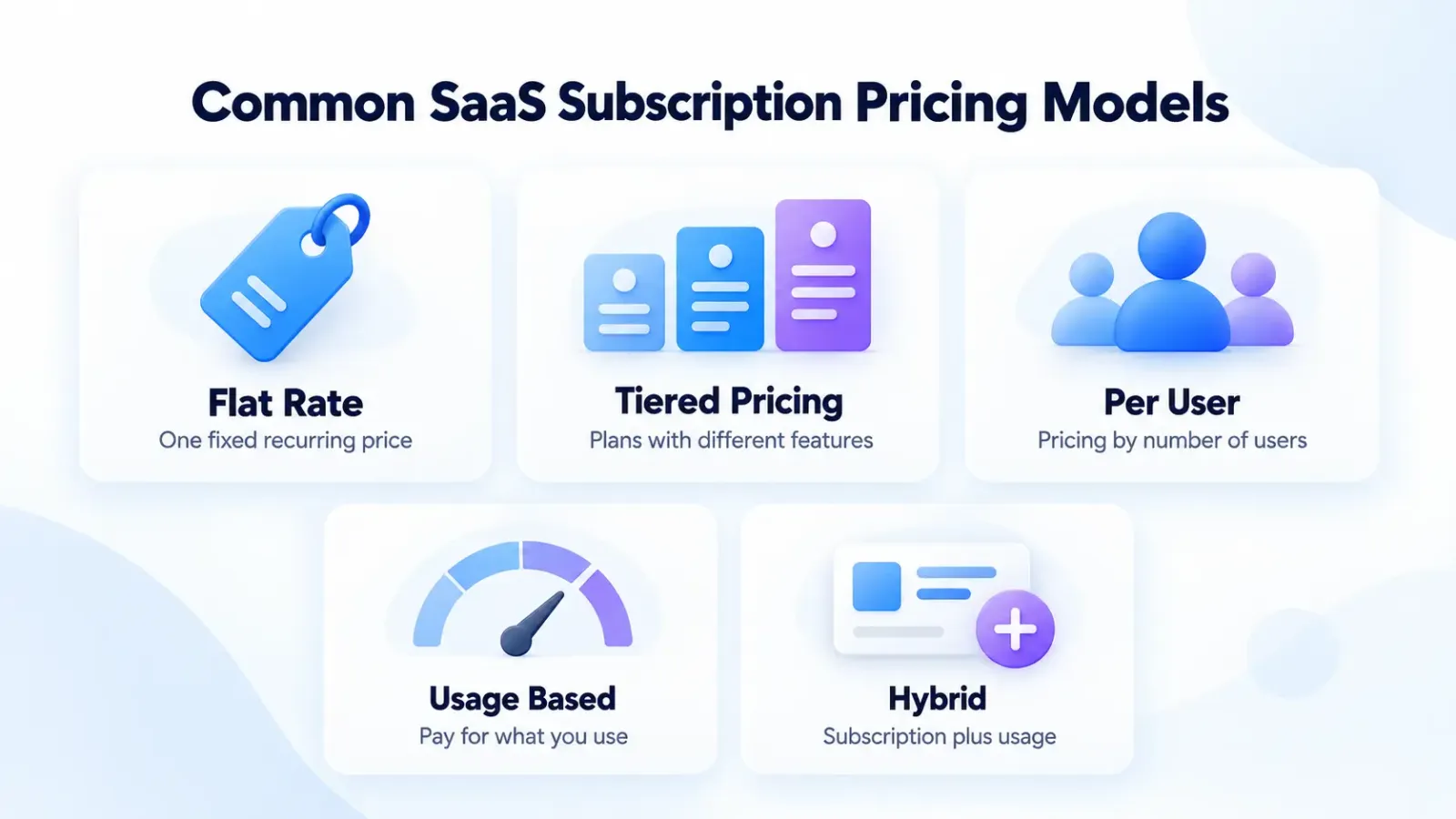
Your pricing model should connect the amount customers pay with the value they receive and the cost of serving them.
Common approaches include fixed subscriptions, feature tiers, charges per user, usage billing, and combinations of these methods.
A freemium approach offers a free plan alongside paid options. It can help people try the software, but free accounts still create hosting and support costs.
Start with pricing that customers can understand. You can refine it as you learn more about usage, willingness to pay, and delivery costs.
Key Benefits of the SaaS Subscription Business Model
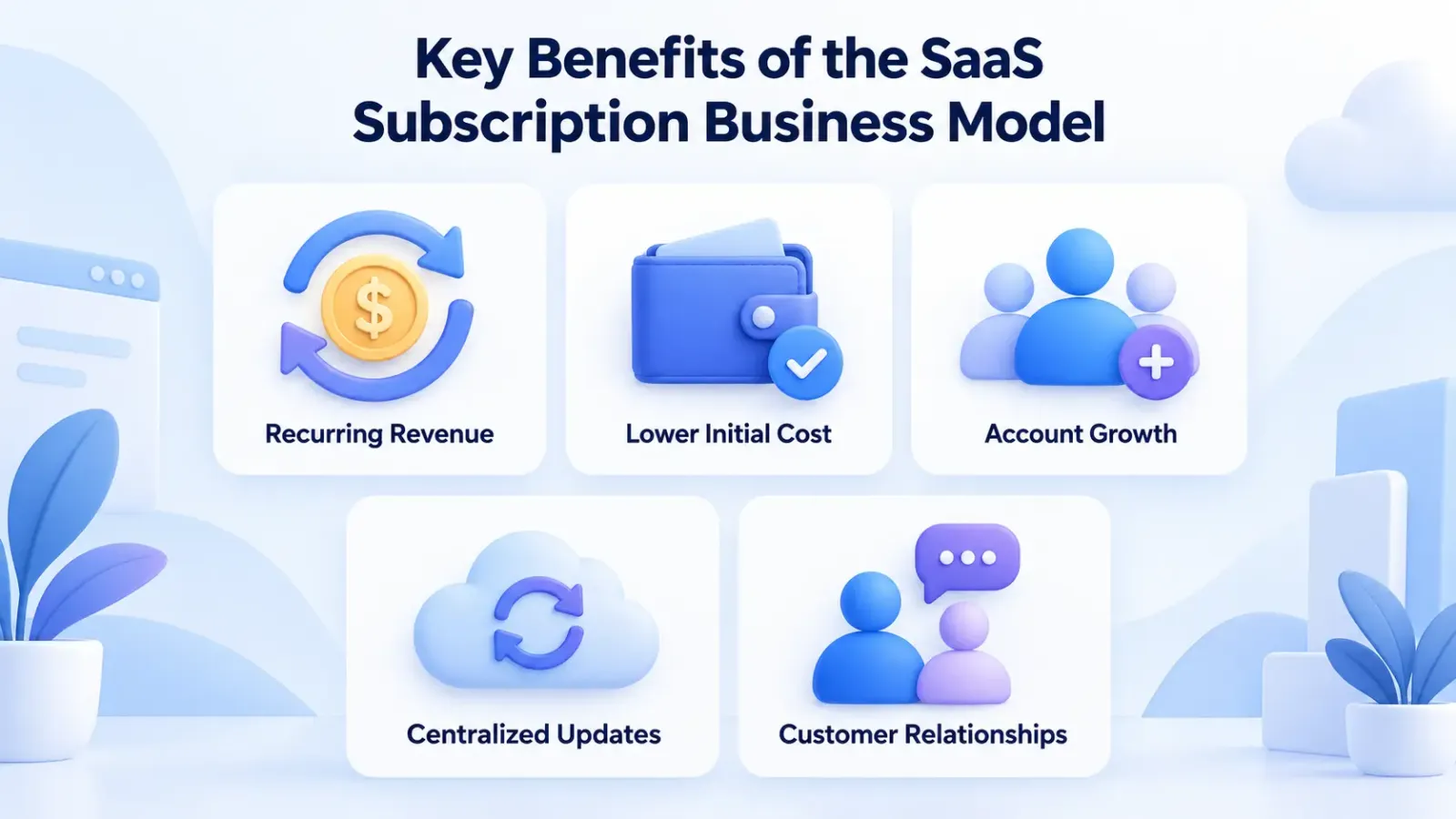
A subscription model can support a lasting business when the product remains useful and the cost of serving customers stays manageable. Its benefits apply to both the provider and the customer.
More Visibility into Recurring Revenue
An active subscriber base gives you a starting point for estimating future subscription income.
This can support hiring, product planning, and operating budgets. However, forecasts should account for cancellations, downgrades, and payment failures.
Lower Initial Commitment for Customers
A monthly subscription can let customers begin using software without purchasing a large upfront license.
This may make adoption easier, although customers should still compare the total cost over their expected period of use.
Opportunities to Grow Existing Accounts
Customers may move to larger plans, add team members, or purchase extra capacity as their needs grow.
This creates expansion opportunities when the additional purchase provides a useful benefit.
Centralized Product Improvements
The provider can maintain and update the hosted application centrally.
Customers can receive improvements without managing the entire software infrastructure themselves. The provider still needs to test releases carefully and communicate significant changes.
Stronger Customer Relationships
Ongoing usage creates opportunities to learn from support requests, feedback, and customer behavior.
These insights can help the business improve the product and identify unmet needs.
How to Prioritize SaaS Subscription Challenges
Subscription revenue comes with ongoing responsibilities. Customer acquisition, infrastructure, support, and product development all require resources.
Prioritize problems that prevent customers from using the product or make the service too expensive to deliver.
Create an issue list with the affected customer group, business impact, owner, and required action. After making a change, check whether it improves the original problem. For example, clearer onboarding should help more customers complete their first useful task.
Development costs also need separate planning. Read our guide to how much it costs to build a SaaS product to understand the factors that influence your initial development budget.
Important Metrics to Track in a SaaS Subscription Business
Subscription counts alone do not explain business health. Track recurring revenue alongside retention, acquisition costs, and the cost of delivering the service.
Monthly recurring revenue, or MRR, normalizes recurring subscription amounts into a monthly figure. Annual recurring revenue, or ARR, commonly annualizes that figure. These measures help monitor subscription growth, but they are different from cash collected.
Consider a simplified example: 100 customers each pay $20 per month. That produces $2,000 in MRR. If 10 cancel and nothing else changes, MRR falls to $1,800.
This example shows why customer retention matters alongside new sales. Subscription revenue must also cover the costs required to operate and improve the product.
How Inforisen Helps Businesses Build SaaS Products
A subscription business needs software that supports its commercial rules. Plans, account permissions, payments, and product access should work together throughout the customer journey.
Inforisen develops software and digital products for business needs. Its SaaS offering covers product planning, architecture, interface design, development, integrations, testing, deployment, and ongoing maintenance.
Our SaaS product development services can support businesses planning a new application or improving an existing platform.
Start by defining your target users, core problem, proposed plans, and required integrations. These details help establish a development scope that supports how your subscription business will operate.
Frequently Asked Questions
1. What Is a SaaS Subscription Business Model?
It is a model where customers make recurring payments to access provider-managed online software. The subscription usually defines the billing period, included features, and usage limits.
2. How Do SaaS Subscription Businesses Make Money?
They earn money through recurring plan payments. Depending on the product, they may also charge for additional users, extra usage, premium features, or implementation services. Profit depends on revenue exceeding business costs.
3. What Is the Difference Between SaaS and Subscription Software?
SaaS describes software delivered as an online service managed by a provider. Subscription describes recurring payment. Installed desktop software can also use subscription billing, so the terms are related but different.
4. Is Monthly or Annual Billing Better?
Monthly billing offers a shorter customer commitment. Annual billing can provide earlier cash collection and a longer subscription period. The suitable option depends on customer preferences, pricing, and service delivery costs.
5. What Is the Biggest Challenge in a SaaS Subscription Business?
Keeping customers subscribed is a major challenge. Businesses need to deliver continuing value while managing acquisition expenses, support demands, infrastructure costs, and product improvements.
6. How Can Inforisen Help Build a SaaS Subscription Product?
Inforisen offers SaaS product planning, design, development, integrations, deployment, and maintenance. Discuss your subscription requirements with the team to define the features, billing workflows, and technical scope your product needs.
Final Thoughts
The SaaS subscription business model connects recurring payments with continued software access and service. Its value depends on solving a problem customers face regularly.
Start with a clear audience, a focused product, and understandable pricing. Make onboarding simple, explain billing rules, and track why customers stay or leave.
As the business grows, review revenue alongside delivery costs and retention. A useful product, reliable service, and manageable operating costs provide a stronger foundation for sustainable subscription growth.