ByArian MahmudReviewed by:Yunus A. Polash
Human WrittenEcommerce Website Development Requirements for Small Businesses
This guide explains the ecommerce website development requirements for small businesses, including business planning, essential features, domain and hosting, platform selection, payment integration, security, and SEO. It also covers development costs, developer preparation, and a practical checklist to help businesses launch an online store.
You have excellent products, and now you are ready to start marketing them on the Internet. But what are the things that you should consider to build an e-commerce website? It may not be so easy to figure out all those aspects at first.
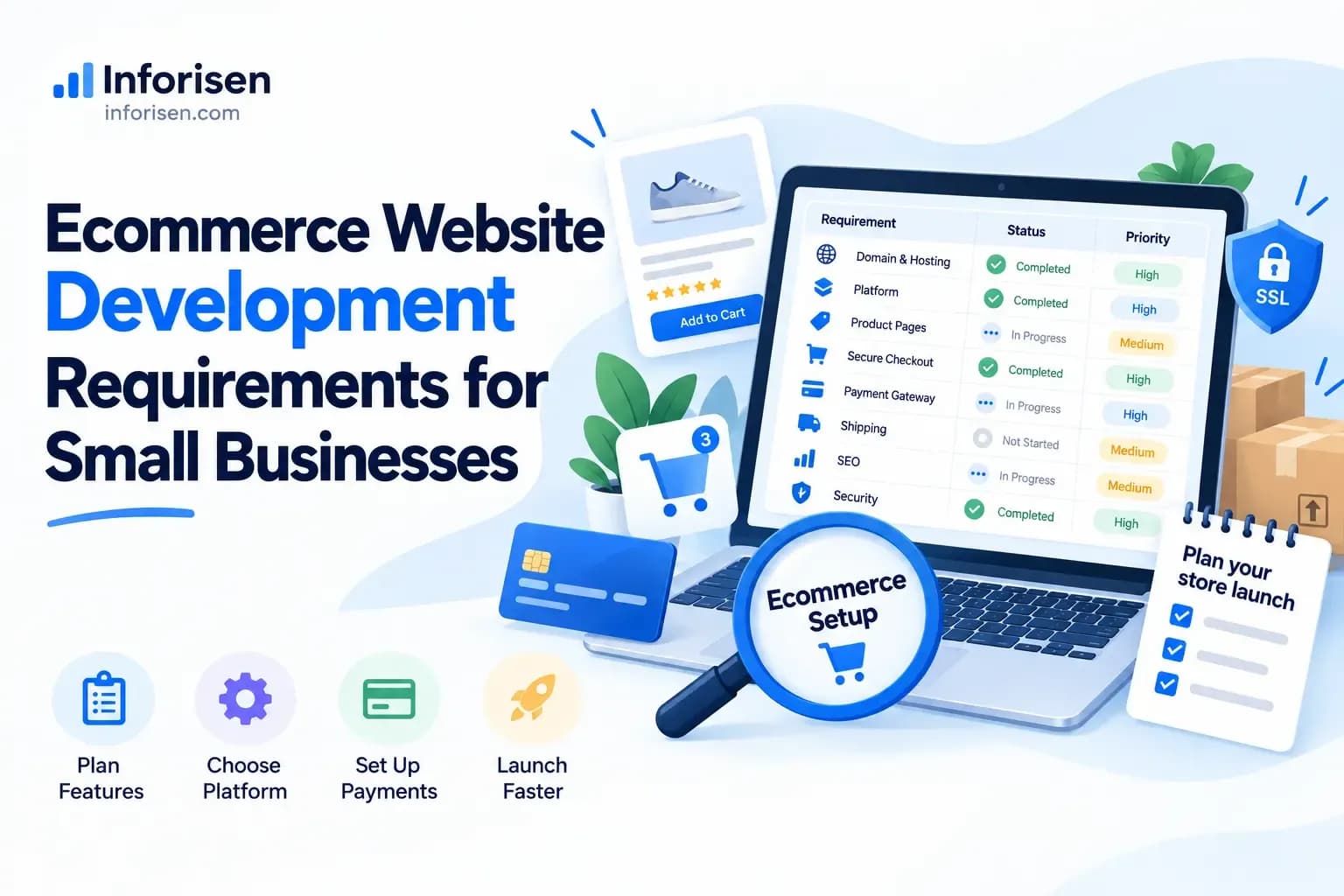
Basic small business ecommerce website requirements are a domain, good hosting, pages for products, a secure checkout process, payment systems, and shipping methods. The planning of these aspects in advance can help you save money and make your site more convenient for your customers.
You will be able to learn about the basics of different features, technical details, and expenses for the development and launch of your online store.
What Is Ecommerce Website Development?

Ecommerce website development is defined as the process of developing a website that enables customers to view products, purchase, and pay for the products. This includes designing the website, managing products, paying, securing and much more.
In the case of a small business, the process of developing an ecommerce website makes it easy for them to sell their products online.
What Are the Basic Requirements for an Ecommerce Website?
The requirements for an ecommerce website include a business plan, domain name, web host, ecommerce platform, online shopping capabilities, payment system, and shipping services. The security and optimization of your website make it easier to find and shop on your site.
Here is a simple breakdown of the main requirements.
Prepare the information about your products, know your customers, and select payment methods and delivery choices. Begin with basic features and include others as you grow.
What Features Does a Small Business Ecommerce Website Need?
The elements required in a small business ecommerce website include good product pages, shopping cart, secured checkout, order management and navigable site for mobile devices. All these are helpful in making shopping more convenient.
Essential Pages and Product Catalog
You should have a homepage, Product pages, Category pages, Contact page, and Policy pages on your website.
Images, descriptions, price, and category must be provided. If you have a high number of products, you can incorporate search and/or filtering capability.
Shopper Cart and Secure Checkout
Customers need to have the ability to add an item to the shopping cart, view orders, and pay. Display the total product cost, delivery costs, and payment terms to customers before they can pay.
Customer Accounts and Order Management. Customers can access their history of transactions and manage their customer accounts. Guests can purchase products without creating an account.
Using the Admin Dashboard, you can manage inventory, process orders, and monitor sales. Optimized design and navigation that adapts to mobile devices.Mobile-Friendly Design and Navigation. The website will be excellent on mobile phones, tablets, and computer screens.
User-oriented navigation menus, legible text, and good product images and buttons on the website are important.
Must-Have vs Optional Ecommerce Features:
Start with must-have features and add optional tools when they offer clear value to your customers.
What Are the Technical Requirements for an Ecommerce Website?
The key technical requirements include having a domain name, hosting, an SSL certificate, fast loading time, responsive design, and data protection. They will ensure that your store is running smoothly and your customers' data is protected.
Domain Name, Hosting, and SSL
Choose a brief and unique domain name to represent your business.
Hosts must be chosen in such a way as to support your website’s requirements. SSL certificate ensures you have an HTTPS protocol for safe data transfer.
Website Speed and Mobile Responsiveness
Customers may become annoyed and dissatisfied by a website that loads slowly.
Reduce image size, cut down on unnecessary code, and perform testing on different devices to make sure the website works well on mobile.
Security, Data Protection, and Backups
Secure your website using strong passwords, updated software, secure payment processing, and backup systems.
Do not give unauthorized individuals access to any confidential customer information. Have a backup plan so that you can recover your information.
Which Ecommerce Platform Is Best for Small Businesses?
There are many options for creating an e-commerce site for a small business, including Shopify and WooCommerce. Shopify is a great platform for those owners who like to manage their stores without any hassle, whereas WooCommerce provides more customization using WordPress.
Shopify – Easy Store Management
In addition, Shopify offers hosting services, shop management, and eCommerce features all at once.
It is the perfect choice for companies that want to manage their products and orders without dealing with most hosting issues.
WooCommerce – Flexible WordPress Stores
The WooCommerce system assists in turning your WordPress website into an e-commerce website.
It has customizable themes and plugins. However, it requires the user to manage hosting and updates.
Custom Development – Unique Business Needs
Custom development would allow you to build functions that could be integrated into specific business processes.
It would help in cases of complex inventory management systems, custom checkout, and other integrations that would not be available in standard platforms.
Which do you choose? You can pick Shopify for ease of hosted management, WooCommerce for WordPress-based flexibility, or custom development where standard options fall short.
What Payment and Shipping Features Does an Ecommerce Website Need?
The security of payments, information about delivery charges and methods of delivery, along with order tracking, is important for any online store. The customer needs to know the payment methods, delivery time, and return policies.
Secure Payment Gateway Integration
Provide payment options that your customers usually use, like:
- Debit and credit cards
- Compatible mobile payment systems
- Online wallets
- Cash on Delivery, wherever applicable
Test all payment options before going live with your website.
Shipping, Delivery, and Order Tracking
Define the delivery zones, shipping costs, and delivery time estimates.
Offer order confirmations and tracking options for deliveries where such services are available.
Refund and Return Policies
Provide an explanation regarding the products that can be returned by customers, the time frame for returns, and refund procedures.
Policies play a great role in helping customers make decisions.
What SEO Requirements Should an Ecommerce Website Have?
The URLs for an ecommerce website must be SEO friendly. This website needs a description that is unique, SEO-optimized images, structured data, and an XML sitemap. All of this helps search engines locate your website.
Some of the important SEO needs include:
- SEO friendly URLs: Have simple and descriptive URLs for product and category pages.
- Product Schema: Give accurate information about the products using structured data. Follow Google Product Structured Data Guidelines.
- XML Sitemap: All important pages to be indexed should be included.
- Google Search Console: Helps in indexing, monitoring search queries, and performance of the website.
- Google Analytics: Tracks the visitors and purchasing activity of the customers.
Make sure that SEO requirements are included during development rather than doing changes later on.
How Much Does Ecommerce Website Development Cost?
Ecommerce website development costs depend on your chosen platform, design, product catalog, features, and integrations. A simple store usually requires less development work than a custom ecommerce website.
You should plan for both initial setup and ongoing expenses.
Initial Development and Setup Costs
Initial costs may include website design, development, domain registration, product setup, and payment gateway configuration.
Ongoing Hosting and Maintenance Costs
Recurring expenses may include hosting, platform subscriptions, software updates, premium extensions, backups, and technical support.
Before hiring a development company, request a detailed quote that includes the features, project timeline, and ongoing expenses.
If you are still comparing development providers, explore these best ecommerce web design companies to learn about different service options and selection factors.
How Can Inforisen Help With Ecommerce Website Development?
Inforisen provides ecommerce development services to companies requiring an efficient, secure, and easily manageable online shop. The services provided by Inforisen for ecommerce development solutions include responsive store design, payment gateway, product management, checkout, and technical assistance.
The ecommerce development process is as follows:
- Specify Requirements for Your Store: Mention your products, customer base, and goals.
- Webstore Planning: Identify suitable features, architecture, and technology.
- Design and Build Your Webstore: Develop your store, product pages, and checkout process.
- Webstore Testing and Implementation: Test the functionality, payment gateway, and webstore performance.
A project plan will help you to know what your website requires during the development process.
Ecommerce Website Pre-Launch Checklist
Before launching your online store, test shopping, payments, deliveries, and security. Testing at the end will help you discover any issues before customers begin making their purchases.
Use the following checklist:
- Review product details, pictures, and pricing.
- Test the shopping cart and checkout process.
- See payment methods and shipping costs.
- Test the website for mobile and PC devices.
- Check website security and legal settings.
- Check SEO and analytics settings.
- Test the purchase process from start to finish.
Correct all potential issues that might prevent users from browsing, purchasing, and making payments.
Frequently Asked Questions
What are the minimum requirements for an ecommerce website?
It is required to have a domain, web hosting service, e-commerce platform, pages for products, shopping cart, checkout process, payment methods, and website security.
Can I build an ecommerce website without coding?
Yes. There are platforms like Shopify and WooCommerce that have applications for creating stores online without programming skills.
How long does it take to build an ecommerce website?
A simple e-commerce site may require some weeks. However, a complicated website may require several months depending on the functionalities.
Is Shopify or WooCommerce better for small businesses?
Shopify can be used for managing hosted stores. WooCommerce provides more flexibility but needs more maintenance.
How can Inforisen help small businesses build an ecommerce website?
Inforisen offers e-commerce development solutions that include store development, payment integration, product management, testing, and support services.
Final Thoughts
The approach to creating an effective online store has to be based on a good strategy and not on visual appeal. Understanding what is needed for the creation of the online store will allow you to choose the required features, economize on costs, and also get rid of the problems associated with website creation.
You must be ready to evaluate the following features: payment security, quality web hosting, responsiveness of design, and order management.
Are you ready to launch your online store? Find out more about Inforisen and choose development services for your company.