ByShuman Chandra DasReviewed by:Yunus A. Polash
Human WrittenHow Much Does It Cost to Make a Website Nowadays?
This guide breaks down how much does it cost to make a website nowadays, covering DIY, freelancer, and agency pricing, hidden costs like hosting and maintenance, and tips to get the best value for your budget.
If you have ever typed how much does it cost to make a website into Google, you already know the answers online are all over the place. One site says $200. Another says $50,000. Both can be true at the same time, because the real cost depends on what you are building, who builds it, and what you expect the website to do for your business.
In this guide, we will break the cost down in plain language. No confusing jargon, no vague "it depends" answer without an explanation. By the end, you will know exactly what factors move the price up or down, what a fair budget looks like for your type of business, and which hidden costs most people forget to plan for.
Factors That Affect Website Cost
Before we talk numbers, it helps to understand why prices vary so much. A website is not one fixed product. It is a mix of design, code, content, and ongoing services, and each part can be simple or complex.
Here are the main things that change the final price:
- Number of pages– A 5-page site costs less than a 50-page site.
- Design complexity– A template-based layout is cheaper than a fully custom design.
- Features and functionality– Booking systems, payment gateways, and membership areas add cost.
- Content creation– Professional copywriting, photos, and videos are separate line items.
- Platform choice– WordPress, Shopify, or a custom-built site all price differently.
- Who builds it– DIY tools, freelancers, and agencies sit at different price points.
Industry data backs this up. Small to medium business websites typically range from a few hundred dollars for a simple DIY build to several thousand dollars for a professionally built site, depending on the features included. So before asking "how much," it is worth asking "what do I actually need."
How Much Does It Cost to Make a Website by Type
Different businesses need different kinds of websites. A local bakery does not need the same setup as a growing SaaS company. Here is a realistic 2026 price snapshot by website type:
Note that custom-coded websites, especially ones with interactive features or dynamic content, need real development work behind the scenes. If your project needs custom scripts or app-like behavior, it helps to understand what role JavaScript plays in web development before you compare quotes, since that single factor can change a price by thousands of dollars.
Most small businesses land somewhere in the $2,000 to $8,000 range for a professional, easy-to-manage site. That number covers design, basic development, and a handful of core pages, but it usually does not include ongoing marketing or advanced integrations.
Website Cost by Who Builds It
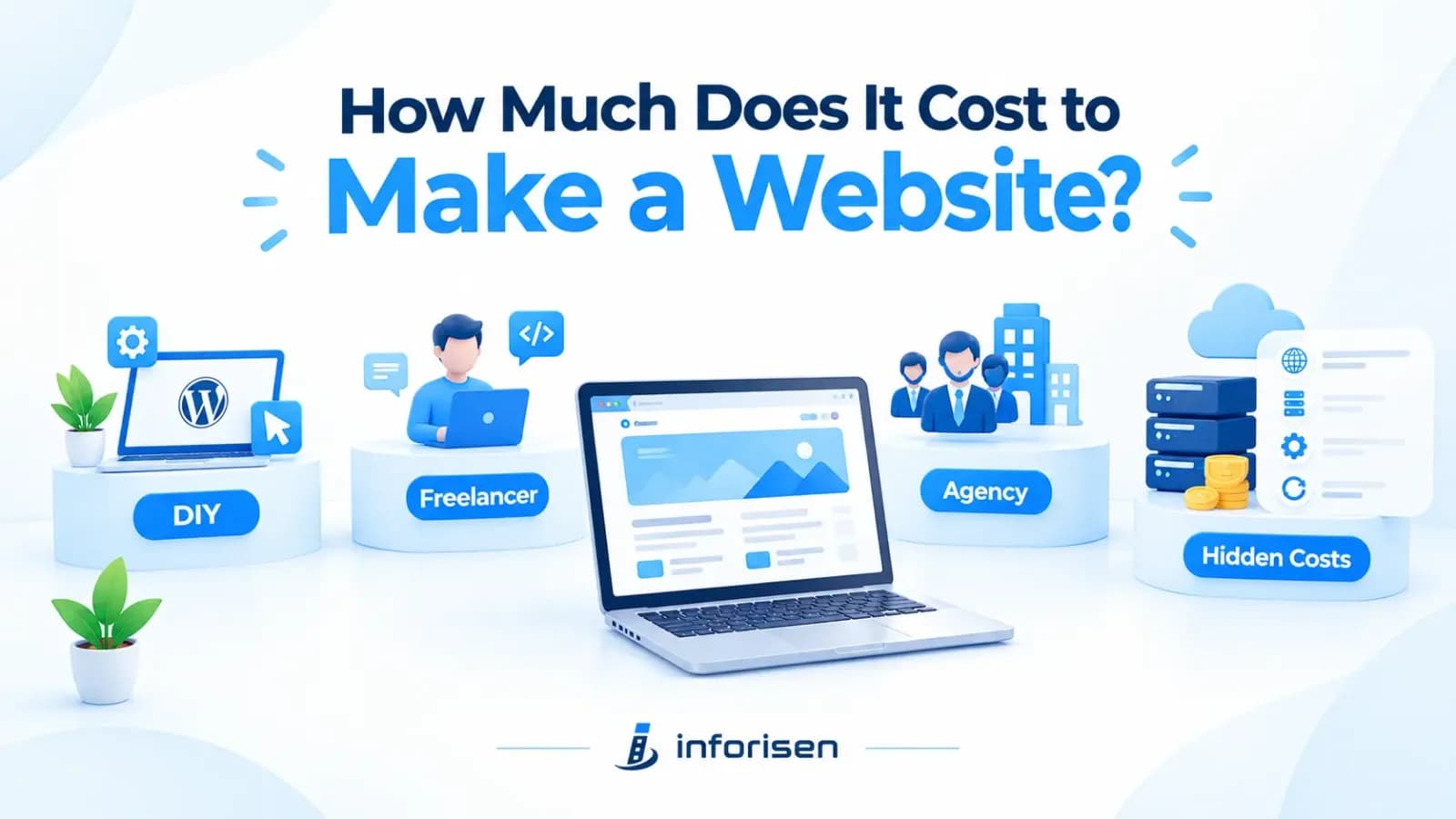
The person or team building your website matters just as much as the type of website. Here is how the three common routes compare.
DIY website builders Tools like Wix, Squarespace, or WordPress.com let you build a site yourself for a low monthly fee, often between $15 and $60 per month. This works well if your budget is tight and your needs are simple.
Freelance web developers Freelancers usually charge between $500 and $10,000 depending on experience and project size. You get more customization than a DIY builder, but quality varies from person to person.
Web design agencies Agencies handle strategy, design, development, and testing as a team. HubSpot notes that mid-size business websites built with more features and CRM integration can run from $15,000 up to $60,000, since agency projects often include research, custom design, and long-term support. This route costs more upfront but reduces the risk of costly mistakes later.
Hidden and Ongoing Website Costs
A lot of people budget for the build and forget everything that comes after. A website is not a one-time purchase. It is more like a small piece of property that needs upkeep.
Common ongoing costs include:
- Domain name– around $10–$20 per year
- Hosting– $5–$150 per month depending on traffic and server type
- SSL certificate– often free, but premium versions cost extra
- Plugin or app subscriptions– $0–$50 per month per tool
- Content updates– varies based on how often you update the site
- Search visibility– getting found on Google is a separate ongoing effort
That last point is easy to underestimate. A beautiful website with zero traffic will not grow your business. If you are new to this side of things, it is worth reading a beginner's guide to how SEO works so you understand why visibility and design are two different investments, not one.
A safe rule of thumb: plan to spend 15–30% of your original build cost every year on hosting, maintenance, and basic optimization. This keeps your site secure, fast, and easy to find.
How to Get the Best Value for Your Website Budget

You do not need the biggest budget to get a website that performs well. You need the right budget for your actual goals. A few practical tips:
- Start with your must-haves. List the pages and features your business truly needs before asking for quotes.
- Ask what is included. Some quotes include content and revisions, others charge extra for every change.
- Think about user experience early. A site that looks nice but confuses visitors will lose sales. Good UI UX design practices matter even for small, budget-friendly sites.
- Compare like for like. A $500 quote and a $5,000 quote are rarely offering the same scope of work, so read the details, not just the total.
- Plan for growth. Choose a platform that can expand later instead of rebuilding from scratch in two years.
If you want a partner that handles design, development, and long-term support together instead of piecing it together yourself, a dedicated website design and development service can save time and reduce the guesswork of managing multiple freelancers.
When Should You Hire a Professional Web Development Team
DIY tools are fine for very simple needs, but there is a point where professional help pays for itself. You are likely at that point if:
- Your website needs to accept payments or manage inventory
- You want a design that reflects a specific brand identity
- Your business relies on the website for most of its leads or sales
- You need integrations with a CRM, booking tool, or internal system
- You have tried DIY tools and outgrown their limits
If any of that sounds familiar, it is worth having a short conversation before committing to a full project scope. A quick call can clarify your real budget range and avoid surprise costs later.
Final Thoughts
So, how much does it cost to make a website? The honest answer is: it depends on what you need, not on a single fixed number. A simple DIY site might cost under $500, a solid small business website usually falls between $2,000 and $8,000, and a large custom platform can reach well into five or six figures.
The smartest approach is to define your goals first, then match the budget to those goals instead of picking a number out of thin air. Whether you are comparing DIY tools, freelancers, or agencies, understanding these cost drivers puts you in a much stronger position to negotiate and plan. If you would rather skip the guesswork, you can always explore what Inforisen offers and get a clear, honest estimate based on your specific project.
Frequently Asked Questions
Is $500 enough to build a professional website?
It can be enough for a very simple DIY site with a few pages, but it usually will not cover custom design, professional copywriting, or advanced features. For most small businesses, $2,000 and up is more realistic for a polished result.
How much does a WordPress website cost?
WordPress itself is free, but you still pay for hosting, a theme, plugins, and often a developer. Total costs typically range from $500 for a simple setup to $10,000 or more for a fully custom build.
Do I need to pay for a website every month?
Yes, in most cases. Even after the initial build, you will have ongoing costs like hosting, domain renewal, and security updates. Budget for these as a permanent part of running a website, not a one-time fee.
Is it legal to copy another website's design?
No. Copying the exact layout, code, or original content of another website without permission can violate copyright law. You can take inspiration from a design style, but the actual code, images, and written content need to be original or properly licensed.
How much should I budget for website maintenance each year?
A common guideline is 15% to 30% of your original build cost per year. This covers hosting, security patches, backups, and small content updates.
Can I really build a website for free?
Yes, with limitations. Free plans on builders like WordPress.com or Wix usually come with the platform's branding, limited storage, and a subdomain instead of your own domain name. It works for testing an idea but is rarely suitable for a serious business.
Why do web development quotes vary so much between agencies?
Quotes differ based on team experience, project scope, the number of revisions included, and whether strategy and content are part of the package. Always ask for a detailed breakdown so you are comparing the same scope of work.
Is an e-commerce website more expensive than a regular business website?
Usually yes. E-commerce sites need product pages, secure payment processing, and inventory management, which add both development time and ongoing transaction fees compared to a standard informational website.

.jpg&w=3840&q=75)