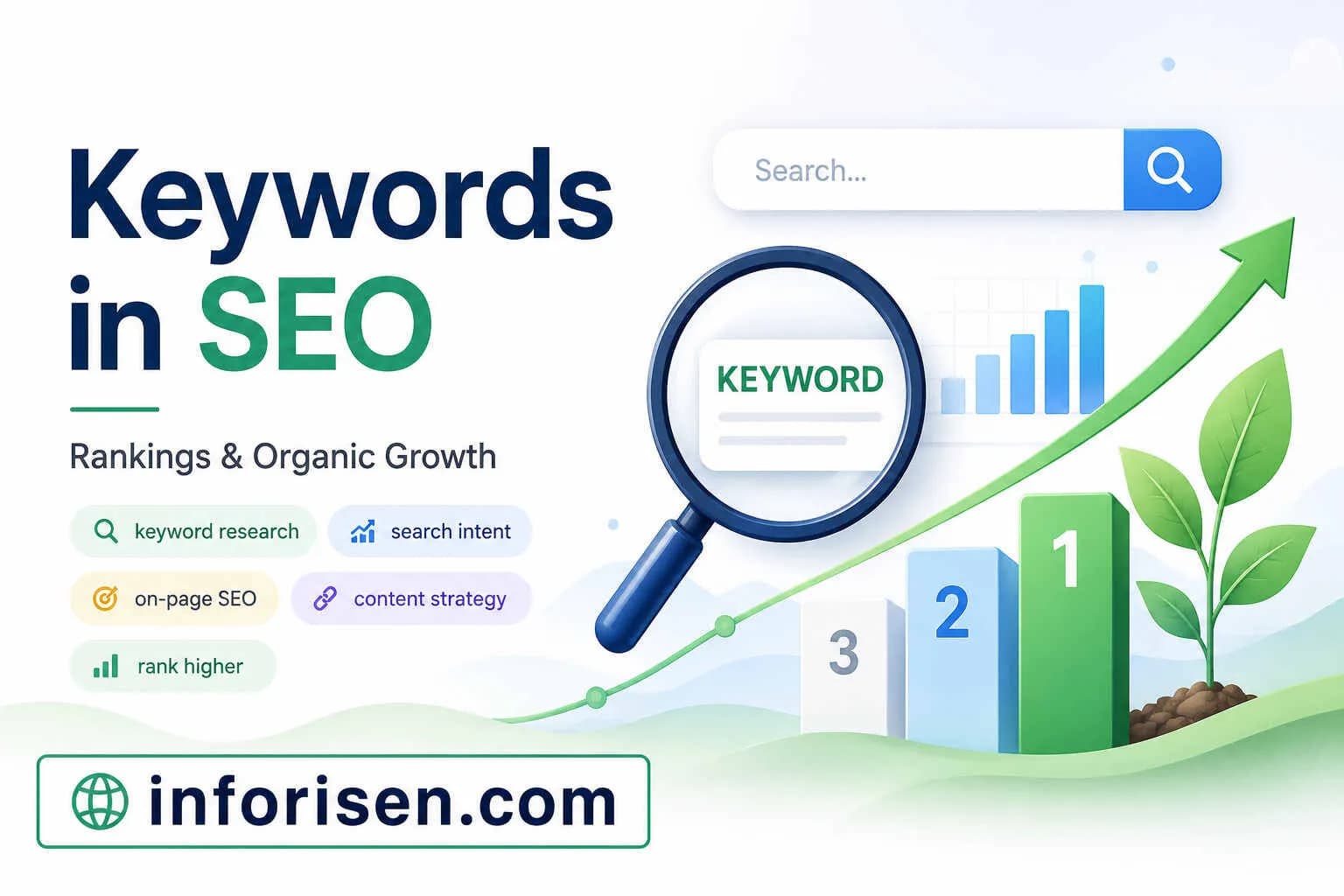
How Important Are Keywords in SEO for Better Rankings
Keywords help search engines understand what your content is about and connect it with relevant searches. However, successful SEO depends on more than keywords—it also requires search intent, high-quality content, topical relevance, and a strong user experience.
If you are trying to improve a website’s visibility, one question appears very early: how important are keywords in seo? Keywords remain highly important because they connect what people search for with the content a website provides. However, modern SEO is no longer about repeating exact phrases. Search intent, relevance, topical depth, user experience, authority, and content quality now work together with keyword targeting.
Google itself recommends using the words people would use to find your content and placing them in prominent areas such as titles, main headings, alt text, and link text. This makes keywords valuable not only for traditional search rankings but also for helping search engines and AI-powered search experiences understand what a page is about.
Why Are Keywords Important for SEO and Search Engine Rankings?
Keywords provide context. They help connect a searcher's question, problem, or buying intent with the page most likely to satisfy that need.
Imagine a business offering SEO services but publishing pages that only use broad phrases such as "digital growth" or "online success." The content may be useful, but search engines have less explicit information about which searches the page should appear for.
Using relevant search terms gives that content clearer topical direction.
This does not mean that inserting a keyword automatically improves rankings. Google evaluates pages using many signals, and its guidance emphasizes creating helpful, reliable, people-first information rather than content written primarily to manipulate search engines.
Keywords therefore work best as relevance signals, not shortcuts.
A useful way to think about their role is:
Once the topic is clear, the next question is whether keyword optimization still matters as search engines become more intelligent.
Are Keywords Still Important for SEO in Modern Search?
Yes, but their role has evolved significantly. Older SEO strategies often focused on matching the exact phrase typed into Google. Modern search systems can understand related language, concepts, entities, synonyms, and the broader meaning behind a query.
For example, a page about "website SEO services" could naturally discuss organic visibility, search intent, content optimization, technical SEO, rankings, and traffic without repeating one phrase dozens of times. That is semantic SEO in practice.
Google's current guidance for generative search also states that foundational SEO practices continue to matter for AI-powered search experiences. Rather than recommending separate tricks for AEO or GEO, Google advises websites to maintain strong technical foundations and create unique, useful, people-first content.
How Do Keywords Help Search Engines Understand Website Content?
Search engines analyze different signals across a page to determine its subject and relevance.
A keyword appearing naturally in the page title, heading, introduction, supporting sections, image description, and internal link context can help establish what the page is discussing.
But search engines do not evaluate isolated words alone. They also analyze the relationships among concepts.
Consider an article about SEO keyword research. Relevant supporting topics could include:
- search volume
- keyword difficulty
- search intent
- long-tail queries
- competitor research
- topical authority
- organic traffic
- content optimization
- SERP analysis
Together, these terms build a stronger semantic picture than repeating "SEO keywords" throughout the article.
This same principle becomes especially important when SEO and website usability overlap. For instance, understanding how UI UX design affects SEO and website ranking shows that page relevance alone is not enough. Visitors also need a website they can navigate, understand, and use comfortably.
Once search engines understand the subject of a page, effective targeting can begin translating that relevance into greater search visibility.
How Do SEO Keywords Improve Website Visibility and Organic Traffic?

SEO keywords help businesses connect with people who are already searching for information, solutions, products, or services related to what they offer. Unlike broad promotional exposure, organic search traffic often comes from users who have a clear need or intention, which makes keyword targeting especially valuable for attracting relevant visitors.
For example, someone scrolling through social media may have no immediate interest in SEO services. In contrast, a user searching for “SEO services for small business” is actively looking for a solution. By targeting keywords that closely match these needs, a website can improve its visibility in search results and attract visitors who are more likely to engage, inquire, or convert.
A strong keyword strategy should address different stages of the customer journey rather than focusing only on one type of search intent.
Informational Keywords Attract Early-Stage Visitors
Informational keywords are used by people who are still researching a topic or trying to understand a problem. Searches such as “what is keyword research” or “why do SEO keywords matter” usually indicate that the user is looking for knowledge rather than an immediate service.
Content targeting these searches can help businesses build early visibility and establish expertise. Well-written guides, articles, and FAQs can introduce the brand to potential customers before they are ready to make a purchasing decision.
Commercial Keywords Reach Users Comparing Options
Commercial keywords appear when users have already identified their needs and are comparing possible solutions. Queries such as “best SEO company” or “SEO agency for ecommerce” suggest that the searcher is evaluating providers, services, or approaches before making a decision.
These searches are valuable because the user has moved beyond basic research. Content aimed at commercial intent should clearly communicate expertise, service quality, benefits, and the reasons a business may be a suitable choice.
Transactional Keywords Capture Higher Buying Intent
Transactional keywords typically indicate stronger intent to take action. Searches such as “hire SEO expert” or “SEO marketing services” are often used by people who are closer to contacting a provider or purchasing a service.
Businesses that offer professional SEO marketing services can target these high-intent terms on relevant service pages while using supporting informational content to guide users toward a decision.
Relevant Keywords Improve Traffic Quality
The purpose of keyword targeting is not simply to increase website visits. The more important goal is to attract the right visitors.
A broad keyword may generate high traffic but deliver little business value if the audience is not relevant. In contrast, a more specific keyword with lower search volume can generate stronger results when it reaches users whose needs closely match the business.
This is why successful SEO strategies consider search intent, relevance, and conversion potential alongside search volume. When these factors are aligned, keywords can improve both organic visibility and the quality of traffic reaching the website.
By targeting informational, commercial, and transactional searches across the customer journey, businesses can create a more complete SEO funnel. This allows them to attract users at different stages, guide them toward relevant solutions, and turn organic visibility into meaningful business opportunities.
What Is the Role of Keywords in a Successful SEO Strategy?

Keywords play a central role in a successful SEO strategy because they help connect a website with the exact topics, questions, products, and services people are searching for. A keyword strategy should influence much more than individual blog posts. It should help shape the website structure, service pages, landing pages, supporting articles, FAQs, internal links, and the overall content plan.
When businesses understand which keywords their target audience uses, they can create pages that match different stages of the customer journey. Some users may only be looking for basic information, while others may be comparing several solutions, checking prices, or searching for a company to hire. A strong SEO strategy considers these different intentions and creates suitable content for each stage.
Keywords Help Define Search Intent
Every keyword carries a certain level of intent. Informational keywords usually indicate that users want to learn something, while commercial keywords show that they may be comparing products or services. Transactional keywords often suggest that the user is closer to taking action.
For example, someone searching for "what is keyword research" is likely looking for educational content. On the other hand, a person searching for "SEO keyword research service" may be looking for a professional provider. Understanding this difference helps businesses create the right type of page instead of trying to satisfy every user with the same content.
Matching keywords with search intent improves relevance and gives visitors a better chance of finding exactly what they expected when they clicked the result.
Keywords Guide Website and Content Structure
A well-planned keyword strategy can also help determine how a website should be organized. Rather than publishing unrelated content randomly, businesses can group keywords into clear topic clusters.
For example, an SEO-focused website might have one main service page about SEO and supporting content around keyword research, on-page optimization, technical SEO, backlinks, local SEO, content optimization, and search intent. Each supporting page can target a specific subject while connecting naturally to the broader topic.
This structure makes it easier for users to navigate the website and helps search engines understand how different pages relate to one another.
Keywords Support Topical Authority
Topical authority becomes stronger when a website consistently covers a subject from multiple relevant angles. Keywords help identify those related topics and reveal the questions audiences commonly ask.
Instead of publishing one article about SEO and stopping there, a website can create a complete content ecosystem around the subject. This may include pages about keyword research, ranking factors, technical issues, content strategy, internal linking, backlinks, local search, and SEO analytics.
Over time, this broader coverage can demonstrate deeper expertise and make the website more useful to visitors searching for information within that topic.
Keywords Help Prevent Content Cannibalization
Keyword planning is also important for preventing multiple pages from competing for the same search intent. This issue, often called keyword cannibalization, can happen when several pages target nearly identical terms without having a clear difference in purpose.
For example, publishing separate pages for "SEO keyword research," "keyword research for SEO," and "best SEO keyword research" may not always be necessary if all three terms share the same intent.
A better strategy is to select one main page for the core topic and use related variations naturally within that content. Other pages should target clearly different questions or stages of the user journey. This creates a more organized website and gives each page a stronger purpose.
Keywords Improve Internal Linking Opportunities
Keywords also make internal linking more strategic. When related pages are planned around connected topics, it becomes easier to link them naturally using descriptive anchor text.
For example, an article about keyword research could link to content about search intent, on-page SEO, or content optimization where those subjects are relevant. These connections help users discover additional information and give search engines more context about the relationship between pages.
Good internal linking can also distribute authority across a website and make important pages easier for search engines to discover.
Keywords Connect SEO With Business Goals
A successful SEO strategy should not focus only on traffic. The keywords selected should also support the goals of the business by attracting people who are genuinely interested in its products, services, or expertise.
For example, a technology company like Inforisen can use informational keywords to educate potential clients while targeting commercial and service-related terms to reach users who are actively searching for professional solutions. This creates a natural connection between content visibility and business growth.
Some keywords are useful for attracting early-stage visitors, while others may generate more qualified leads because the searcher is closer to making a decision. A business should therefore balance educational keywords with commercial and transactional terms.
For example, an informational article may attract users who are learning about SEO, while a service-focused page can target people who are actively searching for professional help. Both types of content are valuable, but they serve different purposes within the overall strategy.
This balance allows SEO to support visibility, brand awareness, lead generation, and conversions at the same time.
Keywords Make Long-Term SEO Planning More Effective
Keyword strategy also helps businesses plan content over the long term. By identifying primary topics, supporting terms, customer questions, and content gaps, marketers can build a clear publishing roadmap instead of choosing topics randomly.
This makes it easier to decide which pages should be created first, which existing pages need improvement, and where new opportunities may exist. It also helps maintain consistency across the website because every page can be connected to a broader SEO objective.
Ultimately, keywords act as a roadmap for a successful SEO strategy. They help businesses understand audience demand, organize content, match search intent, strengthen topical authority, build better internal links, and connect organic visibility with meaningful business outcomes. When keyword planning is combined with high-quality content and a strong user experience, it becomes a foundation for sustainable SEO growth.
How Important Is Keyword Research for SEO and Content Planning?

Keyword research is one of the most important stages of SEO and content planning because it helps businesses understand what their audience is actually searching for. Instead of creating content based on assumptions, keyword research provides real insight into the topics, questions, problems, and services people actively look for in search engines.
It also helps marketers decide which topics deserve priority and what type of content should be created for each keyword. A strong keyword research process does not focus only on search volume. It also considers search intent, business relevance, competition, topical relevance, and conversion potential.
Search Intent
Search intent explains what a user wants to achieve when entering a query into Google or another search engine. Understanding this intent is essential because two keywords may look similar while requiring completely different types of content.
For example, a person searching for "what is SEO" is mainly looking for information, while someone searching for "hire SEO company" is likely considering a service provider. The first query needs an educational article, while the second may be better served by a service or landing page.
Matching the correct content format with the user's intent can improve relevance, engagement, and the likelihood of ranking for that search.
Business Relevance
Not every keyword with good search volume is valuable for every website. A keyword should also be relevant to the products, services, expertise, and goals of the business.
For example, an SEO agency may find a high-volume keyword related to social media trends, but that topic may not directly support its core services. A lower-volume keyword such as "SEO services for ecommerce websites" could be more valuable because the searcher is closer to a potential business decision.
Choosing keywords with strong business relevance helps attract visitors who are more likely to become qualified leads or customers.
Keyword Competition
Competition shows how difficult it may be to rank for a particular keyword. Highly competitive terms are often dominated by established websites with strong authority, backlinks, and extensive content.
This does not mean competitive keywords should always be avoided. Instead, marketers should evaluate whether their website has enough authority, content quality, and supporting resources to compete effectively.
Newer websites may achieve better results by targeting specific long-tail keywords first and gradually building topical authority before competing for broader, more difficult terms.
Topical Relevance
A keyword should fit naturally within the broader subject area of the website. Publishing content around closely related topics helps create a stronger and more organized content ecosystem.
For example, a website specializing in SEO could naturally cover keyword research, on-page SEO, technical SEO, content optimization, backlinks, search intent, and organic traffic. These related topics reinforce one another and help both users and search engines understand the website's area of expertise.
Strong topical relevance can also make internal linking more natural because related pages can support each other within the same subject cluster.
Conversion Potential
Traffic alone does not always create business value. Conversion potential measures how likely a keyword is to attract visitors who may eventually take a meaningful action, such as contacting a company, requesting a quote, subscribing, or purchasing a service.
A broad informational keyword may generate thousands of visits but very few leads. In contrast, a more specific keyword with lower search volume may attract users who already know what they need and are closer to making a decision.
For this reason, businesses should balance informational keywords with commercial and transactional terms throughout their content strategy.
Search Volume and Real Value
Search volume is still useful because it shows how often people search for a particular term, but it should never be the only factor used to choose a keyword.
For example, a highly relevant keyword with 200 monthly searches may be more valuable than a broad term with 10,000 searches if the smaller keyword attracts the right audience. The goal is not simply to generate more visits but to attract visitors who are genuinely interested in the topic, product, or service.
This is why effective keyword research requires judgment. The best opportunities usually combine reasonable search demand with strong relevance, achievable competition, clear search intent, and meaningful business potential.
Using Keyword Research for Better Content Planning
Once the right keywords have been identified, they can guide the entire content planning process. Marketers can group related keywords into topic clusters, assign a primary intent to each page, and avoid creating multiple pages that compete for the same search query.
This approach also helps determine which topics should become service pages, pillar articles, supporting blog posts, FAQs, or comparison content. As a result, every page has a clearer purpose within the overall SEO strategy.
Keyword research should therefore be viewed as more than a list of search terms. It is a planning framework that helps businesses create relevant content, attract the right audience, strengthen topical authority, and support long-term organic growth.
How to Choose the Right Keywords for Better SEO Results
The strongest keywords normally sit at the intersection of relevance, realistic ranking opportunity, and user intent. Start with the primary topic of the page. Then identify closely related questions, subtopics, problems, and variations.
For example, a page about SEO keywords might naturally cover keyword research, placement, search intent, keyword density, long-tail phrases, semantic SEO, keyword stuffing, and content optimization.
The goal is not to rank one page for every phrase imaginable. The goal is to comprehensively satisfy one clear search intent.
A useful evaluation process looks like this:
- Identify the main audience problem.
- Determine the primary search intent.
- Choose one central keyword or topic.
- Research related questions and supporting terms.
- Review the current search results.
- Check whether the planned content provides something genuinely useful.
- Group closely related phrases on one page rather than creating unnecessary duplicate pages.
This approach also reduces keyword cannibalization, where multiple pages compete against each other for nearly identical search intent.
After choosing the terms, marketers often face another question: how many should actually appear on one page?
How Many Keywords Should You Target on One SEO Page?
There is no universal number that every page should target. A better approach is to assign one primary search intent to the page and then include closely related supporting terms where they naturally help explain that topic.
For a focused article, this might mean:
- one main topic
- several secondary keyword variations
- related entities and concepts
- common questions
- relevant long-tail searches
Trying to force 20 unrelated keywords into one page usually makes the writing less focused. Conversely, creating 20 near-identical articles for minor keyword variations may create unnecessary duplication.
Think in terms of topics rather than density. A page should cover enough semantic context to answer the user's question completely without drifting into unrelated subjects. Once the correct keyword set has been chosen, placement matters.
Where Should Keywords Be Placed on a Web Page for SEO?
Important search terms should appear where they help both readers and search engines understand the page.
Google's Search Essentials specifically recommends placing words people use to search in prominent locations such as page titles and main headings, as well as descriptive areas including alt text and anchor text.
Practical placement may include:
Google also explains that descriptive internal anchor text helps both users and Google understand linked pages.
Placement should therefore serve clarity first. That naturally leads to one of the most important content-writing issues: avoiding overoptimization.
How to Use Keywords Naturally in SEO Content Without Stuffing
The best way to use keywords naturally is to focus on answering the reader’s question rather than trying to reach a specific keyword density. When a topic is explained clearly and thoroughly, relevant terms such as search intent, organic rankings, content optimization, topical relevance, and long-tail searches will usually appear naturally within the discussion.
Instead of repeating the exact same phrase several times, use closely related words and concepts that fit the context. This helps the content sound more natural while also giving search engines a broader understanding of the topic.
Keyword stuffing happens when keywords are forced into sentences or repeated excessively in an attempt to influence rankings. This can reduce readability and make the content feel unnatural. Google also identifies keyword stuffing as a spam practice, so it should be avoided.
A simple way to check your content is to read the paragraph aloud. If a keyword sounds awkward, repetitive, or unnecessary, rewrite the sentence. Good SEO content should feel clear, useful, and natural to the person reading it.
Keywords, Search Intent, and Topical Authority Work Together
Keywords, search intent, and topical authority are closely connected. A keyword shows what people are searching for, while search intent explains what they actually want to find. Topical authority develops when a website consistently publishes useful and relevant content around that subject.
For example, someone searching for "best CRM software" is probably looking for comparisons, recommendations, features, or pricing information. A page that only explains what CRM software means may contain the right keywords, but it can still fail to satisfy the user's intent.
This is why matching keywords alone is not enough. The content also needs to match the purpose behind the search and provide the type of information users expect to see.
Topical coverage strengthens this further by supporting the main page with related content about CRM pricing, implementation, integrations, security, migration, automation, and industry-specific use cases. Together, these pages help search engines understand the website's expertise and give users a more complete experience.
For sustainable SEO growth, keyword strategy should therefore focus on user journeys, search intent, and connected topics rather than isolated search terms.
How Keywords Support AEO, GEO, and AI Search Visibility
AI-driven search does not eliminate the need for clear content. It increases the importance of providing information that is easy to identify, interpret, and connect.
Google's current generative-search guidance says that traditional SEO fundamentals remain applicable to AI search experiences and encourages publishers to produce unique, valuable, reliable content instead of looking for special AEO or GEO shortcuts.
For publishers, that means effective AI-search content should have:
- clear questions and direct answers
- descriptive headings
- logically connected subtopics
- accurate claims
- useful examples
- clear entity and topic relationships
- original insight
- natural internal links
- strong technical accessibility
Short, self-contained answers can help search systems understand important sections, while the surrounding paragraphs provide context and depth.
That balance makes the content useful for traditional search visitors, featured answers, and generative search systems alike.
A Practical Keyword Strategy for Sustainable SEO Growth
Keywords should guide content creation, but they should never control the writing so heavily that the content becomes unnatural. A sustainable SEO strategy starts by identifying a real customer problem and researching how people express that problem through search.
Next, determine the dominant search intent and select one central topic with a focused group of supporting terms. From there, create a page that answers the user's needs clearly, accurately, and comprehensively without forcing unnecessary keywords into the content.
Once the page is published, connect it with other relevant content through natural internal links and monitor its performance using search data. This approach creates a healthier SEO foundation than chasing individual keywords one at a time.
It also makes future content planning easier because every new article has a clear purpose and supports the website's broader topical structure.
Final Words
Keywords are still one of the foundations of search optimization because they reveal the language, questions, problems, and intentions of potential visitors. Their function has simply matured. Successful SEO now combines keyword research with semantic relevance, helpful content, user intent, technical quality, internal linking, authority, and a strong overall experience.
So, how important are keywords in seo? They are extremely important for identifying demand and communicating relevance, but they produce the strongest results when they guide valuable content rather than dominate it.
Frequently Asked Questions
Are keywords still necessary for SEO?
Yes. Keywords still help search engines understand subjects and connect pages with relevant queries. However, modern SEO also evaluates context, intent, content quality, authority, usability, and other signals rather than relying on exact keyword matching alone.
Does repeating a keyword improve Google rankings?
Not automatically. Excessive repetition can make content difficult to read and may become keyword stuffing. Use the primary phrase where it adds clarity and rely on natural related terminology throughout the page.
What is more important, keywords or content quality?
They work together. Keywords help identify what people want, while high-quality content satisfies that need. A perfectly targeted keyword cannot compensate for inaccurate, thin, or unhelpful information.
Should every blog post target a different keyword?
Each post should primarily satisfy a distinct search intent. Multiple posts can discuss related terms, but they should avoid competing for exactly the same purpose unless there is a clear reason for separate pages.
Can a page rank for keywords that are not written exactly on the page?
Yes. Search engines can understand related concepts, synonyms, entities, and semantic relationships. Exact-match wording is therefore not required every time a variation is relevant.
Do keywords matter for AI search and AI Overviews?
Yes, clear topical language remains useful, but special keyword tricks are unnecessary. Google's guidance says foundational SEO, helpful content, technical accessibility, and clear information continue to support visibility in generative search.
What is the best way to use keywords in SEO content?
Choose a clear primary topic, understand its intent, use relevant terms naturally in important page areas, answer related questions, and prioritize reader usefulness over keyword density.