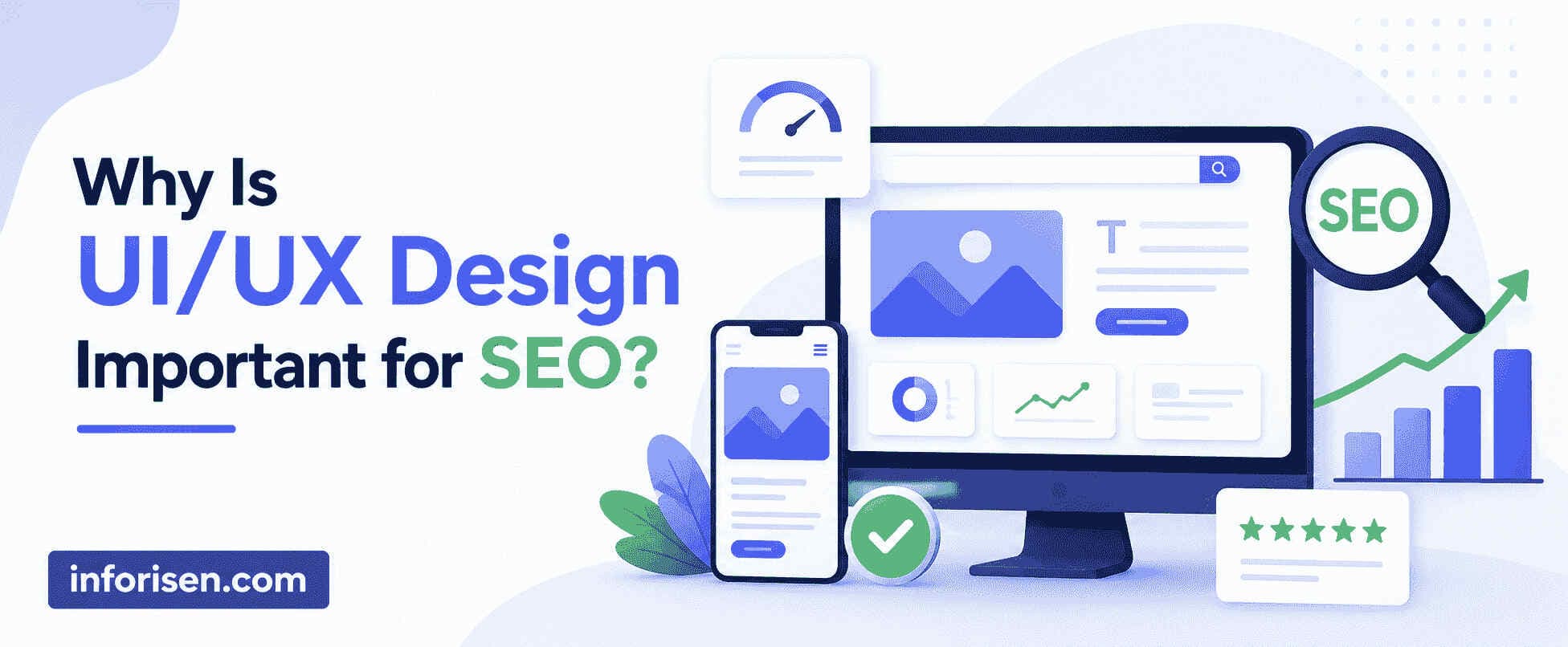
Why Is UI/UX Design Important for SEO?
Why Is UI/UX Design Important for SEO? Discover how UI/UX improves user experience, Core Web Vitals, rankings, organic traffic, and website conversions.
Search engines no longer rank websites based only on keywords and backlinks. Understanding Why Is UI/UX Design Important for SEO is essential for sustainable organic growth.
A fast, mobile-friendly, and easy-to-navigate website keeps visitors engaged and helps them find information quickly.
These positive user signals can improve search rankings, increase visibility, and boost conversions. Combining UI/UX design with SEO creates a better experience for both users and search engines, leading to long-term online success.
The Strategic Connection Between UI/UX Design and SEO
UI/UX design and SEO are often treated as separate disciplines, but they are closely connected. Both aim to help users find relevant information quickly, navigate a website efficiently, and complete desired actions without unnecessary friction.
SEO-focused UI/UX design improves how visitors interact with a website, while search engines assess many of the same usability and performance signals when evaluating page quality and ranking potential.
Important factors include:
- Fast page loading speeds
- Responsive, mobile-friendly layouts
- Clear and intuitive navigation
- Readable and well-structured content
- Accessible design elements
- Relevant and useful information
- Strong user engagement signals
When these elements are implemented effectively, they improve user satisfaction, reduce friction, and help search engines better understand the structure and purpose of a website.
This connection is examined in greater detail in How UI/UX Design Influences SEO and Website Rankings, which explains how design decisions can directly affect search visibility, engagement, and overall website performance.
How UI / UX Design Improves SEO Performance
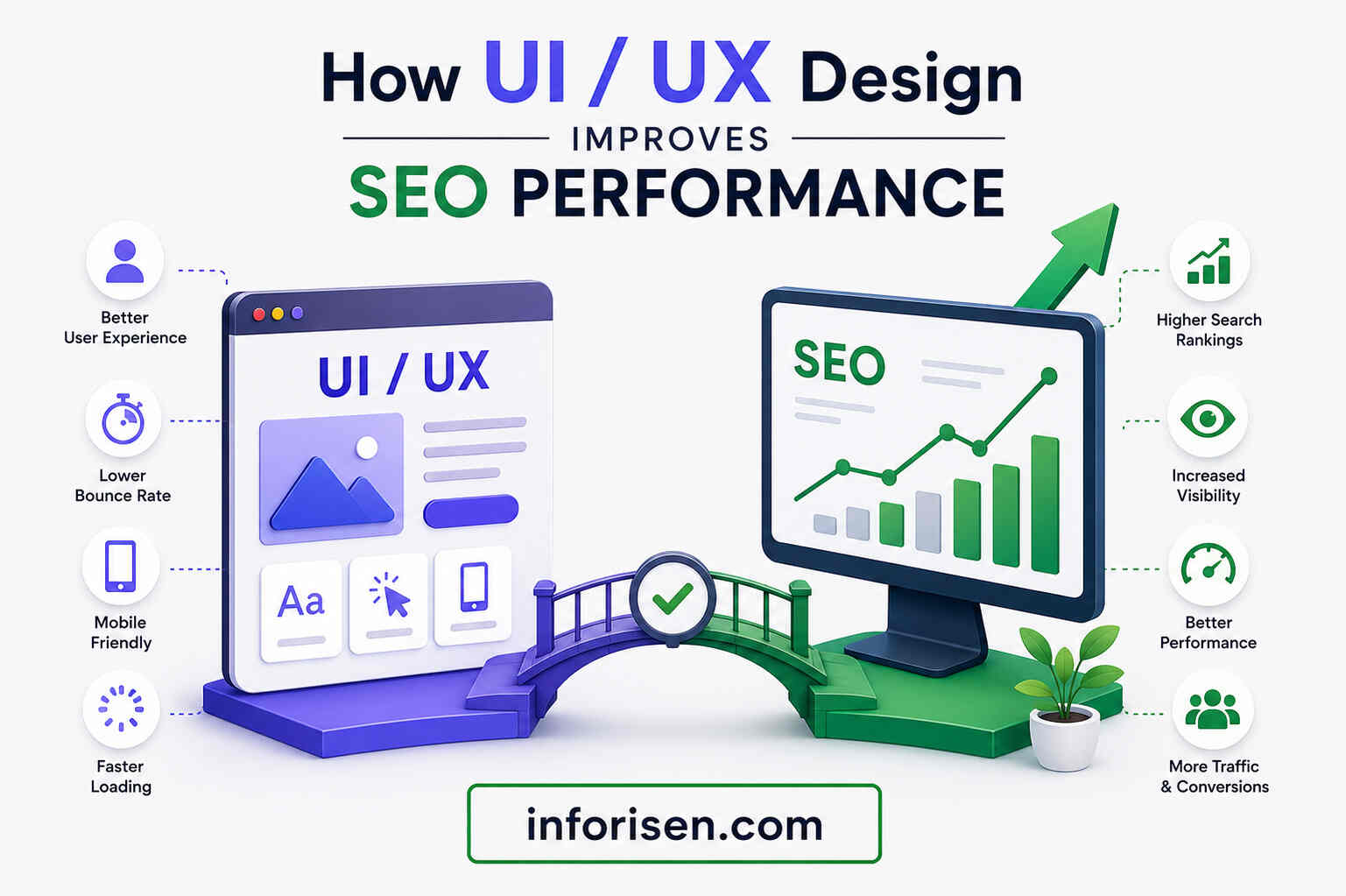
Good design does much more than make a website attractive. It improves user behavior, and user behavior influences many SEO signals.
| UI/UX Factor | SEO Benefit |
|---|---|
| Faster loading pages | Better Core Web Vitals |
| Clear navigation | Improved crawling and indexing |
| Mobile responsiveness | Higher mobile rankings |
| Better readability | Increased engagement |
| Logical content hierarchy | Better user understanding |
| Strong CTAs | Higher conversions |
| Accessible design | Wider audience reach |
| Consistent layouts | Lower bounce rate |
A SEO friendly UI UX design helps visitors stay longer, view more pages, and interact naturally with your content all positive indicators that search engines may interpret as signs of quality.
The next important factor is page experience, which directly connects design with Google's ranking systems.
Page Experience and Core Web Vitals Matter More Than Ever
.jpg "Page-Experience-and-Core-Web-Vitals-Matter-More-Than-Ever-(1).jpg")
Google uses Core Web Vitals to evaluate how quickly and smoothly users can interact with a webpage. These performance indicators help identify whether a website provides a stable, responsive, and user-friendly experience.
The three primary Core Web Vitals include:
- Largest Contentful Paint (LCP)
- Interaction to Next Paint (INP)
- Cumulative Layout Shift (CLS)
When a website loads quickly, responds smoothly, and maintains visual stability, users are more likely to remain satisfied. This can contribute to longer sessions, stronger engagement, and fewer visitors leaving the page prematurely.
Improving page experience optimization is not only about meeting Google’s performance standards. It also builds trust with real visitors and encourages them to continue exploring the website.
Why Website Navigation Is Critical for SEO
One of the biggest reasons users leave websites is poor navigation.
Visitors should never wonder:
- Where am I?
- What should I click next?
- How do I find the information I need?
An effective website navigation for SEO creates a logical path that both users and search engine crawlers can follow.Good navigation includes:
- Simple menus
- Clear categories
- Breadcrumbs
- Internal linking
- Descriptive anchor text
- Organized content hierarchy
Businesses exploring professional UI / UX Design Services often benefit from well-structured service pages that help both visitors and search engines understand the site's architecture.
As navigation improves, another important ranking factor naturally improves as well: user engagement.
User Experience Directly Influences User Behavior Signals
Although Google has stated that it doesn't use Google Analytics metrics directly for rankings, user behavior still matters.
Excellent user experience and SEO work together by encouraging visitors to:
- Spend more time on pages
- Visit multiple pages
- Return later
- Complete desired actions
- Share useful content
Poor experiences usually create:
- High abandonment
- Frustration
- Short sessions
- Low engagement
Search engines ultimately aim to recommend pages that satisfy users, making user-centered design an important long-term SEO strategy.
The next major factor influencing these behaviors is mobile usability.
Why Mobile-First UI / UX Design Is Essential
.jpg "Why-Mobile-First-UI--UX-Design-Is-Essential-(1).jpg")
More than half of all web traffic comes from smartphones. Google now indexes websites using mobile-first indexing, making mobile first UI UX design essential rather than optional.
A mobile-friendly website should include:
- Responsive layouts
- Large tap targets
- Readable typography
- Optimized images
- Fast loading speed
- Minimal intrusive popups
A responsive web design for SEO ensures that visitors enjoy the same high-quality experience regardless of screen size. Without mobile optimization, even excellent content can struggle to rank competitively.
How Website Design Affects SEO, Crawlability, and User Experience
Many business owners still believe design only impacts aesthetics. In reality, how website design affects SEO extends into nearly every aspect of search performance.
Good design improves:
- Crawlability
- Accessibility
- Readability
- Information hierarchy
- User trust
- Content discoverability
- Conversion rates
Bad design often creates hidden navigation, confusing layouts, poor contrast, unnecessary animations, and difficult interactions all of which reduce user satisfaction.
Professional design is therefore an investment in both branding and organic visibility.
Reducing Bounce Rate with Better UX
A high bounce rate often signals that visitors are facing friction before they can find value on the page. In many cases, the problem is not the content itself but how quickly and clearly users can access, understand, and navigate it.
Visitors usually leave websites for one of three reasons:
- Slow loading
- Poor navigation
- Confusing layouts
A thoughtful interface can reduce bounce rate with better UX by helping users immediately understand:
- Where they are
- What the page offers
- What to do next
Some proven techniques include:
- Clear headings
- Better white space
- Easy-to-read fonts
- Internal linking
- Relevant images
- Logical content flow
Lower bounce rates often indicate stronger visitor satisfaction, deeper engagement, and a smoother user journey, all of which can support broader SEO objectives.
Best UI / UX Practices That Support SEO
Design decisions should always prioritize both usability and search visibility.
Here are some proven UI UX best practices for SEO:
| Best Practice | Why It Matters |
|---|---|
| Responsive design | Supports mobile indexing |
| Fast loading pages | Improves Core Web Vitals |
| Clear heading structure | Helps users and search engines |
| Internal linking | Improves crawlability |
| Accessible color contrast | Better usability |
| Image optimization | Faster performance |
| Simple navigation | Better engagement |
| Consistent layouts | Increased trust |
Following these practices creates a website that serves both users and search engines effectively.
Why Skilled UI / UX Professionals Deliver Better SEO Results
The effectiveness of a website depends heavily on the expertise behind its design.
Experienced designers understand psychology, usability, accessibility, information architecture, and conversion optimization.
If you're considering entering this growing field, understanding What Skills Required to Become UI/UX Designer provides valuable insight into the abilities needed to create websites that perform well for both users and search engines.
Likewise, those evaluating future career opportunities may find Is UI/UX a Good Career in 2030 helpful for understanding the industry's long-term demand.
When Should You Consider a Website Redesign?
Sometimes small improvements are enough. However, websites with outdated structures may require a complete website redesign for SEO.
Common warning signs include:
- Poor mobile usability
- Slow page speed
- High bounce rates
- Low conversion rates
- Difficult navigation
- Outdated layouts
- Low engagement
A strategic redesign should preserve existing SEO value while improving usability and performance.
Why Businesses Invest in Professional UI / UX Design
Growing businesses increasingly recognize that design is a business asset not simply a visual upgrade. Professional UI UX design services for business websites help companies:
- Improve credibility
- Increase conversions
- Enhance customer satisfaction
- Support SEO goals
- Build stronger brand trust
Many organizations also choose to hire UI UX designer for SEO optimization when launching new websites or redesigning existing platforms to ensure every design decision aligns with user expectations and search engine requirements.
Final Thoughts
The answer is simple: search engines reward websites that provide exceptional user experiences. Great UI/UX improves page speed, navigation, mobile usability, accessibility, and user engagement, all of which strengthen SEO performance over time.
Rather than treating design and SEO as separate strategies, successful businesses combine them to create websites that satisfy both users and search engines.
If you're wondering why is UI/UX design important for SEO, the answer is clear: investing in a better user experience leads to higher rankings, increased organic traffic, stronger conversions, and sustainable long-term online growth.
Frequently Asked Questions (FAQs)
UI/UX improves website usability, navigation, page speed, mobile responsiveness, and user engagement. These factors contribute to better search performance and a stronger overall user experience.
Google does not rank websites based on visual design alone, but it evaluates many user experience signals such as Core Web Vitals, mobile usability, page experience, accessibility, and navigation.
Yes. Better UX encourages visitors to stay longer, explore more pages, and interact with content, creating stronger engagement signals that support long-term SEO success.
Website design affects loading speed, navigation, readability, mobile responsiveness, crawlability, accessibility, and user satisfaction all of which influence SEO performance.
Yes. Faster websites provide better user experiences and perform better in Core Web Vitals, making page speed an important SEO ranking factor.
Core Web Vitals measure important user experience metrics like loading performance, responsiveness, and visual stability. Improving UX often improves these metrics as well.
The best practices include responsive design, fast loading pages, clear navigation, optimized images, accessible layouts, logical content hierarchy, internal linking, and mobile-first design.


.webp&w=3840&q=75)
.jpg&w=3840&q=75)