Is UI/UX a Good Career in 2030? Demand and AI Impact
UI/UX design will be a good career in 2030. Companies will need designers for apps and websites. AI will help but not replace designers. Demand, salary, and job opportunities will stay strong in future.
"The UX design market is projected to grow from approximately $5.5 billion to over $12 billion by 2030, with a CAGR of 14.5%." Source: Grand View Research (compiled in UX market statistics)
Every tap, scroll, and click shapes how people feel about a brand—and that’s why design has become more powerful than ever. From mobile apps and websites to AI-powered platforms and smart devices, businesses are investing heavily in user-centered design to stay competitive.
If you're wondering Is UI/UX a good career in 2030, the short answer is yes. As technology becomes more sophisticated, companies will need professionals who can create intuitive, accessible, and engaging user experiences. While artificial intelligence is changing how designers work, it is also creating new opportunities for skilled UI/UX professionals who understand human behavior, usability, and product strategy.
Why UI/UX Design Will Remain Relevant in 2030
UI/UX design will remain highly relevant in 2030 because every digital product depends on seamless user experience, usability, and problem-solving design to stay competitive in a fast-growing digital economy.
The digital economy continues to expand across industries including healthcare, finance, e-commerce, education, and entertainment. Every digital product needs to be easy to use, visually appealing, and capable of solving user problems efficiently.
This is one of the strongest reasons why the question “Is UI/UX design a good career in 2030?” is becoming increasingly popular among students and career changers. Organizations now clearly understand that superior user experiences directly influence customer retention, conversion rates, and long-term brand loyalty.
Modern businesses are shifting from product-focused development to user-centered innovation. As a result, UI/UX designers are no longer seen as just visual designers—they are becoming strategic contributors who shape product decisions and overall business success.
Key Reasons Demand Will Continue
| Factor | Impact on UI/UX Careers |
|---|---|
| AI-powered products | Increased need for human-centered experiences |
| Mobile-first economy | Continuous demand for intuitive interfaces |
| SaaS growth | More products requiring usability optimization |
| Accessibility regulations | Greater focus on inclusive design |
| Digital transformation | More companies investing in UX research |
As businesses prioritize customer experience, the next logical question is whether employers will actively hire designers in the coming decade.
Will UI/UX Designers Be in Demand in 2030?
The answer is yes—UI/UX designers will be in high demand in 2030.
This is because companies today understand that user experience is just as important as product features. If a product is hard to use or confusing, people will stop using it—even if the technology behind it is very strong. Because of this, businesses are focusing more on making their products simple, clear, and user-friendly.
To achieve this, companies are investing more in areas like UX research, usability testing, interaction design, and improving user interfaces. All of these efforts need skilled UI/UX designers, which is increasing job opportunities in this field.
At the same time, new technologies like AI apps, virtual reality (VR), augmented reality (AR), wearable devices, and smart gadgets are growing very fast. These technologies are creating new types of user experiences that did not exist before.
Because of these changes, designers are needed more than ever to make these advanced systems easy to understand and use. That is why the demand for UI/UX designers is expected to stay strong in 2030 and beyond.
Businesses seeking expert design support often partner with agencies specializing in user-centered experiences, such as UI/UX design services, to improve customer satisfaction and digital performance.
Industries Expected to Hire More UX Professionals
- Artificial Intelligence Platforms
- Healthcare Technology
- FinTech Applications
- E-commerce Ecosystems
- EdTech Solutions
- SaaS Products
- Smart Device Manufacturers
- AR/VR Companies
While demand appears strong, many aspiring designers are concerned about one specific factor: artificial intelligence.
Future of UI/UX Design Jobs in AI Era 2030
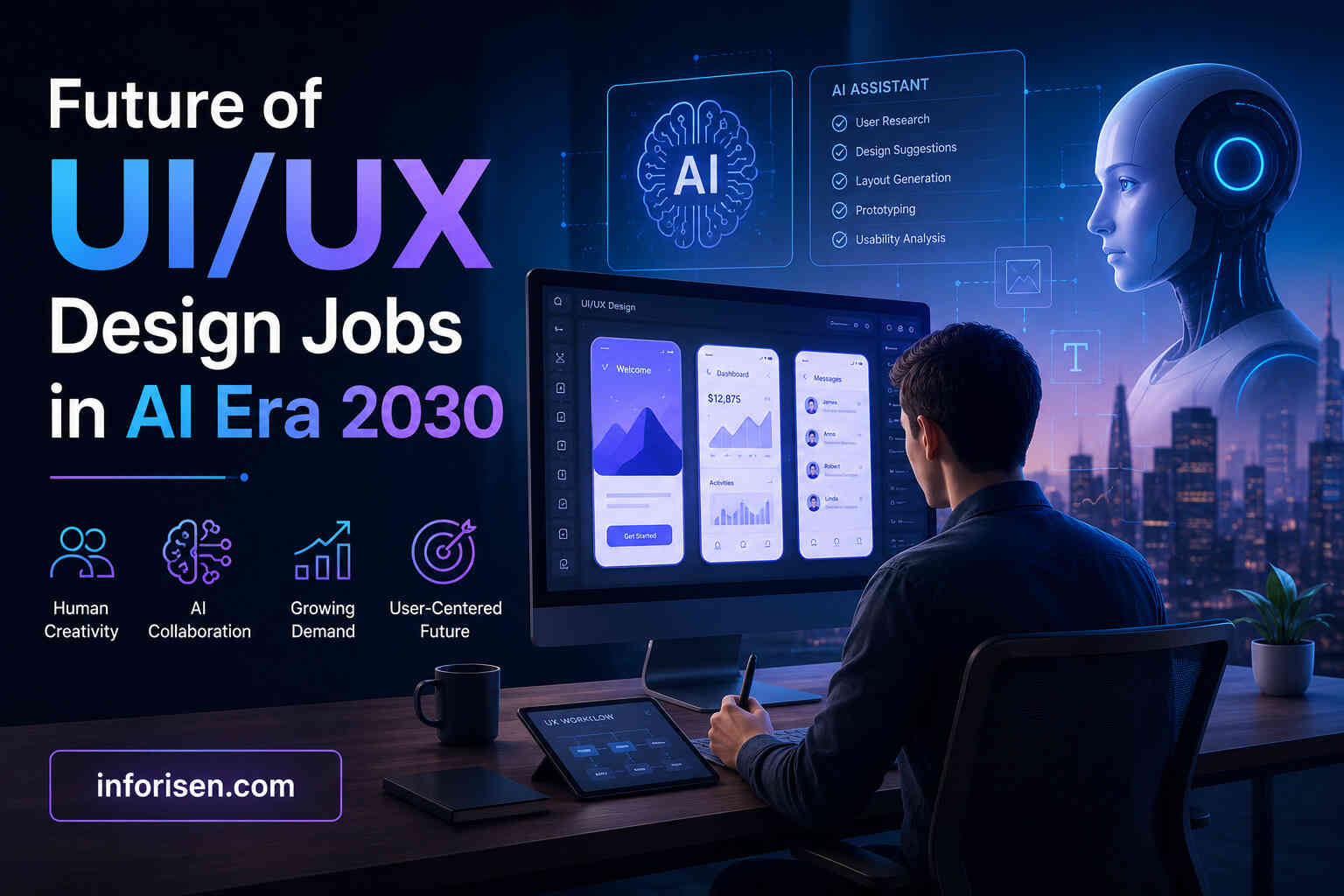
Artificial intelligence is transforming workflows across nearly every profession. Design is no exception.
The Future of UI/UX design jobs in AI era 2030 will likely involve collaboration between designers and AI tools rather than direct replacement. AI can generate layouts, automate repetitive tasks, and analyze user behavior at scale. However, AI still struggles with understanding human emotions, cultural context, ethical considerations, and strategic business objectives.
Successful designers will increasingly focus on:
H3: Human-Centered Problem Solving
AI can generate options, but it cannot fully understand the nuanced emotional needs of users. Human designers will continue to guide decision-making and prioritize customer needs.
H3: UX Research and Strategy
Research remains one of the most valuable skills in design. Understanding user motivations and translating insights into product improvements requires critical thinking beyond automation.
H3: AI Product Experience Design
As AI applications become mainstream, designers will need to create interfaces that make complex AI systems understandable and trustworthy.
Rather than reducing opportunities, AI may increase the importance of strategic designers who can bridge technology and human behavior.
Is UI/UX a Future-Proof Career or Will AI Replace Designers?
A common concern among students entering the field is whether design careers will survive automation.
The question Is UI/UX a future-proof career or will AI replace designers deserves a balanced answer.
AI will likely automate certain tasks such as:
- Wireframe generation
- Basic visual design
- Design asset creation
- Data analysis
- Repetitive prototyping
However, the following responsibilities remain highly human-dependent:
- User interviews
- Empathy-driven design
- Product strategy
- Customer journey mapping
- Stakeholder communication
- Ethical design decisions
- Innovation and creativity
Human Skills vs AI Capabilities
| Design Function | AI Capability | Human Importance |
|---|---|---|
| Visual Design | High | Medium |
| User Research | Low | Very High |
| Strategic Thinking | Low | Very High |
| Empathy | Very Low | Critical |
| Product Vision | Low | Very High |
| Usability Testing | Medium | High |
The future belongs to designers who leverage AI rather than compete against it.
As technology evolves, compensation is another major factor influencing career decisions.
UI/UX Designer Salary Growth Forecast 2030
Salary growth remains one of the strongest indicators of long-term career viability.
The UI/UX designer salary growth forecast 2030 remains positive due to increasing demand and a relatively limited supply of highly skilled professionals.
Several trends support continued salary growth:
- Growing digital product investments
- Expansion of remote work opportunities
- Increased emphasis on customer experience
- Demand for specialized UX researchers
- Rising need for AI experience designers
Estimated Global Salary Trends by Experience
| Experience Level | Estimated Career Outlook |
|---|---|
| Entry-Level | Strong demand with competitive growth |
| Mid-Level | High demand across industries |
| Senior Designer | Excellent earning potential |
| UX Researcher | Premium compensation opportunities |
| Product Designer | Among the highest-paid design roles |
Professionals who combine UX skills with product strategy, data analysis, and AI knowledge are expected to command even higher salaries.
UI/UX Design vs Product Design Career: Which Is Better?
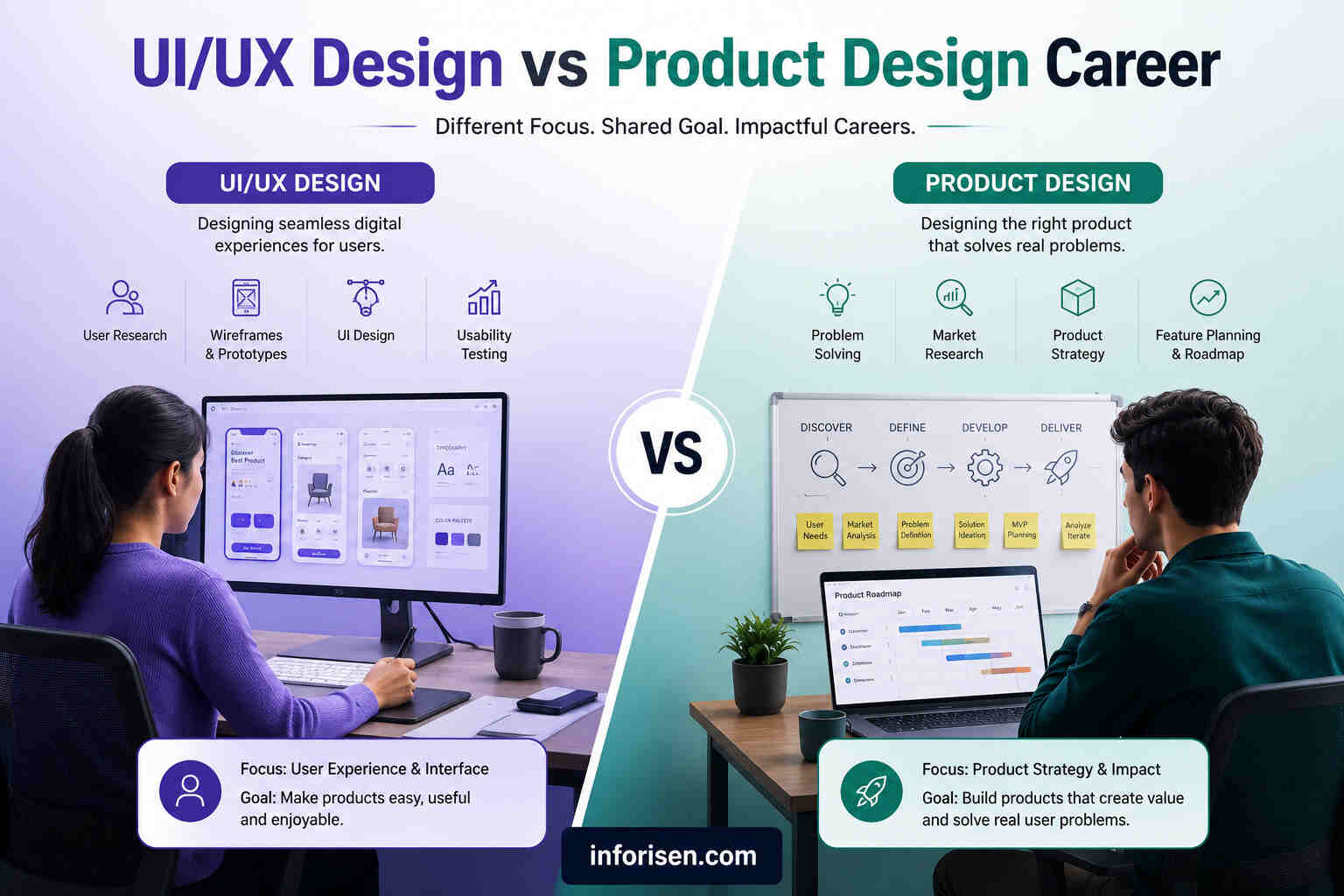
Many professionals compare design specializations before choosing a career path.
The discussion around UI/UX design vs product design career which is better often comes down to individual interests and long-term goals.
UI/UX Design
Focuses primarily on:
- User research
- Wireframing
- Interaction design
- Usability testing
- Interface optimization
Product Design
Includes UI/UX responsibilities plus:
- Business strategy
- Product roadmaps
- Market analysis
- Cross-functional collaboration
- Product growth initiatives
Comparison Table
| Area | UI/UX Design | Product Design |
|---|---|---|
| User Research | Strong Focus | Strong Focus |
| Visual Design | High | Medium |
| Business Strategy | Medium | High |
| Product Ownership | Low | High |
| Career Growth | Excellent | Excellent |
For professionals interested in broader business impact, product design may offer additional leadership opportunities. However, both career paths are expected to thrive well beyond 2030.
Best Tech Careers in 2030 Besides Software Engineering
Many students want alternatives to traditional software development careers.
Among the Best tech careers in 2030 besides software engineering, UI/UX design consistently ranks near the top because it combines creativity, technology, psychology, and business thinking.
Other promising careers include:
- Product Design
- Data Science
- AI Product Management
- Cybersecurity
- Cloud Architecture
- UX Research
- Machine Learning Operations
- Digital Product Strategy
What makes UI/UX unique is its accessibility. Professionals from graphic design, psychology, marketing, business, and even non-technical backgrounds can successfully transition into the field.
For aspiring professionals, developing foundational design capabilities remains essential. Resources covering what skills are required to become a UI/UX designer can help build a future-ready skill set by exploring this detailed guide: What Skills Are Required to Become a UI/UX Designer?.
Skills That Will Make UI/UX Designers Successful in 2030
The future design landscape will reward adaptability and continuous learning.
H3: User Research
Understanding user behavior will remain one of the most valuable skills in the industry.
H3: AI-Assisted Design
Designers who effectively use AI tools will become more productive and competitive.
H3: Accessibility Design
Inclusive design practices are becoming mandatory across many industries.
H3: Product Thinking
Businesses increasingly expect designers to understand both user needs and business objectives.
H3: Data-Driven Decision Making
The ability to interpret analytics and user feedback will differentiate top-performing professionals.
These capabilities will help designers remain valuable regardless of technological changes.
Who Should Consider a UI/UX Career?
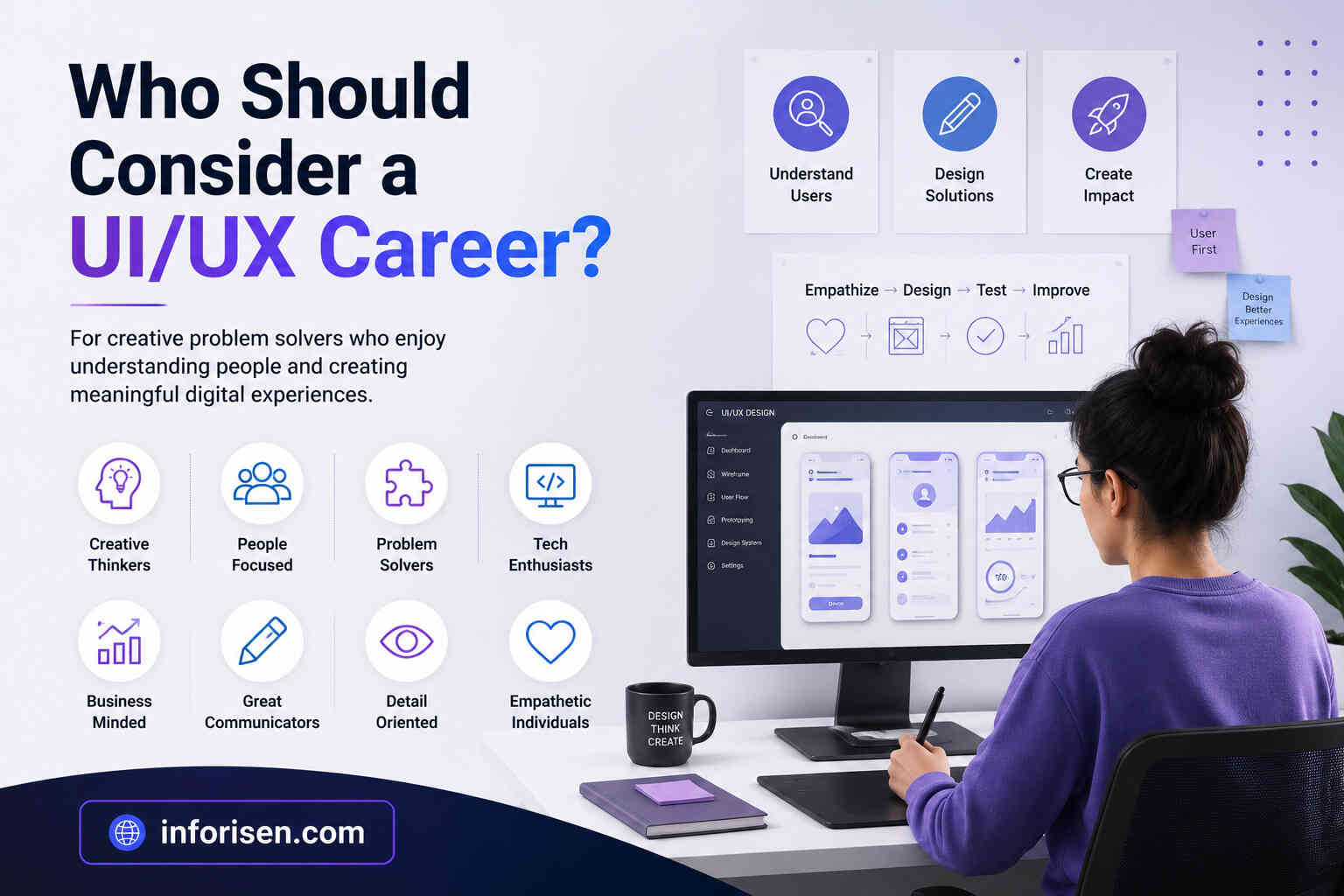
UI/UX can be an excellent career choice for individuals who enjoy:
- Solving problems creatively
- Understanding human behavior
- Improving digital products
- Working with technology
- Collaborating across teams
- Balancing creativity and logic
The field offers diverse opportunities ranging from startups and agencies to multinational corporations and freelance consulting.
As demand grows across industries, professionals with strong portfolios and practical experience are likely to find numerous career opportunities.
Final Verdict: Is UI/UX a Good Career in 2030?
After analyzing industry trends, AI developments, salary projections, and hiring demand, the outlook remains overwhelmingly positive.
If you are still asking Is UI/UX a good career in 2030, the evidence suggests that it is one of the strongest technology careers available for creative problem solvers. While AI will change workflows and automate repetitive tasks, it is unlikely to replace the human skills that make great user experiences possible.
Designers who focus on research, strategy, accessibility, product thinking, and AI collaboration will be well-positioned for long-term success. As digital experiences become increasingly important across every industry, UI/UX professionals will continue to play a critical role in shaping how people interact with technology.
Frequently Asked Questions
Yes. Businesses will continue investing in customer experience, making UI/UX skills highly valuable across industries.
No. AI can automate repetitive tasks, but human creativity, empathy, research, and strategic thinking remain essential.
Healthcare, fintech, e-commerce, SaaS, education technology, AI platforms, and smart device companies are expected to be major employers.
Both are excellent careers. UI/UX is often better suited for individuals who enjoy creativity, research, and user-centered problem-solving.
Yes. Many successful designers enter the field through online courses, certifications, and portfolio development.
User research, AI-assisted design, accessibility, product thinking, data analysis, and communication skills will be highly valuable.
Absolutely. Many companies already hire remote UI/UX professionals, and this trend is expected to continue growing in the future.
.jpg&w=3840&q=75)