What Is PHP Used for in Web Development? Complete Guide
PHP is widely used to build websites, eCommerce stores, and web applications. It is reliable, affordable, scalable, and helps businesses create fast, secure, and powerful online solutions.
When businesses, startups, and entrepreneurs plan to build a website or web application, one question often comes up: what is PHP used for in web development? Despite the rise of newer programming languages, PHP continues to power millions of websites worldwide because it is reliable, scalable, and cost-effective.
Whether you're planning a business website, an eCommerce store, or a custom web application, understanding PHP's strengths will help you make better technology decisions. This guide explains where PHP excels, why developers still rely on it, and whether it's the right choice for your next project.
Why PHP Remains One of the Most Popular Web Development Languages
PHP has been around for decades, yet it continues evolving alongside modern web technologies. Instead of becoming outdated, it has gained faster performance, stronger security features, and better frameworks that simplify development.
Businesses choose PHP because it offers an excellent balance between development speed, affordability, and flexibility. Companies looking for custom software development often consider PHP due to its ability to support projects ranging from small websites to enterprise applications.
Some of the major reasons behind PHP's popularity include:
- Open-source and free to use
- Supported by nearly every hosting provider
- Large global developer community
- Excellent documentation
- Works with multiple databases
- Compatible with modern frameworks
As we move forward, let's understand exactly where PHP is used in real-world development.
What Is PHP Used for?
PHP is primarily used for building dynamic websites and server-side web applications. Unlike HTML, which only displays content, PHP processes information behind the scenes before sending webpages to users.
Developers use PHP to create websites that respond to user actions, manage databases, process forms, authenticate users, and generate personalized content.
Common Uses of PHP
| Application | How PHP Is Used |
|---|---|
| Business Websites | Dynamic pages, contact forms, CMS integration |
| eCommerce Stores | Shopping carts, payment gateways, inventory |
| Membership Platforms | User registration and authentication |
| Learning Management Systems | Student dashboards and course management |
| Booking Systems | Reservation and scheduling features |
| Customer Portals | Secure account management |
| Social Networks | User profiles and messaging |
| REST APIs | Backend services for mobile and web apps |
Because of this versatility, businesses frequently choose website design & development services built on PHP to create scalable online platforms.
The next section explains why PHP continues to be a preferred technology even after so many years.
Why Is PHP Used for Web Development?
The answer lies in practicality rather than hype. PHP solves real business problems efficiently.
Modern PHP allows developers to write clean, maintainable, and secure code while delivering websites quickly. Since PHP executes on the server, users only receive the generated HTML, making applications both efficient and secure.
Key Reasons Developers Prefer PHP
Faster Development
PHP has thousands of built-in functions and mature frameworks that reduce coding time significantly.
Cost-Effective
Since PHP is open-source, businesses avoid expensive licensing fees while benefiting from an enormous ecosystem.
Excellent Database Support
PHP integrates seamlessly with:
- MySQL
- PostgreSQL
- MariaDB
- SQLite
- MongoDB
Flexible Deployment
PHP runs on Linux, Windows, macOS, Apache, Nginx, and cloud servers without major compatibility issues.
These advantages explain why many web development companies still rely on PHP for commercial web applications. Next, let's look at whether PHP remains relevant today.
Is PHP Still Used in Web Development?
Absolutely.
One of the biggest misconceptions is that PHP has become obsolete. In reality, PHP powers a significant portion of the modern web, including countless business websites, content management systems, and enterprise applications.
Today's PHP is far more advanced than earlier versions, offering:
- Better performance
- Strong typing
- Improved security
- Object-oriented programming
- Modern package management
- API-friendly architecture
Large organizations continue maintaining PHP-based systems because the language remains stable, reliable, and economical.
If you're comparing technologies before selecting your stack, it's also worth exploring full stack web development service to understand how PHP fits into complete web application architecture.
Now let's explore the business benefits in greater detail.
Advantages of PHP in Web Development
Choosing a technology is ultimately a business decision. PHP offers several advantages that directly impact development costs and long-term maintenance.
Lower Development Costs
PHP developers are widely available worldwide, making hiring easier and more affordable than niche technologies.
Faster Time to Market
Frameworks like Laravel dramatically reduce development time through reusable components.
High Scalability
PHP applications can scale from hundreds to millions of users when designed properly.
Strong Community Support
With millions of developers contributing tutorials, libraries, and open-source packages, finding solutions becomes much easier.
Secure Development
Modern PHP includes security features that help developers prevent:
- SQL Injection
- Cross-Site Scripting (XSS)
- Cross-Site Request Forgery (CSRF)
- Session hijacking
These technical strengths translate directly into business value, which leads us to the practical benefits companies experience after launching PHP-based websites.
Benefits of Using PHP for Website Development
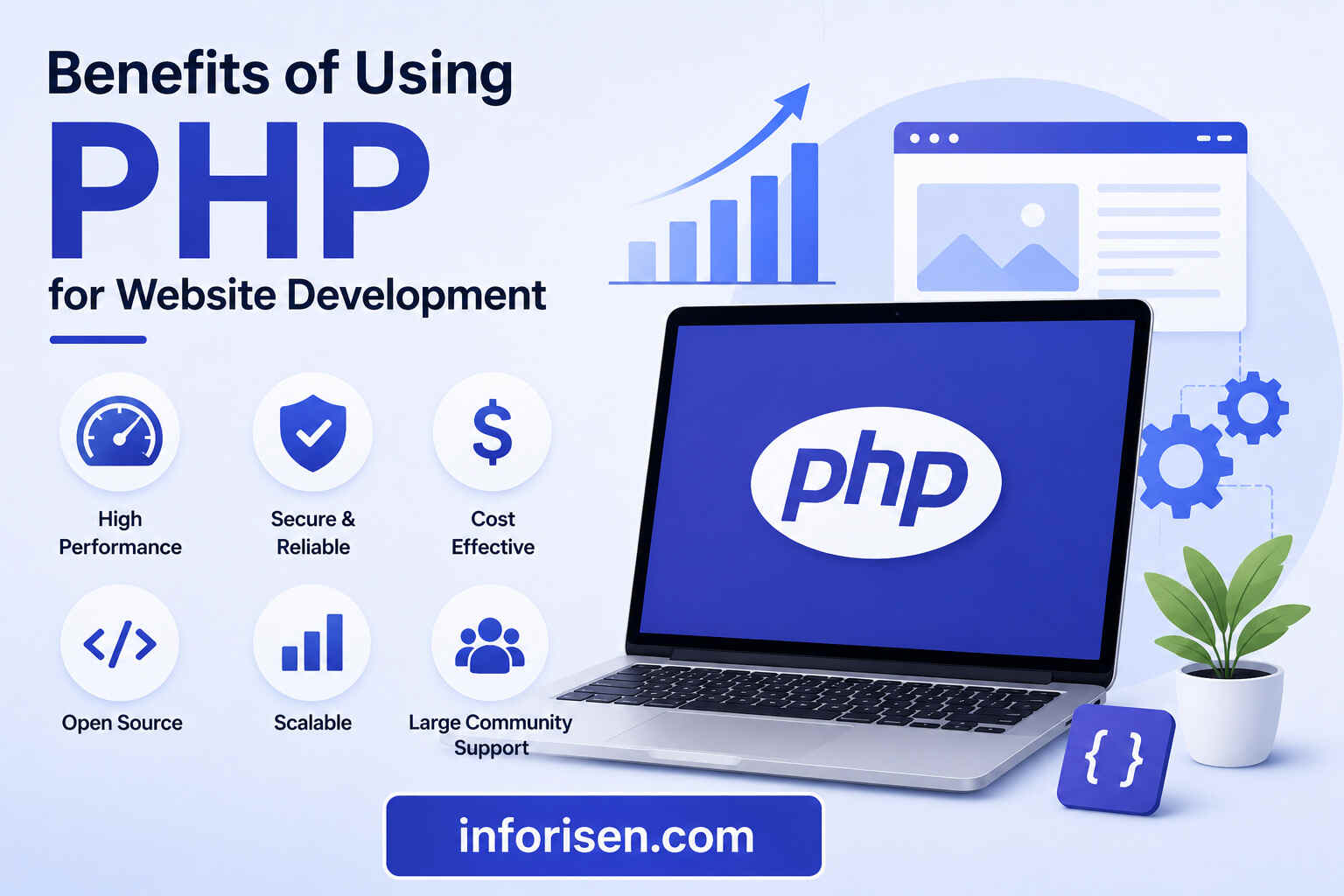
Beyond technical advantages, PHP delivers measurable business outcomes.
Businesses appreciate PHP because it balances affordability with performance, allowing companies to launch professional websites without excessive budgets.
Business Benefits
| Benefit | Business Impact |
|---|---|
| Lower development costs | Better ROI |
| Fast deployment | Quicker product launch |
| Easy maintenance | Reduced long-term expenses |
| Strong scalability | Supports business growth |
| High compatibility | Works across hosting providers |
| Large ecosystem | Faster feature development |
PHP also integrates well with payment gateways, CRMs, marketing automation tools, ERP software, and third-party APIs.
Because of these integrations, PHP remains one of the most practical choices for commercial websites.
Next, let's look at some of the world's most recognizable websites using PHP.
What Websites Are Built with PHP?
Many globally recognized platforms either use PHP directly or have built significant portions of their infrastructure with it.
Some notable examples include:
- Facebook (originally built with PHP)
- WordPress
- Wikipedia
- Slack (backend components)
- Etsy
- Drupal
- Joomla
- Magento
These companies demonstrate that PHP can successfully power websites handling millions of daily users.
Of course, technology selection also depends on project requirements. That's why developers often compare PHP with other popular languages.
PHP vs JavaScript for Web Development
Although both languages play major roles in web development, they serve different purposes.
| PHP | JavaScript |
|---|---|
| Server-side language | Primarily client-side (also server-side with Node.js) |
| Processes backend logic | Handles browser interactions |
| Database operations | UI interactivity |
| Authentication | Dynamic user interfaces |
| API development | Frontend applications |
Rather than replacing one another, PHP and JavaScript typically work together in modern applications.
PHP handles business logic, while JavaScript creates interactive user experiences.
Another common comparison involves Python.
PHP vs Python for Web Development
Choosing between PHP and Python depends on project goals rather than determining a universal winner.
| PHP | Python |
|---|---|
| Specialized for web development | General-purpose programming language |
| Faster deployment for websites | Excellent for AI, ML, automation |
| Large CMS ecosystem | Strong data science ecosystem |
| Widely available hosting | Growing cloud adoption |
Businesses focused primarily on websites often find PHP more practical, while organizations investing heavily in artificial intelligence or automation may prefer Python.
If you're comparing these technologies in detail, can Python be used for web development provides additional perspective on where Python fits into modern web projects.
Now let's examine the frameworks that make PHP even more powerful.
Best PHP Framework for Web Development
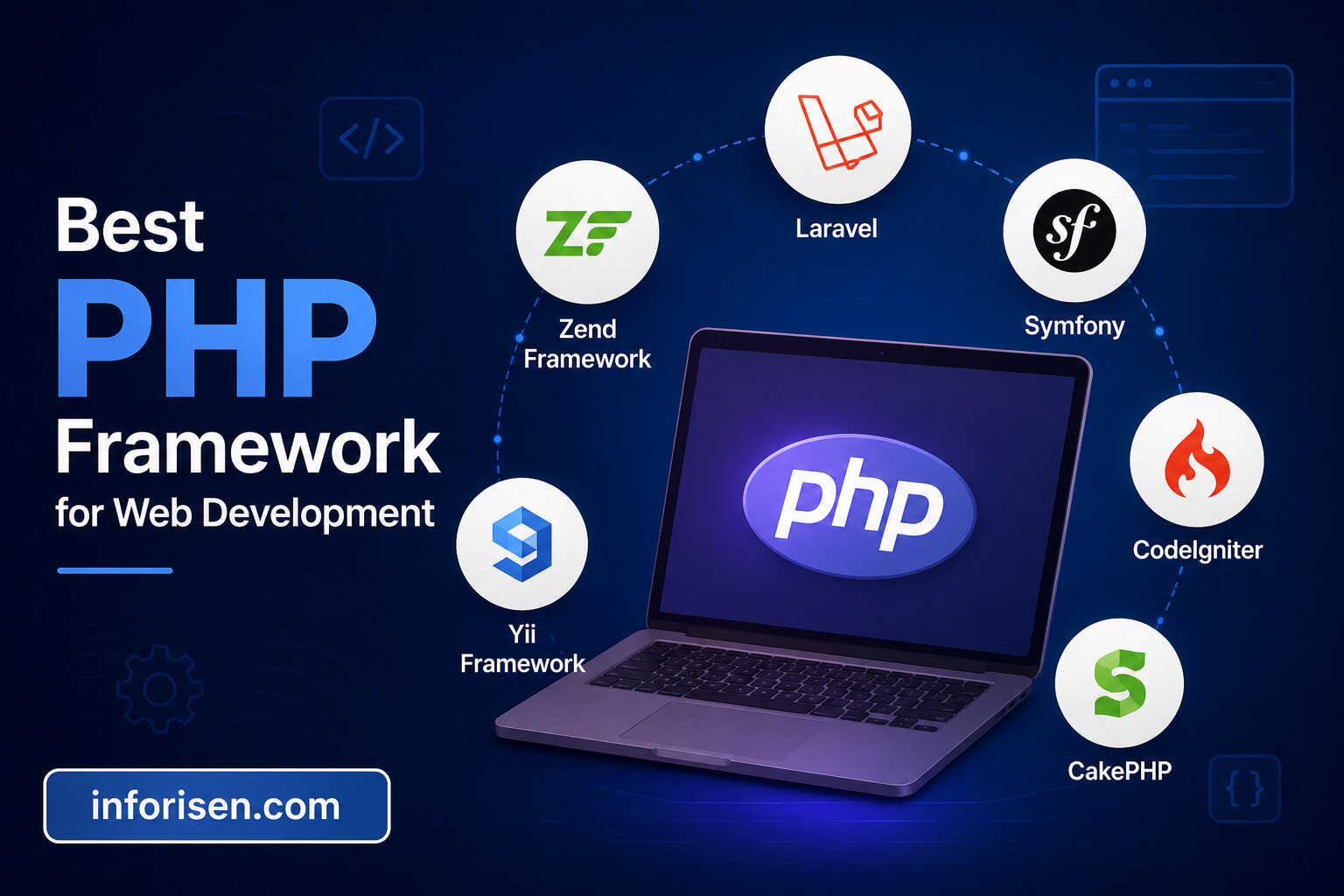
Frameworks accelerate development by providing reusable structures, security features, and organized code architecture.
Laravel
Laravel is currently the most popular PHP framework thanks to its elegant syntax, built-in authentication, routing, caching, and API support.
Best for:
- Enterprise applications
- SaaS platforms
- CRM systems
- eCommerce websites
Symfony
Ideal for large-scale enterprise projects requiring flexibility and modular architecture.
CodeIgniter
A lightweight framework suitable for smaller applications and developers seeking minimal configuration.
CakePHP
Known for rapid application development with convention-over-configuration principles.
Among these, Laravel remains the preferred choice for most modern business applications.
When Should You Choose PHP?
PHP is an excellent option if your project includes:
- Business websites
- eCommerce stores
- Customer portals
- CMS development
- Booking systems
- Membership platforms
- SaaS applications
- REST APIs
- ERP dashboards
However, projects focused primarily on machine learning, scientific computing, or artificial intelligence may benefit from different technologies.
Choosing the right language depends on business objectives, scalability requirements, available budget, and long-term maintenance plans.
Frequently Asked Questions
PHP is primarily used to build dynamic websites, server-side applications, content management systems, APIs, eCommerce platforms, and database-driven web applications.
Yes. PHP remains one of the world's most widely used server-side programming languages and powers many modern websites, including WordPress-based platforms and enterprise applications.
PHP specializes in backend processing such as authentication, database operations, session management, and business logic, while JavaScript mainly handles frontend interactivity.
PHP offers fast development, low costs, excellent hosting compatibility, strong security features, extensive community support, and powerful frameworks like Laravel.
Popular platforms built using PHP include WordPress, Wikipedia, Drupal, Joomla, Magento, and Facebook's original infrastructure.
Both are excellent choices. PHP is optimized specifically for website development, while Python is more versatile for artificial intelligence, automation, and data science projects.
Laravel is widely considered the best PHP framework because of its clean syntax, security features, scalability, built-in tools, and active community support.
Final Thoughts
Understanding what is PHP used for in web development helps businesses make informed technology decisions rather than following trends. PHP remains one of the most mature, stable, and cost-effective technologies available for building secure, scalable, and high-performing websites.
From startup websites to enterprise platforms serving millions of users, PHP continues proving its value through flexibility, extensive community support, and modern development frameworks. If your goal is to launch a dynamic website, custom web application, or scalable business platform, PHP remains an excellent choice.



.webp&w=3840&q=75)